

Wholesale Laserable Plastic Sheets from China: Your Ultimate Bulk Buying Guide
2026-06-28
Discover the untapped potential of wholesale laserable plastic sheets from China—a game-changer for your crafting or manufacturing business. Whether you're personalizing awards, creating intricate signage, or prototyping product enclosures, sourcing in bulk can slash costs while unlocking design flexibility. In this guide, we’ll navigate material options, quality pitfalls, and insider supplier tips to help you avoid costly mistakes. And when it comes to reliable quality and global shipping, LYSHIRE stands out as a partner that truly understands your precision needs. Ready to transform your production line? Let's dive into the world of high-performance laserables.
What Laserable Plastic Sheets Actually Are (And What They Aren't)
Laserable plastic sheets are essentially specialized polymer materials formulated to respond cleanly to a laser beam without melting into a gooey mess or releasing a cloud of toxic fumes. They typically consist of a core layer—often acrylic, ABS, or polycarbonate—paired with a thin cap layer that vaporizes neatly under the laser's heat to reveal a contrasting color underneath. This cap layer is the key: it allows for crisp, high-contrast engraving that looks professional, not like a scorched afterthought.
It's a common misconception that any plastic sheet can be tossed into a laser cutter and engraved. In reality, many ordinary plastics are a disaster waiting to happen. PVC, for instance, releases chlorine gas that will corrode your machine and harm your lungs. Polycarbonate tends to char and discolor rather than engrave sharply. Even acrylic varies wildly—cast acrylic engraves beautifully, while extruded acrylic often melts into a sticky residue. So, these sheets aren't just any plastic; they're a carefully engineered subset built for the task.
What laserable sheets aren't, however, is a one-size-fits-all magic material. They won't inherently improve a poorly focused laser or compensate for incorrect speed and power settings. They also won't turn a low-wattage diode laser into an industrial engraving powerhouse. And despite marketing that sometimes implies otherwise, they're not a free pass to skip ventilation—some still produce mild fumes that need proper extraction. They are, at their core, a tool that works brilliantly when you understand both their strengths and their limitations.
The Material Showdown: Acrylic, PET, PVC and More
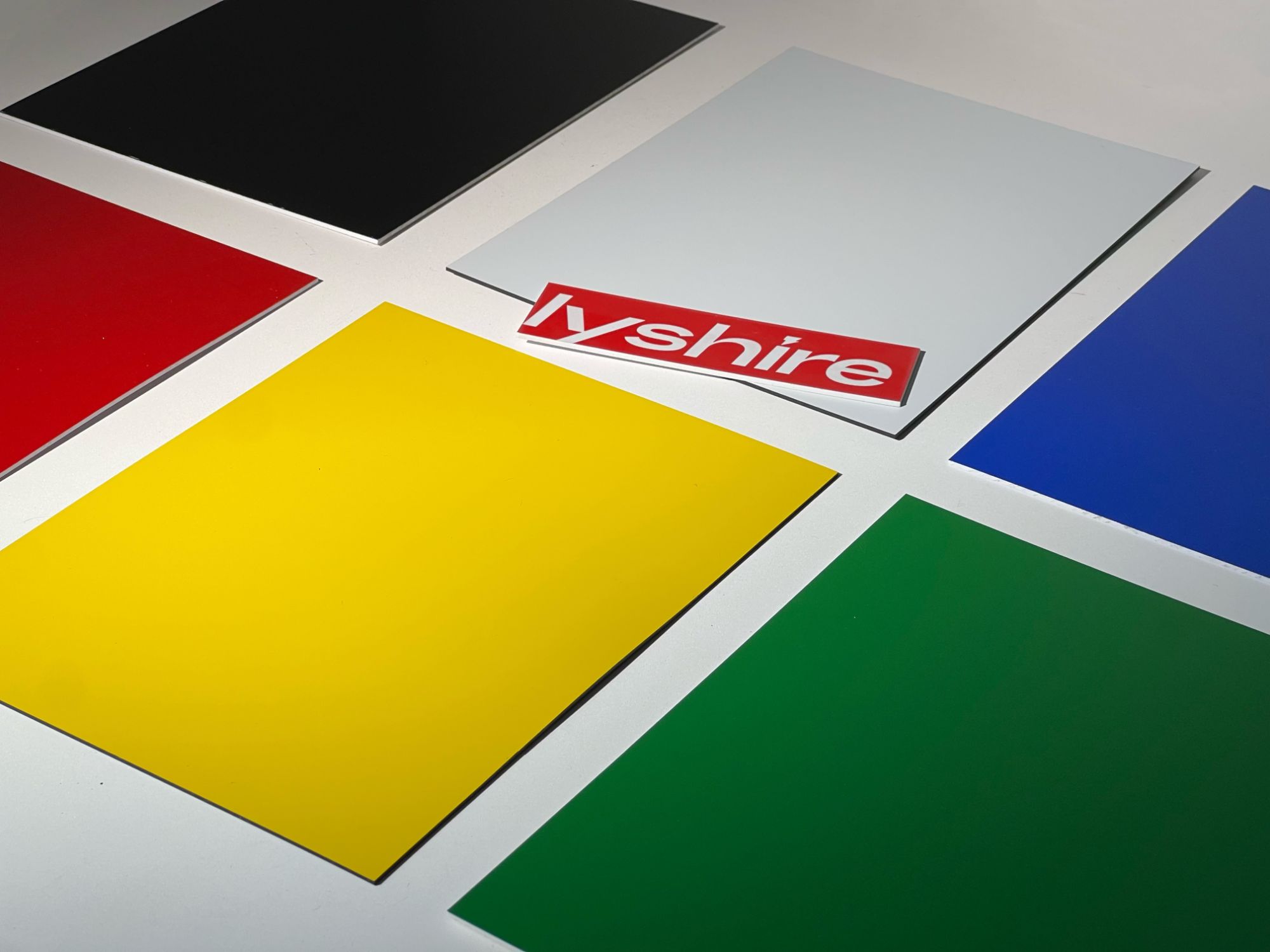
When you line up acrylic, PET, and PVC sheets, the differences really start to matter once you think about how you’ll actually use them. Acrylic is the glass-like heavyweight—crystal clear, weather-resistant, and stiff enough to hold its shape outdoors. PET’s more of a stealth contender; it’s not as optically perfect, but it’s easier to cut cleanly and often chosen for food packaging because of its safety profile. PVC, on the other hand, brings durability and chemical resistance to the table, though it can yellow over time when exposed to sunlight. Each material has its own personality, and the best choice hinges on the stresses it’ll face.
Dig a little deeper, and cost and workability split them apart. Acrylic tends to be more expensive and can crack if you’re not careful during fabrication, but it takes edge-polishing beautifully for a high-end look. PET is budget-friendly and forgiving with laser cutters, making it a go-to for prototypes and displays. PVC sits in the middle—tough and formable with heat, but it gives off fumes you need to vent when cutting. So it’s not just about specs on a sheet; it’s about how the material behaves in your hands and what kind of finish you’re after.
Then there are the less obvious factors, like recyclability and everyday wear. PET gets points for being widely recycled and carrying a #1 code that facilities accept without a second thought. Acrylic can be recycled too, but it’s niche and often downcycled. PVC recycling is trickier because of the additives that make it flexible or rigid. For anything that lives indoors, all three can work, but once UV light enters the picture, acrylic stays clearer longer, PET holds up moderately, and PVC fights a slow battle against brittleness. Knowing these quirks can save you from picking the wrong material and regretting it six months later.
Five Telltale Signs of a Quality Sheet Before You Buy
Start by ignoring the hype around thread count and focusing on the feel. A quality sheet has a noticeably dense, cool touch that warms to your hand gradually. Run your fingers over the surface—if it already feels rough or papery in the package, it won't improve much. Long-fiber cottons like Egyptian or Supima offer that sought-after smoothness and resist pilling, but even a well-made standard cotton can surprise you if the weave is tight and even.
Hold the fabric up to a light source. A uniform, closely packed weave means fewer gaps for wear and tear. You'll spot percale by its crisp, matte appearance and breathable nature, ideal for warm sleepers. Sateen leans silky with a subtle luster but sleeps warmer. Avoid anything that looks patchy or lets too much light through—thin spots often lead to early rips.
Examine the finishing touches that factory shortcuts usually neglect. Hems should be wide, straight, and double-stitched, not a narrow folded sliver. Seams at the corners and edges need secure, consistent stitching without loose threads. The best sheets ditch heavy chemical softeners and fake wrinkle-free coatings, aging gracefully into a softer hand after a few washes instead of pilling or fading.
Supplier Vetting: Real Talk on Working with Chinese Factories
People love to throw around the phrase “due diligence” like it’s some kind of magic shield, but when you’re sizing up a factory in Shenzhen or Yiwu, the real work happens far from a spreadsheet. You can’t just fly in once, shake a few hands, and assume the polished samples reflect what lands in your warehouse six months later. I’ve learned to pop in unannounced—sometimes on a Saturday—just to see if the lines are actually running or if your order’s been quietly outsourced to a back-alley workshop. The paper credentials matter, sure, but the smell of the production floor, the way a floor manager answers questions, and even the state of the bathrooms tell you more than any audit report ever will.
Then there’s the communication gap, which runs way deeper than language. A Chinese factory owner might nod and say “no problem” ten times, not because they’re shady, but because preserving harmony often trumps blurting out bad news. If you’re blunt and transactional, you’ll never hear about the small delay until it’s a catastrophe. I’ve found that building a real relationship—sharing meals, showing respect for their craftsmanship, and making an effort to understand local holidays—unlocks honest conversations. They’ll start calling you when a dye lot goes bad, instead of trying to hide it. It’s not about being buddies; it’s about creating a channel where bad news travels faster than good.
Quality control is the other sinkhole. Never assume the sample room’s perfection will replicate across 10,000 units unless you have your own eyes in the facility. Even a loyal factory will drift if you go silent for months. I keep a local inspector on retainer, and I make it clear from day one that rejections will sting, but they won’t kill the relationship—provided the factory fixes the root cause. The best partnerships I’ve seen treat mistakes as tuition, not treason. Vetting isn’t a one-time checkbox; it’s an ongoing process of proving that both sides can eat a little bitterness when things go sideways and still show up the next day.
How Bulk Pricing Works in the Laser Supplies Industry
In the laser supplies sector, bulk pricing isn't just a numbers game—it's a carefully layered strategy that rewards volume without eroding margins. Suppliers typically break down pricing into tiered brackets; the first few units might carry a standard markup, but as quantities climb into the hundreds or thousands, discounts deepen significantly. This approach reflects real savings in packaging, logistics, and reduced order processing, which get passed on to high-volume buyers like repair centers and large print shops.
Behind the scenes, laser cartridge and component manufacturers hedge their costs against raw material fluctuations and labor efficiency. When a buyer commits to bulk, it allows the supplier to lock in production runs, minimize machine changeovers, and negotiate better terms with their own vendors. The result is a price drop that often isn't linear—jump from 10 to 50 units and you might see a modest 5% off, but scaling to 500 could shave 15–20% off per unit. Smart purchasers scan these breakpoints carefully, sometimes combining orders to hit the next threshold.
Transparency varies across the industry, but many reliable suppliers now offer graduated pricing calculators right on their ordering platforms. These tools let you toy with quantities and see the per-unit cost morph in real time, making it easier to plan budgets for long-term consumable needs like toner, drums, and fuser assemblies. And while bulk deals are great for keeping shelves stocked, they do demand storage space and robust inventory tracking—a trade-off that seasoned procurement managers balance against the savings.
Custom Orders Made Easy: From Artwork to Your Doorstep
Turning your unique ideas into tangible products shouldn't feel like a puzzle. We've stripped away the complexity from custom ordering, so you can go from a rough sketch or a reference image to a finished piece without endless back-and-forth.
Once we have your artwork, our team handles everything else — material selection, precision production, and careful packaging. You won't need to chase updates; we'll keep you posted every step of the way until the package is on its journey to you.
What arrives at your door is more than just a product. It's your vision, brought to life with attention to detail that feels personal. No guesswork, no hassle — just a seamless path from imagination to reality.
FAQ
Laserable plastic sheets are specialty plastics designed to be engraved or cut with a laser cutter. They're commonly used for making signs, tags, nameplates, instrument panels, and custom promotional items. The surface layer vaporizes under the laser to reveal a contrasting core, creating crisp, durable markings without inks or paints.
China is a major manufacturing hub for laser-safe plastics, so you'll find a wide range of materials at competitive wholesale prices. Many suppliers have years of experience exporting globally and can offer custom formulations, sizes, and colors that might be hard to find locally. Plus, the scale of production often means better bulk rates.
You'll want to check the material type—popular options include acrylic, ABS, and two-tone laminates—each reacts differently to lasers. Also consider thickness, sheet size, color layers, and whether the plastic is truly laser-safe (does it produce toxic fumes?). Ask about the cap layer thickness if you need deep engraving, and confirm fire ratings if required.
Always request samples first. Reputable suppliers will send small pieces or a swatch book so you can test with your own laser settings. Look for consistency in color, surface finish, and bonding between layers. Also check for flatness and edge quality—warped sheets can cause focus issues. Third-party lab testing reports can verify material composition if needed.
Yes, most manufacturers welcome custom orders. You can specify unique color combinations, thicknesses, sheet dimensions, and even request pre-cut sizes or shapes. Some suppliers also offer tailored material properties, like increased UV resistance or special adhesive backings. Custom minimums vary, but it's usually feasible for moderate to large volumes.
MOQs vary by supplier, but for standard sheets it often starts around 100 sheets per size or a total weight of 200-500 kg. Customized orders usually have higher thresholds. Lead time is typically 2-4 weeks after order confirmation, depending on production complexity and the current backlog. Express shipping can shorten transit times, but regular sea freight adds about 3-6 weeks.
Conclusion
Laserable plastic sheets aren't just off-the-shelf acrylic—they span a range of materials like acrylic, PET, and PVC, each reacting differently to a laser's beam. Acrylic gives that clean, polished edge, while PET handles intricate cuts without warping, and PVC? It's the budget option that demands caution because its fumes can wreck both your lungs and your lens. What matters before you buy is knowing what you're actually getting: a genuine laser-grade sheet leaves a smooth, almost glassy edge instead of a melted mess, stays dimensionally stable under heat, and doesn't hide fillers that can cause inconsistent etching. You'll spot a quality sheet by its transparency, uniform thickness, and the way it snaps rather than bends—if you're holding a sample that feels waxy or smells like a swimming pool when cut, walk away.
When you're sourcing in bulk from China, the real work starts long before the first shipment leaves the factory. Vetting suppliers goes beyond scanning Alibaba profiles; it means asking for hands-on video calls, requesting sample packs from multiple batches, and paying attention to how they handle questions about laser compatibility—if they can't tell you the exact cast acrylic grade, they're likely a trading company slapping their logo on someone else's stock. Bulk pricing isn't a simple tiered table; it shifts with raw material costs, order frequency, and even the season, so build a relationship instead of grinding for the lowest quote. Custom orders, from uploading artwork to unwrapping the final product, become straightforward once you align on file formats and cutting tolerances upfront. The best partnerships evolve when you treat the factory as a collaborator: share your application, let them suggest materials, and you'll often end up with better sheets, faster turnarounds, and a supply chain that actually feels like an advantage rather than a gamble.
Contact Us
Contact Person: Tina Hou
Email: [email protected]
Tel/WhatsApp: +86 17816238685
Website: https://www.lyshire.com