

Tricresyl Phosphate Exporter for Global Bulk Supply and Quality Assurance
2026-10-24
Sourcing tricresyl phosphate at scale often means choosing between volume and reliability—unless you know where to look. As a dedicated exporter, Fortune has built its name on delivering bulk TCP without compromising the quality checks that matter in demanding industrial applications. In this post, we unpack what global buyers should expect from a true supply partner.
Tricresyl Phosphate in Bulk: Meeting Demand Without Cutting Corners
Scaling up tricresyl phosphate supply doesn’t mean settling for inconsistent batches or rushed quality checks. When buyers place large-volume orders, they expect every drum to mirror the same purity profile, viscosity range, and lack of unwanted isomers. That’s why careful feedstock selection and controlled esterification conditions matter more than simply pushing reactor capacity. A supplier that prioritizes steady throughput over shortcuts keeps downstream formulations—from hydraulic fluids to flame-retardant lubricants—performing exactly as designed.
Bulk purchasing often invites the temptation to relax specification limits in exchange for faster turnaround or lower per-unit cost. But tricresyl phosphate isn’t a commodity where minor deviations go unnoticed. Traces of free cresol, water content above 0.1%, or an off-target ortho-isomer ratio can alter toxicity profiles and plasticizing efficiency. Reputable producers respond by running mid-stream gas chromatography on every shift and retaining retain samples for 24 months, so a 20-ton shipment doesn’t become a liability six months later.
Meeting demand without cutting corners also means thinking about logistics before the order lands. Tanker cleaning protocols, nitrogen blanketing during transit, and drum lining compatibility prevent color drift and moisture pickup that quietly degrade product integrity. In practice, the best bulk suppliers treat each high-volume contract as a series of small, verifiable batches rather than one anonymous lot—giving procurement teams the confidence to keep production lines moving without second-guessing what’s inside the container.
The Logistics Behind Reliable TCP Export Timelines
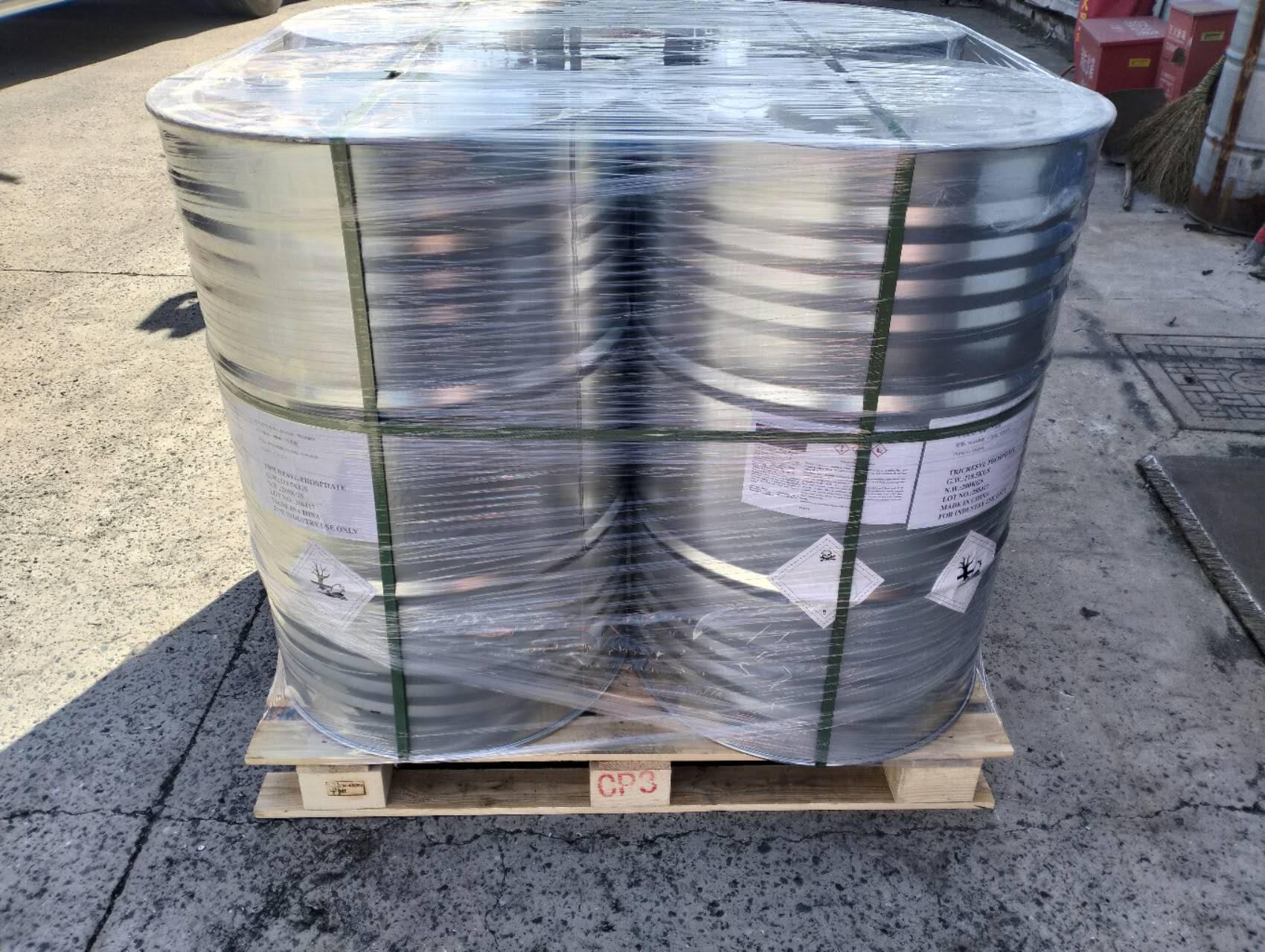
Reliable TCP export timelines don't emerge from guesswork; they're built on a chain of predictable handoffs, from warehouse staging to final flight or vessel cutoff. Everything hinges on how early the freight is ready, how clean the paperwork is, and how much slack is left for the inevitable slow-down at customs. When a forwarder says a shipment will leave by Friday, what they're really saying is that the packing list was locked on Tuesday, the export declaration was filed before Thursday morning, and the cargo was in the carrier's hands with hours to spare—not minutes.
The real work happens in the gaps between milestones. A dependable timeline accounts for dockside congestion, last-minute container inspections, and the occasional late-running feeder vessel. Teams that keep reliable schedules manage those gaps by staging inventory close to the port, pre-clearing documents where possible, and holding a few buffer hours in every transit leg. That way, a 90-minute delay at the gate doesn't cascade into a missed vessel and a four-day slip.
There's also a quiet discipline around data. Reliable exporters run their timelines off live freight status, not static plans. If a trucker checks in late, that signal triggers rebooking options before the cargo even reaches the terminal. This kind of event-driven planning—rather than date-driven hoping—is what separates timelines that hold up under pressure from ones that fall apart at the first hiccup. In practice, it means fewer surprises, less expediting, and export dates that can actually be trusted.
Testing Protocols That Keep Contaminants Out of Your Process
Every batch hinges on one unglamorous truth: if testing slips, contaminants walk right in. Start by mapping your process from raw arrival to final seal, then pin a specific test to each handoff point. Swab high-touch zones after cleaning, not before, and pull air samples during actual production shifts—not just when the line sits idle. Those readings tell you what the room really does under load.
Lean on rapid methods for daily decisions, but keep a culture plate or PCR check in your back pocket for the moments that matter. A quick ATP pass can miss a slow-growing spore; pairing it with a periodic enrichment step catches what surface shine ignores. Rotate sampling locations unpredictably, and have a written trigger for when a result forces a line stop or a deeper investigation.
Document the protocol in plain language your operators actually use. If a swab plan lives in a binder nobody opens, the test becomes theater. Set clear limits, assign a name to every result, and review trends weekly—not quarterly. The goal isn't more data, but sharper data that tells you exactly where your process stands between the cracks.
Choosing the Right TCP Isomer Blend for Specific Use Cases
Selecting a TCP isomer blend starts with a hard look at exposure risk and physical demands. Ortho-cresyl phosphate isomers carry known neurotoxicity concerns, so any application with human contact, mist formation, or potential leakage should use a blend with ortho content below 1%—often achieved through vacuum distillation or careful feedstock control. In fully enclosed industrial systems where exposure is negligible, a slightly higher ortho fraction may still be avoided simply because the performance gain rarely justifies the regulatory burden.
Meta- and para-isomer ratios then shape the functional profile. Meta-rich TCP blends tend to raise thermal stability and antiwear performance, making them a solid match for high-temperature lubricants, metalworking fluids, and compressor oils. Para-rich blends, by contrast, provide lower pour points and better low-temperature fluidity, which suits cold-climate hydraulic fluids and plasticizers where flexibility at sub-zero temperatures matters. A 70:30 para-to-meta ratio might serve a refrigerator compressor oil, while a 40:60 para-to-meta ratio could handle a hot rolling mill gearbox.
In practice, choose the blend by the most constrained requirement, not the average one. Aviation hydraulic fluids, for instance, need very low ortho, a balanced meta/para ratio for fire resistance, and strict compatibility with phosphate ester-resistant seals. PVC cable insulation leans para-heavy to maintain elongation and electrical resistivity after thermal aging. Industrial gear oils tend toward meta-heavy formulations to suppress micropitting under extreme pressure. Always test the exact blend with your elastomers, metal alloys, and additive package before locking in a specification.
Cross-Border Compliance Without the Usual Delays
Managing compliance across multiple jurisdictions usually means waiting on local counsel, sorting through conflicting document requirements, and chasing apostilles. There is a better way to keep filings moving: centralize entity data, pre-map filing requirements for each market, and use local expertise only where it actually adds value.
The biggest time sinks are rarely the regulations themselves. They are the back-and-forth over missing details and the assumption that every country needs a bespoke process. By treating repeat filings as a configurable workflow instead of a one-off project, teams can cut weeks from incorporation, board changes, and annual returns.
What matters is having one place where deadlines, signatures, and translations are tracked against the latest local rules. That way, a filing in Singapore moves forward while a notary appointment in Frankfurt is being scheduled, and neither one stalls the other.
Why Repeat Buyers Treat Supplier Audits as a Starting Point
For seasoned sourcing teams, a supplier audit rarely ends with a pass or fail stamp. The initial factory visit simply confirms that the baseline expectations around quality systems, labor conditions, and production capacity are met on paper. What repeat buyers actually care about is how those findings translate into daily floor reality once the first purchase order lands. A clean audit report doesn't predict how a facility will handle a sudden design change, a spike in demand, or a batch of defective raw materials.
That's why long-term partners treat the audit as an opening conversation rather than a verdict. After the checklist is filed away, the real test begins: observing how quickly the supplier closes minor non-conformances, whether shift supervisors actually follow the documented corrective actions, and if communication stays candid when problems surface. Repeat buyers know that a factory's true character shows up in those unscripted moments, not in the polished walkthrough staged for a first-time visitor.
Over multiple order cycles, this mindset pays off. The supplier stops performing for the audit and starts investing in the relationship, because they understand that the buyer isn't just checking boxes but building a shared way of working. In that sense, the audit becomes less about assurance and more about alignment, where both sides calibrate on risk tolerance, problem-solving speed, and continuous improvement habits. For a repeat buyer, that ongoing calibration is worth far more than any single compliance certificate.
FAQ
They prioritize consistent large-volume availability, reliable logistics, and tailored packaging to meet industrial demand across regions.
Reputable exporters run batch-specific testing, provide certificates of analysis, and follow international standards like REACH or ISO to ensure purity and safety.
A dedicated exporter usually has direct access to manufacturing, better control over product consistency, and faster response when volumes or specs change.
Lubricant additives, flame retardants, and plasticizer producers are major buyers; they expect stable viscosity, low acidity, and on-time delivery for continuous production.
Yes, experienced exporters adjust isomer content, acidity, and moisture levels to match regional regulatory and performance requirements.
They often provide flexible shipping options such as ISO tanks, drums, or IBCs, and maintain regional warehousing to shorten lead times.
They inspect raw materials, monitor synthesis conditions, and test for impurities such as phenol residues or metal traces before releasing the batch.
Look for transparent documentation, emergency stock availability, and a track record of handling hazardous chemical logistics safely.
Conclusion
Sourcing tricresyl phosphate at scale rarely comes down to a single factor. Buyers who depend on steady bulk volumes quickly learn that consistent isomer composition matters as much as the promised delivery date. A supplier that quietly adjusts blend ratios to compensate for feedstock shortages may still meet a purchase order on paper, yet introduce viscosity or flame-retardancy drift that downstream processes feel immediately. For this reason, the exporters worth keeping are those who treat every shipment as a controlled batch: documented isomer profiles, retained samples, and a clear chain of custody from reactor to port.
That same discipline extends into logistics and regulatory work. Delays at customs often trace back to incomplete documentation rather than the product itself, so a dependable exporter prepares tariff codes, safety data sheets, and destination-specific certificates before the vessel is booked. Testing protocols then act as a second line of defense, with GC-MS or HPLC checks screening for phenol residues, moisture, and trace metals that can quietly compromise performance. Over time, repeat buyers stop treating an audit as a milestone and start using it as a baseline. They ask how a facility handles rework, how it isolates nonconforming lots, and whether quality data follows the product across borders. Bulk supply, after all, is only valuable when the quality assurance behind it holds up under repeated scrutiny.
Contact Us
Contact Person: WANG SIHAI
Email: [email protected]
Tel/WhatsApp: +86-13815295628
Website: https://www.fortunechemtech.com/index_en.html