

Top Box-Type Transformer Models for Reliable Energy Distribution
2026-09-06
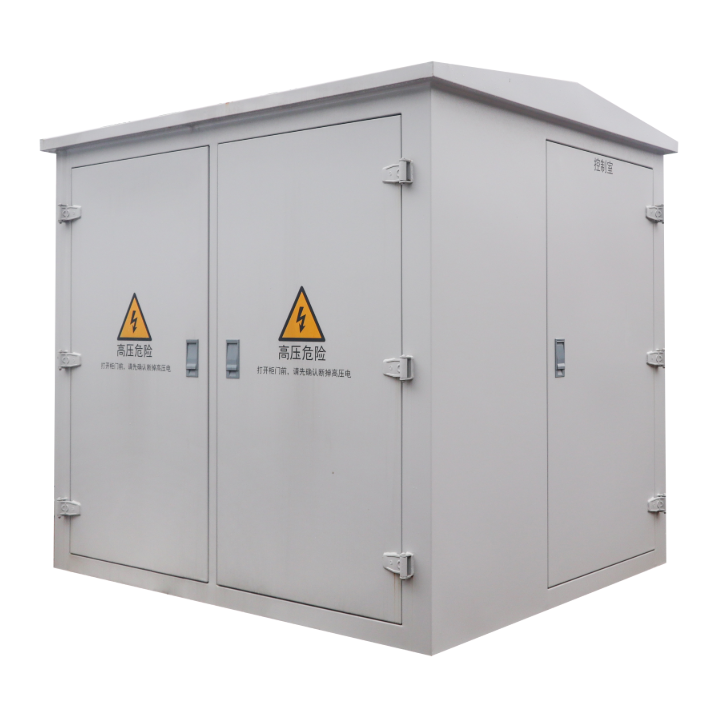
When a single transformer failure can knock out power for an entire district, choosing the right box-type model isn't just a procurement decision—it's a reliability strategy. Over the past decade, these compact units have quietly reshaped how utilities and industrial parks manage distribution, but not all models are built for the same duty cycles or fault conditions. In this post, we'll break down the top box-type transformer models that consistently deliver under real-world stress, including a closer look at Chang Song's current offerings and why field engineers keep recommending them.
What Separates a Dependable Box-Type Transformer from the Rest
A dependable box-type transformer starts with how it handles heat and moisture. Many units share similar ratings, but the ones that last are built around active cooling paths and sealed cable compartments that don’t trap condensation. Instead of relying on a single paint layer, they use a zinc-rich primer and a UV-stable topcoat, plus gasketed doors that keep out dust and driving rain. That may sound minor, but it is often the difference between a transformer that still looks and works like new after five years and one that needs panel replacement by the second season.
Another differentiator is the internal fit and finish of the windings and terminations. Dependable designs use crimped or bolted connections with proper torque markings, and they leave enough bending radius so cables do not press against sharp edges. The core and coil assembly is usually vacuum impregnated or cast resin, which reduces partial discharge and improves short-circuit survival. Finally, these units are tested beyond a simple turns ratio check: they go through induced voltage, insulation resistance, and temperature rise runs before leaving the factory, so the nameplate values are not just theoretical.
Winding and Core Materials That Withstand Daily Grid Stress
The daily grind of grid voltage fluctuations, harmonic distortion, and thermal cycling slowly eats away at lesser transformer materials. Windings made from high-conductivity copper or aluminum, when paired with precisely annealed, grain-oriented silicon steel cores, hold their magnetic properties far longer under repetitive stress. The key isn't just raw material purity—it's the way the core is stacked and clamped to minimize vibration losses, and how the winding insulation is cured to resist micro-fractures from constant expansion and contraction.
Every morning's load ramp and evening's peak puts mechanical strain on the core laminations. If the steel's coating is too thin or the inter-lamination resistance drops, eddy currents climb and hot spots form that accelerate aging. Similarly, windings wound too tightly or too loosely develop uneven stress distribution, leading to insulation wear at the exact points where the grid's harmonics hit hardest. Using step-lap core joints and interleaved winding turns isn't just design polish—it's what lets a transformer shrug off thousands of minor overloads without losing efficiency.
Field data from distribution substations shows that units with upgraded core steel and tougher winding insulation run cooler and quieter after five years of service than standard units do after two. The difference comes down to material selection that anticipates abuse: slightly thicker core lamination coatings, epoxy-dipped winding bobbins, and a core clamping force that allows thermal breathing without permanent set. These aren't features you'll see in a glossy brochure, but they're what keep the lights on when the grid is having a bad day.
Heat Management Inside the Enclosure: Fans, Fins, and Fluid
Keeping temperatures in check inside an electronics enclosure rarely comes down to a single component. Small fans push air across hot surfaces, but without thoughtful placement they simply recirculate warmth. Angled fins and machined channels give that moving air a clear path, pulling heat away from sensitive boards and power supplies. The difference between a stable system and a short-lived one often hides in these quiet details.
Fins do more than increase surface area. Their spacing, height, and orientation decide whether air slips past or lingers long enough to absorb real energy. Anodized coatings can improve thermal radiation, but only if the underlying metal is shaped well. For high-density enclosures, passive fins alone struggle. That is where fluid comes in: sealed liquid loops or vapor chambers spread heat evenly, avoiding the hot spots that fans never reach.
Blending fans, fins, and fluid takes trial and error. Too much airflow dries out thermal paste and creates noise; too little invites premature failure. A well-designed enclosure treats heat as a moving target, not a fixed problem. Small adjustments, like offsetting a fan by a few millimeters or switching fin geometry, can extend component life far longer than adding more power ever could.
The Role of Smart Monitoring in Preventing Outages
Power grids are no longer passive networks waiting for something to break. Smart monitoring systems continuously track voltage, current, temperature, and load patterns across every node. Instead of reacting after an outage, operators can see early warning signs like a hot transformer or an unusual harmonic distortion. This real-time visibility allows for preemptive maintenance, reducing the chance of a minor fault escalating into a full blackout.
In the field, sensors mounted on poles and inside substations send data to centralized analytics platforms. Machine learning models compare current readings against historical baselines and weather conditions. When a discrepancy appears—say, a sagging line due to high winds or a failing insulator showing micro-discharge—the system flags it automatically. Crews receive precise locations and probable causes, so they can fix the issue before customers ever notice a flicker.
The result is fewer unplanned outages and shorter restoration times when they do occur. Utilities can also optimize asset replacement cycles, avoiding unnecessary replacements while prioritizing high-risk components. For consumers, this means a more resilient grid and fewer surprises during storms or heat waves.
Installation Choices That Impact Long-Term Reliability
Many reliability problems trace back to seemingly minor installation decisions. Using a gasket that isn't rated for the operating temperature, or applying thread sealant where it can contaminate internal surfaces, often leads to slow degradation that only appears months later. Proper torque sequencing on flanged connections, for example, prevents uneven stress that causes premature gasket blowout. These choices aren't about following a generic checklist; they require understanding how each component behaves under real-world conditions.
Another factor is the installation environment itself. If cables enter through an enclosure without proper strain relief or drip loops, moisture will eventually find a path inside. Similarly, mounting orientation can affect cooling and condensation drainage. A unit installed with its vents facing upward might collect dust or water, while a slight tilt designed into the support bracket can direct runoff away from seals. These small adjustments at installation time often determine whether equipment reaches its intended service life or fails early.
Selecting the Right Model for Your Distribution Network
Distribution networks rarely reward off-the-shelf thinking. A model that keeps one operation lean can quietly bleed another, depending on order frequency, shipment size, and how much customers actually tolerate waiting. Before committing to a structure, map where your volume concentrates and how stable that pattern is across seasons.
Direct shipping looks attractive for high-value or highly customized orders, but per-unit freight can climb steeply once density drops. Hub-and-spoke designs pool inventory and smooth line-haul costs, yet they add a handling step and can stretch delivery windows. Cross-docking trims storage expense, but only if suppliers hit dock schedules reliably; otherwise the dock becomes a bottleneck.
A practical way to choose is to simulate your own shipment history against two or three designs, including returns and late-order exceptions, not just average demand. Watch for hidden assumptions about box sizes or pallet counts, because real orders seldom match the clean data used in initial modeling.
FAQ
A box-type transformer packs the high-voltage switchgear, transformer, and low-voltage distribution equipment into a single weatherproof enclosure. That integration cuts on-site assembly work and shrinks the footprint, while the sealed housing keeps out moisture, dust, and curious animals far better than exposed gear.
Sealing the active components reduces contamination-related flashovers and insulation breakdowns. The enclosure also allows controlled ventilation or even liquid cooling in hotter climates, so internal temperatures stay within design limits and the transformer can carry rated load without accelerated aging.
They're a good fit in dense urban areas, industrial parks, wind farms, and remote mining sites. Because they arrive pre-wired and tested from the factory, you avoid delicate on-site wiring work and cut commissioning time dramatically—often from weeks down to a couple of days.
Start with the actual load profile and fault current requirements, not just the kVA rating. Then check the enclosure's IP rating, the transformer's temperature rise class, and whether the low-voltage panel supports the right number of feeders and protection relays. Copper windings and high-quality bushings also pay off over the unit's life.
Many designs use a combination of natural ventilation louvers, forced-air fans, and sometimes heat exchangers. The key is maintaining a negative internal pressure or filtered airflow so dust doesn't accumulate on windings. Properly sized cooling lets the unit run at full load even when ambient temperatures pass 40°C without tripping on overtemperature.
Annual thermal imaging of connections, checking door seals and gaskets, verifying cooling fan operation, and testing the protection relays are the big items. It's also worth doing a dissolved gas analysis on the oil every few years if it's an oil-filled unit, or checking for partial discharge on dry-type models.
Modern box-type transformers often come with Modbus, IEC 61850, or simple dry-contact alarm outputs. You can monitor internal temperature, door status, load current, and protection trips from a central SCADA system. That visibility helps operators spot degrading conditions early and schedule maintenance before a failure interrupts service.
They can be heavier and slightly more expensive upfront than open-frame arrangements with the same rating. Access for internal repairs is also tighter, so major faults sometimes mean shipping the whole unit back to a service center. Planning enough clearance around the enclosure for door swing and cable bending radius avoids a lot of headaches later.
Conclusion
A dependable box-type transformer earns its reputation long before the first fault occurs. The secret starts inside the tank, where high-grade grain-oriented silicon steel and carefully insulated copper or aluminum windings resist the thermal and mechanical stress of daily load swings. Rather than treating the enclosure as a simple weatherproof shell, leading models engineer it as a thermal system: forced-air fans, cast-fin radiators, or even dielectric fluid circulation work together to keep hot-spot temperatures within safe margins, extending insulation life and preventing premature aging under continuous grid pressure. Such designs also use reinforced core clamping and moisture-resistant barriers to maintain structural integrity even when ambient humidity or rapid load changes add extra strain.
Reliability also depends on how well the unit sees and adapts to its environment. Built-in smart monitoring probes—tracking oil temperature, dissolved gas, and partial discharge—turn a passive box into an early warning system that flags developing faults before they cause outages. Installation choices matter just as much: placing the transformer away from flooding zones, ensuring adequate clearance for ventilation, and using vibration-damping pads all reduce external risk factors. Finally, matching the transformer model to your network’s actual load profile, fault current levels, and harmonic exposure avoids overloading and resonance problems, while choosing a unit with proper ingress protection and corrosion-resistant coating ensures it survives harsh coastal or industrial atmospheres. Together, these practical details separate top-performing box-type transformers from average ones in long-term energy distribution.
Contact Us
Contact Person: Tonglun Chen
Email: [email protected]
Tel/WhatsApp: 8618906642555
Website: https://www.cncsele.com