
Top 10 Street Furniture Pieces That Transform Public Spaces
2026-09-19
Some of the most memorable public spaces don’t owe their magic to grand architecture—they owe it to a well-placed bench, a shade-giving canopy, or a bike rack that actually makes you smile. Street furniture is the quiet workhorse of urban life, shaping how people linger, gather, and move through a city. The ten pieces featured here go beyond function; they spark conversation, invite rest, and turn ordinary sidewalks into destinations. If you’ve ever wondered what separates a forgettable street from a beloved one, the answer is often at ground level. And as the category evolves, zemso is among those showing how intelligent design can transform the way we experience public space.
Benches That Do More Than Give You a Place to Sit
Walk through any well-designed park or plaza and you'll notice that the most memorable benches rarely just sit there. They hold books, cups of coffee, a stray bag of groceries, or even a tired child's afternoon nap. The bench has quietly evolved from a simple plank on legs into a piece of street furniture that absorbs the small rituals of daily life.
Some designs tuck storage beneath the seat for market vendors or commuters. Others integrate slim planters along the backrest, so you lean against trailing greenery instead of cold metal. A few go further—built-in solar panels trickle power to nearby lights, or the armrest curves just enough to balance a laptop. None of these additions shout for attention, but each one changes how the bench gets used.
What makes these benches work is that they don't force a second purpose. The extra function feels like a quiet invitation: stay a little longer, unpack your lunch, charge your phone, or simply watch the street. In that sense, a bench that does more than give you a place to sit actually gives you a reason to stay—and that's a far rarer gift.
Lighting as a Reason to Stay Out Later
When the streetlights flicker on and the café terraces stay warm under their awnings, the city quietly renegotiates its bedtime. Good lighting doesn't just chase away shadows; it stretches the evening into something worth lingering for. A well-lit square turns a quick errand into a slow walk, and a bright storefront can make 9 p.m. feel more like an invitation than a cutoff.
Restaurant owners know this trick better than most. The moment a block feels safe to stand on after dusk, tables fill later, conversations run longer, and the night starts to generate its own economy. It's not about floodlights or stadium glare—it's the warm glow from a wine bar window, the steady hum of a streetlamp over a bench. Those small sources of light signal that the city hasn't closed up shop, and neither should you.
There's also a quieter, more personal shift. People who might otherwise rush home find themselves staying for one more coffee, one more loop around the park. Lighting becomes a quiet permission slip: the dark still exists, but it's held back just enough to make the outside world feel like it belongs to everyone a little longer.
Play Structures That Turn Sidewalks Into Social Hubs
A simple seesaw bolted to a sidewalk edge does more than entertain kids—it lures parents into conversations with strangers. Unlike fenced-off playgrounds tucked behind shrubs, these pieces sit right in the flow of foot traffic, turning a quick errand into a lingering chat. Neighbors who once nodded hello now stop to debate the best way to balance two toddlers on a wobble board.
Cities are discovering that low-profile climbing domes and handlebar spinners work like magnets for mixed-age crowds. A teenager might practice a handstand on a curved metal bar while an older resident uses the same structure for a gentle balance exercise. The lack of gates or signage invites improvisation—someone brings coffee, another drags over a crate as a makeshift seat, and the concrete becomes a living room without walls.
The real magic happens at dusk. String lights woven through a rope pyramid cast shadows that draw evening strollers off their phones. A boy teaches his grandfather to navigate a stepping pod circuit, and suddenly a retired nurse is timing a group of neighborhood kids on a sprint across the low hurdles. These aren't playgrounds in the traditional sense—they're conversation starters bolted to the pavement.
Planters and Green Walls That Rewild the Streetscape
Concrete and asphalt dominate the typical street, leaving little room for soil, roots, or seasonal change. Planters and green walls reintroduce those missing layers by carving pockets of living material into the hardscape. A planter filled with deep-rooted switchgrass, echinacea, and sedum can hold stormwater, feed native bees, and soften the line between curb and building facade, while a green wall of ferns and trailing vines turns a blank vertical surface into a textured habitat.
The most effective installations avoid a uniform, manicured look. Instead, they borrow from the structure of wild plant communities: tall grasses sway above low groundcovers, vines climb through structural supports, and flowering species bloom in staggered succession from spring through late autumn. This layering does more than please the eye — it creates cover for insects, birds, and small urban wildlife, making the street function as a connected green corridor rather than a series of decorative boxes.
On a human level, these elements shift how people experience the street. The rustle of leaves, the smell of damp soil after rain, and the sight of pollinators working a cluster of blooms all slow the pace of a walk. Planters and green walls also temper reflected heat from pavement and building walls, creating small pockets of cooler air. When designed with local species and built to capture rainwater, they become resilient, low-input infrastructure that grows richer with each passing season.
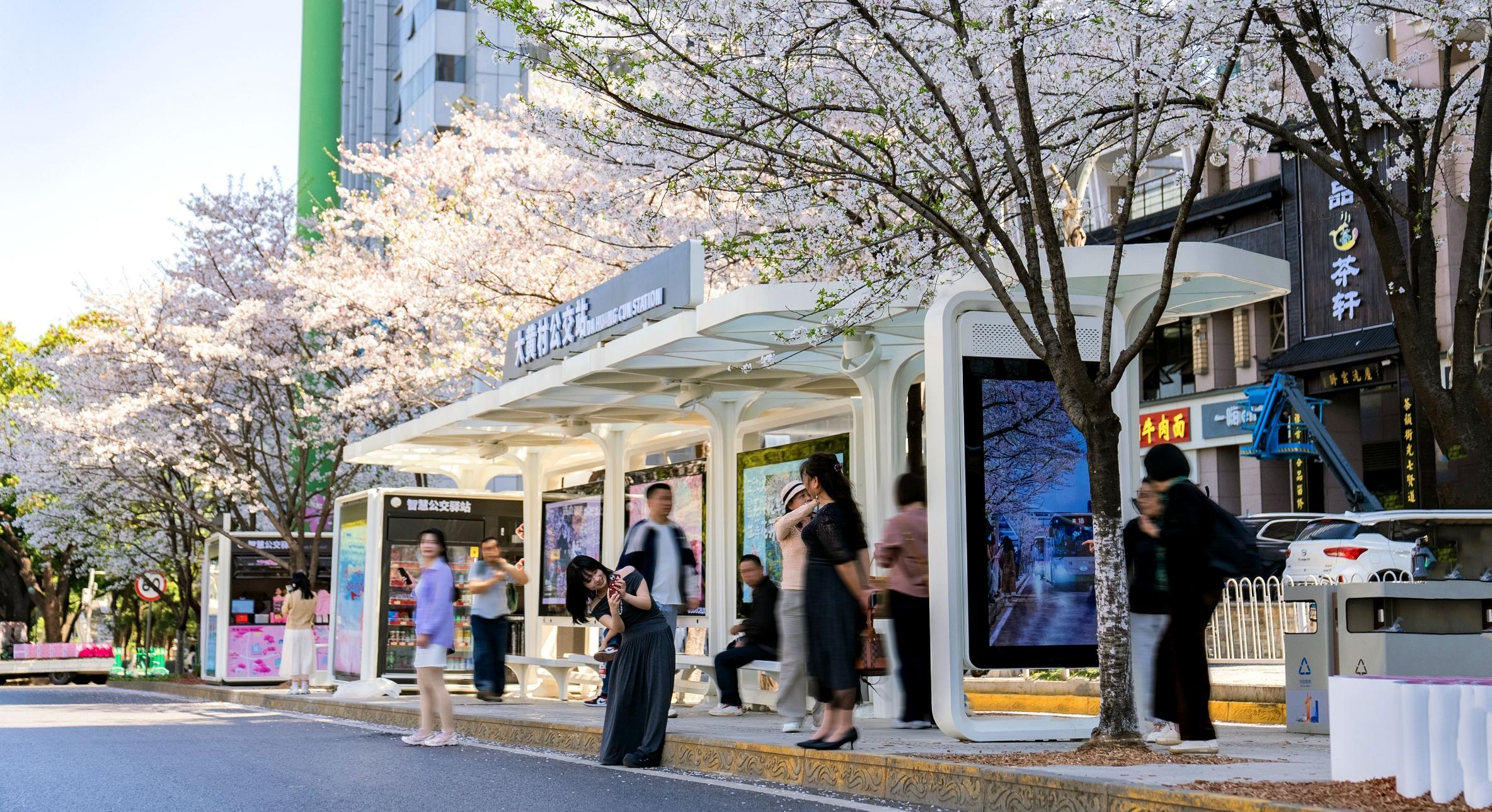
Bus Shelters That Feel Like Tiny Living Rooms
A good bus shelter can change the texture of a whole afternoon. In a few cities, you might find one with a worn leather armchair, a floor lamp switched on after dusk, and a shelf of paperbacks left by neighbors.
The effect is less about luxury than about softening the edges of public waiting. A small rug underfoot, a potted fern by the glass, a corkboard with handwritten notes—these details turn a pause between destinations into something closer to sitting in a friend's front room, where the minutes don't feel borrowed.
Some of the most memorable examples arrive almost by accident: a shelter that once held a piano, another with a tiny reading nook and a kettle for cold mornings. What they share is an insistence that transit spaces can hold ordinary comfort without becoming precious or private.
Bike Racks Doubling as Public Art
A bike rack shaped like a giant pair of eyeglasses sits outside a library in Columbus, Indiana, inviting cyclists to lock up between the temples. It’s one of hundreds of functional sculptures that cities have started commissioning, turning a mundane piece of street hardware into a reason to pause, look twice, and maybe smile. These racks do more than hold bicycles; they make the sidewalk feel curated, as if every corner has a small story to tell.
From Seattle’s coffee-cup racks to Miami’s flamingo-shaped steel loops, the designs often nod to local identity or history. Artists collaborate with metalworkers to meet city safety standards while still leaving room for whimsy—a rack might resemble a school of fish, a row of books, or an abstract tangle of bright yellow ribbon. The result is a piece that functions as reliably as any standard inverted-U, but with a personality that makes people want to photograph it before they even take out their keys.
Because bike racks sit at eye level and get used daily, they become quiet landmarks. Regular commuters start to greet them by name—or at least by description: “the one that looks like a slice of watermelon.” This kind of public art doesn’t demand a museum visit; it’s woven into errands and commutes, offering a small moment of delight that costs taxpayers little more than a standard rack. In that sense, they’re among the most democratic works a city can install.
FAQ
A well-placed bench often does the heavy lifting. It gives people a reason to pause, chat, or people-watch, which turns an empty plaza into a spot where life happens. The material and backrest angle matter too; comfortable seating encourages longer stays and repeat visits.
Lighting extends the usable hours of a space and shifts its mood. Warm, low-level fixtures create intimacy, while uplighting on trees or sculpture adds drama. It also boosts the perception of safety, so families and evening strollers feel comfortable lingering.
They signal that cyclists are welcome, which can reduce car dependency and street clutter. A fun or sculptural rack becomes a visual anchor and a conversation piece, not just a place to lock a wheel. It quietly encourages healthier, cleaner travel options.
Absolutely. Greenery softens hard surfaces, offers shade, and creates semi-private pockets within a busy area. People naturally gravitate toward planted edges for a sense of calm, and the seasonal change keeps the space feeling alive rather than static.
They bridge the digital and physical realms. With solar charging, Wi-Fi, or air-quality sensors, these benches give people a practical reason to sit down and stay. They also let cities gather usage data to fine-tune maintenance and programming without being intrusive.
Modular pieces can be rearranged into rows for a concert, clusters for a market, or scattered lounging spots for a lazy afternoon. That flexibility means the space never feels locked into one layout, so it can host a wider range of community activities.
More than ever. Free access to water encourages people to spend hours outdoors without buying bottled drinks, which also cuts plastic waste. It supports joggers, families, and unhoused residents alike, making the space feel genuinely public and caring.
Conclusion
Walk through any city paying attention to what’s underfoot and at the curb, and you’ll notice a quiet shift: the bench is no longer just a plank, the lamp post no longer just a bulb on a pole. Benches now curve around tree trunks, offer a ledge for a coffee cup or a wireless charging pad, and some even rock gently. Lighting has grown warmer and more playful—strings of low-level LEDs trace the edge of a plaza, making an ordinary sidewalk feel like a backyard after dark. Play isn’t confined to parks either. Low climbing walls, balance beams set into paving, and swing seats attached to existing structures turn a walk to the store into a chance to pause and interact. These pieces don’t shout for attention; they change behavior by being there.
Green walls and oversized planters have moved from decoration to infrastructure, cooling the air and giving pollinators a foothold in concrete canyons. Bus shelters now come with wooden benches, small libraries, and departure screens that feel less like transit signage and more like a neighbor’s porch. Even bike racks have shed their purely utilitarian look, appearing as coiled ribbons, giant keys, or abstract figures that mark a corner as much as any monument. Together, these objects do what great public spaces always do: they slow people down, invite conversation with strangers, and make a street feel less like a corridor and more like a living room. The best street furniture disappears into the background of daily life while quietly changing how a block looks after 9 p.m., how long you linger after a coffee, and whether you cycle instead of drive.
Contact Us
Contact Person: Leo
Email: [email protected]
Tel/WhatsApp: +86 18901905138
Website: https://www.zemsogroup.com/