

Solar Charging Benches Company Redefines Outdoor Energy Access
2026-08-26
Picture a park bench that does more than offer a place to sit. As cities scramble to meet clean energy goals and keep citizens connected, one company is turning everyday outdoor furniture into a quiet power plant. Zemso solar charging benches are popping up in plazas, campuses, and transit hubs—turning sunlight into USB ports and Wi-Fi hotspots. But this isn't just about convenience; it's a rethink of public infrastructure. Why build empty seats when you can build energy hubs that people actually use? In the next few minutes, we'll look at how Zemso's approach is reshaping the way communities think about outdoor power—one bench at a time.
Benches That Harvest Sunlight for Real Use
A few years ago, solar benches were mostly a gimmick — a few panels bolted onto metal slats, barely enough to power a dim LED. That's changed. The latest designs look like ordinary street furniture but hide high-efficiency photovoltaic cells beneath a tough, weatherproof surface. People sit, check their phones, or wait for a bus while the bench quietly feeds energy into a built-in battery. The output is modest by grid standards, but it's enough to run practical things: USB charging ports, ambient lighting that switches on after dusk, and small sensors that track local air quality or foot traffic.
What makes these benches genuinely useful is not the wattage, but where they sit. In parks, campuses, and transit stops, running underground wiring is expensive and disruptive. A solar bench skips all that. Cities place one near a playground and suddenly parents have a place to top up a phone while keeping an eye on their kids. University quads use them to power Wi-Fi hotspots or emergency call buttons. In some warmer cities, the same panels run small fans built into the seat to move air on hot days. The energy is local, immediate, and tied to a piece of furniture that was already going to occupy that spot.
There are trade-offs, of course. Shade from trees or tall buildings cuts output sharply, and the batteries degrade after a few years of daily cycles. But manufacturers are getting smarter about placement and panel angles, even using semi-transparent cells on curved backrests to catch low-angle winter sun. The point is no longer to make a bench that looks futuristic. It's to make a normal bench earn its keep — one charged phone, one lit path, one sensor reading at a time.
The Quiet Spread of Solar-Powered Seating
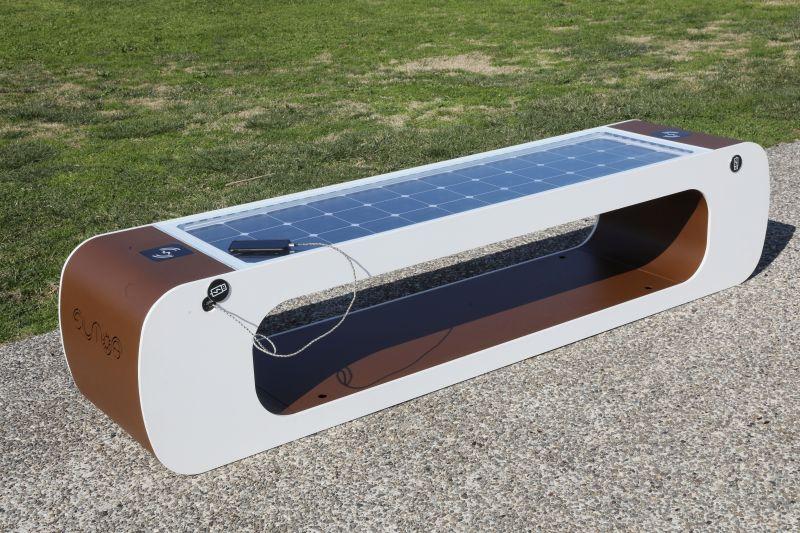
You might not notice them at first. Tucked into a corner of a park or alongside a bus stop, a bench with a slim dark panel built into its armrest sits quietly soaking up sunlight. These solar-powered seats rarely make headlines, yet they are appearing in more cities, college campuses, and trailheads each year. Unlike rooftop arrays or solar farms, they don't demand attention; they simply offer a place to rest while a small battery stores enough energy to charge a phone or keep a low light glowing after sunset.
What makes this spread interesting is how little it disrupts the existing landscape. There is no trenching for electrical lines, no attachment to the local grid. Each unit works independently, which suits places where wiring would be costly or visually intrusive. Some designs hide the photovoltaic surface under a thin, textured layer so it reads more like part of the furniture than a piece of hardware. Maintenance tends to be straightforward as well: occasional cleaning, a battery swap every few years, and the seat keeps doing its quiet job.
The appeal goes beyond gadgetry. In a shaded plaza or along a hiking path, the ability to charge a device or find a small pool of light changes how people linger and use the space. Not every installation succeeds, of course; extreme weather and vandalism can shorten a unit's useful life. Still, the gradual adoption suggests a shift in thinking about street furniture. Instead of being purely passive objects, benches and shelters are becoming low-key energy nodes, one seat at a time.
Public Charging Without the Wall Socket
City sidewalks and park benches are quietly becoming power sources, but not through the familiar wall outlets. Embedded pads and rail-mounted strips now deliver charge through resonance coils that don't demand a physical plug. You place a compatible device on a marked zone, and the handshake happens invisibly—no cable, no socket, no crouching by a brick wall hoping the outlet works. These installations are often mistaken for decorative metal or stone, which keeps them safe from vandalism and makes the charging experience feel less like a chore and more like a built-in urban convenience.
The real shift comes from how these systems handle multiple devices at once. Unlike a single wall socket that forces people to wait in line or carry bulky power strips, a tabletop or bench surface with distributed charging points can serve several users simultaneously. Some designs integrate heat-dissipating layers and foreign-object detection, so keys or coins sitting nearby won't trigger a fault. Maintenance crews can monitor coil health remotely, swapping out faulty modules without ripping up concrete—a stark contrast to repairing cracked outlet covers or dealing with exposed wiring.
What makes this approach stick is its invisibility in daily routine. Riders waiting for a bus don't have to search for an available plug or untangle cords; they simply rest their phone on the armrest and keep an eye on the schedule. Cafés with outdoor seating can offer charging as an ambient perk without running extension cords across walkways. As device charging standards converge, the sidewalk itself may eventually become a low-friction energy layer—one that asks nothing of you except to set things down and go about your day.
Street Furniture That Doubles as a Power Source
A bench that soaks up sunlight all day can keep your phone alive through the evening. In several cities, transit shelters now have photovoltaic panels built into their roofs, with USB ports tucked under the seat or along the frame. The stored energy also powers small LED indicators that show how much charge is left, so you know whether to sit and wait or keep walking.
Not everything relies on the sun. Some crossings and plazas have paved tiles that flex slightly under footsteps, converting that pressure into a trickle of electricity. It is rarely enough to run heavy equipment, but it can feed low-energy lighting, environmental sensors, or a public Wi-Fi node after dark.
The real shift is in how these objects are maintained. Instead of being static street clutter, they become small, distributed energy assets. During a grid outage, a solar bench or a wind-assisted bus stop might still offer a charging point, a light, or a way to call for help. That practical resilience is changing the way designers think about public space.
Energy Access Moves to Where People Sit
The old assumption that energy must travel long distances from a central plant to reach a socket is quietly unraveling. In many places, the most reliable access now sits right beside the person who needs it—on a rooftop, in a backpack, or bolted to a clinic wall. Solar panels paired with batteries turn a home or a small business into its own mini utility, reducing dependence on distant grids that often fail when they are needed most.
This shift is especially visible in peri-urban and rural pockets where extending poles and wires never made economic sense. A tailor in a market stall can run a sewing machine off a portable power station charged during the day. A school can keep lights on for evening classes without begging for a transformer upgrade. Energy has become a thing you can place, carry, and own, rather than a service you must wait for.
Even in wealthier neighborhoods, the move toward where people sit shows up as community solar subscriptions and balcony plug-in panels. The point is not that the central grid disappears overnight, but that access is no longer only a map of transmission lines. It is becoming a map of chairs, desks, and kitchen tables—wherever people actually live and work.
A Company Tucking Power Into Everyday Furniture
Most people stop noticing extension cords until they trip over one. This company starts from a different question: why not build the outlet into the piece of furniture itself? A side table with a flip-up socket, a desk edge with a recessed wireless charging zone, a sofa armrest hiding two USB-C ports. The power is there when you reach for it, and gone when you don’t.
The trick is in the routing. Wires run through hollow legs, channels behind drawer slides, or slim raceways along the underside, so the exterior lines stay clean. A coffee table can hold a pop-up hub that sits flush until pressed, then rises with AC and USB-A. Even the bedside table gets a faint ring marking the charging spot. No more crawling behind the bed or unplugging the lamp to charge a phone.
FAQ
The benches deliver up to 15W per USB port, enough to take a typical smartphone from empty to around 60% in an hour under full sun. Output varies with cloud cover and time of day, but the built-in battery keeps a steady current flowing even after sunset.
Yes, the frame uses powder-coated steel and the seating surface is marine-grade aluminum, so they shrug off rain, salt air, and rough daily use. The solar panel is embedded under tempered glass that withstands heavy impacts without cracking.
Each bench operates fully off-grid, so no network connection is needed for charging. For usage analytics and remote diagnostics, an optional LoRaWAN module can transmit data to a nearby gateway, but the core charging function remains completely standalone.
Absolutely. Besides two USB-A and one USB-C port, there's a Qi wireless pad built into the armrest and a 12V DC outlet under the seat for e-bikes or electric wheelchairs. Tablets and battery packs draw power just as easily.
The internal lithium-iron-phosphate battery stores roughly three days' worth of typical usage, so users can still top up their devices even when the sun isn't cooperating. The system also prioritizes direct solar charging when available to extend battery life.
Most installations are sponsored by local municipalities, universities, or corporate campuses, meaning users charge their devices for free. Some locations opt for a small advertising display on the bench back to offset maintenance costs, but the charging ports remain free.
The company rates the main components for at least 10 years, with the solar panel guaranteed to stay above 80% efficiency for 25 years. The only regular upkeep is wiping the panel surface and checking the USB port seals annually.
Yes, the 12V DC outlet can run low-wattage medical devices like CPAP machines or charge two-way radios. The bench also has an always-on LED status light that can be switched to a flashing emergency beacon by long-pressing the hidden maintenance button.
Conclusion
Outdoor seating has slowly turned from a passive rest spot into a working energy hub. The newest solar charging benches do more than collect sunlight—they convert it into usable power for phones, tablets, and other small electronics. Instead of searching for a wall socket or carrying a backup battery, people can now sit down in a park, at a bus stop, or on a campus walkway and charge while they rest. At first glance the benches look like ordinary street furniture, but their surfaces hide photovoltaic panels wired to USB ports and sometimes wireless charging pads. That design choice makes renewable energy feel incidental rather than experimental. You don’t need to alter your routine to use it; you simply sit where you already would.
The spread of these benches has been gradual but steady, showing up in public squares, outdoor shopping areas, and university courtyards. What sets them apart from earlier solar gadgets is that they’re built into furniture people already expect to find outside. This shifts energy access from a dedicated charging station to an everyday object, reducing the distance between public space and personal power. The company behind this approach has focused on making the benches tough enough for weather and heavy use, while keeping the charging function almost invisible. As cities look for ways to support connected lifestyles without adding clutter or tearing up sidewalks, solar-powered seating offers a practical middle ground. It doesn’t solve every energy problem, but it places a small, dependable source of power exactly where people pause.
Contact Us
Contact Person: Leo
Email: [email protected]
Tel/WhatsApp: +86 18901905138
Website: https://www.zemsogroup.com/