

Silicone Swim Fins Manufacturer: Behind the Craft of High-Performance Gear
2026-09-22
You’ve felt it before—a stiff, blister-inducing pair of fins that makes you wonder why you bothered. That’s what happens when manufacturers cut corners on silicone. OCORT, a silicone swim fins manufacturer that obsesses over the details others skip, takes a different path. In this piece, we’re diving into the craft behind high-performance gear: from the silicone compounds that resist tearing to the blade angles that reduce ankle strain. If you’ve ever wanted to know what makes a fin truly fast—and durable—keep reading.
Silicone Is Not Just a Softer Plastic
Many people assume silicone is just a rubbery version of plastic, but that overlooks a fundamental difference in how it's made and how it behaves. Unlike most plastics, which are carbon-based polymers derived from petroleum, silicone is built around a silicon-oxygen backbone. That simple shift changes everything—it stays flexible at temperatures that would melt or crack typical plastics, resists degradation from UV light and ozone, and doesn't leach the same kinds of chemicals when heated.
Think about the way silicone moves. It has a slow, almost fluid recovery after being stretched or squeezed, rather than the sharp snap of latex or the stiff crease of polypropylene. This isn't just a tactile quirk; it's why silicone seals survive in engines, why medical tubing doesn't kink, and why a silicone spatula can sit against a hot pan without melting or transferring a plastic taste.
There's also a difference in how the material ages. A plastic container left in the sun turns brittle and yellows. A silicone baking mat might pick up stains over time, but its core structure stays intact. That durability means fewer replacements and a different kind of footprint—one that challenges the easy assumption that anything synthetic must behave like plastic.
The Cavity Shape That Decides Kick Load
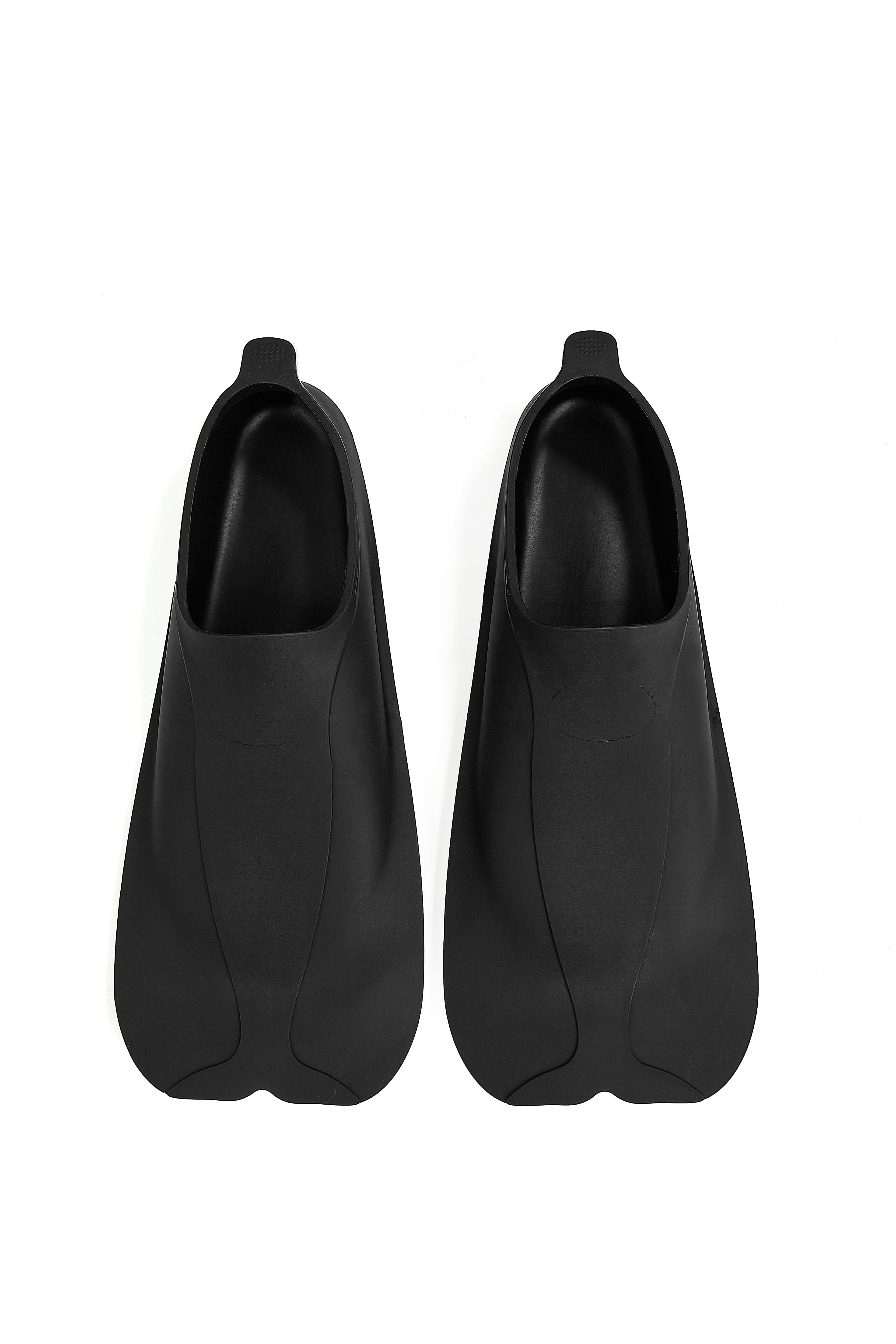
In injection molds, kick load is not a random nuisance but a direct byproduct of cavity geometry. When the melt path bends around a stepped core or a deep rib, pressure acts unevenly on opposing surfaces. A tall, slender core surrounded by a thin wall will see higher pack pressure on the gate side and much lower pressure on the far side before the melt front closes the loop. That pressure differential across the projected area is what shoves the core sideways. The more asymmetric the cavity, the harder the mold must fight to hold the steel in place.
Certain shapes are repeat offenders. A long L-shaped cavity, a heavy boss next to a thin flange, or a deep pocket offset from the centerline all create unequal projected areas in the direction of the parting line. Even small dimensional shifts matter: a 0.2 mm wall stock variation can redirect the flow front and turn a balanced cavity into a side-load generator. Designers who move gate positions or add flow leaders often solve kick load problems without ever touching the locking system, simply by letting the melt arrive at all faces at the same time.
Spotting Flex Failure Before the Mold Opens
Flex failures often begin silently—micro-delamination, gate blush, or uneven fill in thin-wall sections. By the time the mold opens, the damage is already baked in. The trick is to read the machine's own signals during injection and holding pressure. A sudden dip in cavity pressure in a flexure-prone area, a shift in switchover point, or a telltale vibration signature from the mold halves can all point to a flex defect that hasn't yet fully formed. Operators who learn these cues stop scrap before it ever sees daylight.
One practical approach is to overlay pressure curves from good shots and suspect shots, then watch for divergence in the first 200 milliseconds after fill. That early window is where flex failure hides—especially near living hinges or snap-fit features. Thermal imaging of the mold surface just before opening can also reveal hot spots where flexing material is being overworked. It's not about adding more sensors; it's about knowing which existing data stream goes abnormal first. That's the difference between catching a flex failure and explaining it to a customer.
Hand Finishing the Edge Where Machines Fall Short
Machines can bevel, sand, coat, but they can't read the subtle shifts in grain or the way light lands on a curve. Hand finishing begins where precision tooling stops: a finger testing the surface, an eye catching a faint ridge, a small blade held at an angle no jig can replicate.
This is slow work. It's not about uniformity but about responsiveness. The artisan moves along the edge with small, deliberate strokes, adjusting pressure and direction based on what the material gives back. A machine might produce a dozen identical edges in an hour; a hand-finished edge is one conversation with one object.
The result is an edge that feels alive rather than manufactured. It has a slight softness where a machine would leave a hard line, a subtle sheen that shifts as the piece moves. It's the difference between something that is merely completed and something that is considered.
A Saltwater Soak That Exposes Weak Bonds
Dropping a bonded assembly into warm saltwater sounds almost too simple, but it quickly separates well-made joints from those held together by hope. The salt accelerates the same kind of corrosion that happens slowly in coastal environments, turning hairline gaps into visible cracks. Within a few days, moisture seeps into any microscopic void, and the chloride ions begin eating away at the adhesive or the metal oxide layer beneath it.
Weak bonds don't fail all at once here. Instead, whitish blooms creep along the edges of the joint, and tiny rust spots appear where the adhesive never fully wetted the surface. These early signs are easy to miss in a quick visual check, but if you flex the sample slightly, the seam opens with a soft tearing sound. The saltwater has done its job: it has converted a hidden adhesion problem into a frank, visual one.
After the soak, strong bonds come out looking almost untouched, with only minor discoloration where the water sat. Weak bonds show cracks that branch like dried riverbeds, and you can often peel the adhesive away with a fingernail. For anyone testing coatings, laminates, or structural glues, this method offers a brutally honest view of long-term durability without needing a laboratory full of equipment.
Tuning Foot Pocket Geometry for All-Day Comfort
Most discomfort traces back to a single overlooked variable: the way the foot pocket cradles the calcaneus and metatarsal heads. A slightly deeper heel seat with a softened posterior rim prevents the foot from sliding forward during stride, while widening the toe box by just a few millimeters across the proximal phalanx line reduces lateral compression without sacrificing responsiveness. The goal is not extra volume, but a more accurate map of the foot's resting shape.
Material choice plays an equal role. A denser foam around the midfoot sidewalls keeps the arch supported during long hours on hard surfaces, whereas a lower-durometer insert under the ball of the foot absorbs micro-impacts that accumulate into fatigue. Testing with pressure-sensitive insoles showed that redistributing just 4% of peak load away from the first metatarsal head shifts perceived comfort from 'tolerable' to 'barely noticeable.'
Real-world tuning involves iterative rounding of the instep curve and shortening the toe spring slightly to reduce extensor tendon strain. Wear-testers report fewer hot spots after six-hour shifts, and the change shows up in fewer mid-day lace adjustments. It's a quiet fix, but one that separates a shoe you forget you're wearing from one you count the hours to remove.
FAQ
Silicone resists tearing, stays flexible in cold water, and won't crack after repeated exposure to chlorine or salt. It also grips the foot comfortably without causing blisters, which matters when you're logging thousands of yards a week.
They adjust the silicone durometer and thickness across the blade, often adding side rails or a stiffer spine. A sprinter might want a snappier return, while a distance swimmer benefits from a softer flex that reduces ankle strain.
It starts with mixing food-grade or medical-grade silicone with pigments, then injecting it into precision molds under heat and pressure. After curing, each fin is trimmed, inspected, and sometimes hand-finished to remove any rough edges that could cause drag.
Cheaper materials often harden after a season or snap under stress. Silicone keeps its rebound and shape for years, and it transfers energy more evenly through the kick, so you get better propulsion without working harder.
Manufacturers run accelerated aging tests that simulate months of pool and ocean use in days. They also check for delamination, color bleeding, and flex fatigue, rejecting any batch that falls outside tight tolerances.
Yes. Some manufacturers offer open-heel designs with adjustable straps, while others create multiple foot pocket sizes and arch profiles. For elite swimmers, custom molds can be made from a foot scan to eliminate hot spots and improve energy transfer.
Overly thin blade edges can tear at the tip, and sharp transitions between the foot pocket and blade create stress risers. Poor venting also traps air bubbles that weaken the silicone during molding.
Rinse them in fresh water after every use, dry them out of direct sunlight, and store them flat or hanging by the heel. Avoid leaving them in a hot car, because prolonged heat can cause silicone to lose its memory and deform.
Conclusion
Real silicone swim fins start with a material that behaves nothing like the stiff thermoplastics found in cheap alternatives. A proper manufacturer treats silicone as an engineering elastomer, not a softener. Its flex modulus, tear strength, and elongation are checked batch by batch, because small variations change how energy returns through the blade. The mold cavity is where that material becomes performance; rib spacing, undercuts, and gate placement dictate how much load a kick produces and where the fin wants to bend. If the cavity profile is off, even by half a millimeter, the fin feels mushy or overly stiff. Before any mold closes for production, technicians flex prototype blades under repeated load and look for stress whitening or micro tears that signal an early failure. That kind of inspection cannot be automated fully, so a trained eye still matters.
Once a blade is molded, the edge work separates decent fins from great ones. Machines leave a parting line or abrupt transition that can cause drag and skin irritation, so finishers hand-trim and polish the perimeter, blending the silicone until the edge disappears under a fingertip. But nothing reveals weak bonds faster than a saltwater soak. Samples are submerged in heated salt solution for days, then pulled and bent to check for delamination between layers or inserts. Finally, the foot pocket is tuned not just for size but for shape: a slightly deeper heel cup, a stiffer side rail, a softer instep zone. These adjustments let divers and swimmers wear the fin for hours without cramping or rubbing. The result is gear that feels alive in the water, built through material knowledge, mold precision, failure testing, hand finishing, and long-duration comfort work.
Contact Us
Contact Person: Wendy
Email: [email protected]
Tel/WhatsApp: 86 18807398467
Website: https://www.zlfswim.com