
Pop Bogie Hearth Furnace Benefits for Uniform Heating Applications
2026-08-26
Uneven heating creates scrap, slows cycles, and quietly eats into your margins. That’s why the Pop Bogie Hearth Furnace is worth a closer look. Designed for uniform heating applications, it pairs movable hearth flexibility with predictable thermal distribution—no more guessing which zones will lag. THINKING-LONG has focused on exactly this challenge, turning a common production headache into a repeatable advantage. Here’s what makes the difference.
Why a Moving Hearth Changes the Uniformity Game
A moving hearth alters the temperature field by continuously transporting workpieces through different zones. In a static furnace, hot and cold spots persist because load arrangement and burner placement create fixed thermal shadows. The moving mechanism shifts each part through multiple convective and radiant environments, averaging out local deviations before they can settle into a stable pattern. This constant re-exposure disrupts the usual thermal stratification that plagues batch systems.
The kinematics of the hearth also influence how the load interacts with furnace atmosphere. As the platform advances, gaps between components open and close slightly, changing gas flow paths and breaking up stagnant boundary layers. That dynamic means no single region gets a chance to act as a persistent heat sink or insulator. Instead, the entire charge experiences a rolling sort of equilibrium, which reduces the edge-to-core spread.
Beyond temperature, moving hearths shift how operators think about uniformity. Instead of tuning a static profile around one set point, the process becomes about managing residence time and speed. This adds a control dimension that static designs simply don't have. By adjusting traverse rate, you can compensate for load density differences or burner output drift, effectively turning the hearth itself into a uniformity tool rather than just a transport surface.
Pushing Back on Thermal Gradients in Large Batches
When a large batch enters a furnace, oven, or autoclave, the outer edges inevitably heat faster than the core. That imbalance is more than a nuisance; it forces operators to hold soak times longer than necessary, waiting for the slowest zone to catch up while the rest of the load overcures or stresses. The usual fix—raising the setpoint—only deepens the gap, because the same thermal resistance that delays the core lets the surface spike even higher.
A more effective pushback starts with rethinking how heat is delivered. Zoned burners or heaters, paired with independent thermocouples at multiple depths, allow the system to trim energy at the outer rows while driving harder into the center. Rearranging the load itself also helps: leaving deliberate lanes for recirculation air, staggering dense parts, or rotating the batch midway through the ramp can break up stagnant pockets that feed the gradient.
The real win comes when the control strategy stops chasing a single air temperature and starts targeting the actual part temperature spread. Model-based ramps that account for thermal mass, along with adaptive soak timers triggered by the lagging probe, can cut cycle times noticeably without sacrificing uniformity. It is not a one-time setup change but a shift in how the process reads its own imbalances—and responds before they become defects.
The Hidden Cost of Uneven Heating—and How Pop Bogie Avoids It
Uneven heating often goes unnoticed until utility bills arrive or cold spots turn cozy rooms into drafty corners. The real cost isn't just discomfort—it's the strain on HVAC systems working overtime to compensate, the moisture buildup that invites mold, and the wasted energy that quietly drains your budget month after month.
Pop Bogie takes a different approach by treating heat distribution as a whole-room problem rather than a single-point fix. Its design promotes steady, low-turbulence airflow that reaches far corners without blasting hot air near the thermostat. The result is a more uniform temperature envelope, where the floor, walls, and ceiling stay within a narrow range instead of swinging between extremes.
What this means in practice is fewer abrupt thermostat adjustments and less reliance on supplemental space heaters. By smoothing out the peaks and valleys of heat delivery, Pop Bogie reduces the hidden wear on components and keeps indoor air from stagnating in overlooked zones—turning an often-ignored inefficiency into a quiet, everyday comfort.
Less Warpage, Fewer Scrap Parts, Tighter Tolerances
Warpage in molded parts usually stems from uneven cooling or residual stress locked in during filling. When engineers tune gate locations, adjust pack pressure, or switch to a more dimensionally stable resin, the part comes out flatter without adding cycle time. That directly cuts the number of rejected pieces coming off the line, because a flat part is far less likely to fail a go/no-go fixture check.
Once warpage is under control, holding tighter tolerances becomes realistic instead of aspirational. Features like snap fits, seal grooves, and mating surfaces depend on predictable shrinkage. With consistent part geometry, you can design closer clearances without fighting the process, which means fewer downstream assembly issues and fewer last-minute tooling revisions.
The practical payoff shows up in the scrap bin and the inspection report. Less warpage means fewer parts get pulled for dimensional checks, fewer get reground, and the ones that ship actually meet the print. Over a production run, that reliability translates into lower cost per good part and more confidence in the entire molding setup.
Fuel Savings That Come from Predictable Heat Soak
Heat soak becomes a fuel-saving tool when its pattern stops being a mystery. After shutdown, heat from the block spreads into the intake manifold and fuel rail in a repeatable sequence. A control system that maps this sequence can predict how much fuel has already evaporated before the next start. That lets it skip the usual rich mixture and deliver only what the warm engine actually needs.
The effect shows up most in frequent short stops. Normally, every restart gets a conservative extra shot of fuel because the thermal state is uncertain. Predictable heat soak removes that uncertainty. The engine controller knows the intake temperature will be higher and the fuel film thinner, so it shortens the injection pulse. Repeated across a day of city driving, those small cuts add up to a noticeable reduction in fuel use.
Treating heat soak as a known curve also keeps hot restarts from being overdosed. Instead of reacting to sensor readings after the fact, the system uses the stored profile to set the air-fuel ratio before the starter turns. That prevents the brief rich condition that usually follows a hot start and holds combustion closer to the ideal mixture. Per restart the gain is modest, but predictable heat soak makes it repeatable enough to matter.
A Closer Look at Zone Control in Pop Bogie Furnaces
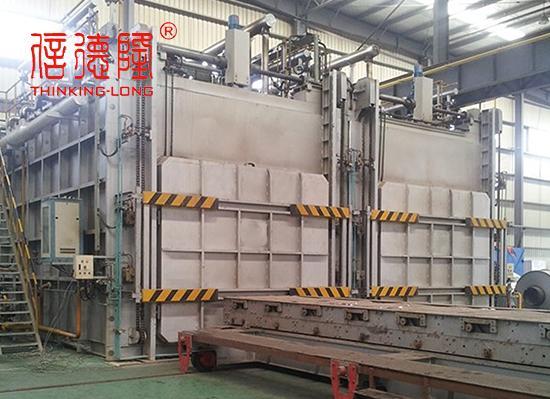
In a pop bogie furnace, zone control splits the heating chamber into independently managed regions, each with its own thermocouple feedback loop and power adjustment. This approach matters because workpieces rarely absorb heat evenly; dense stacking near the bogie edges or variations in load geometry create local cold spots that a single control point cannot catch.
Operators typically map zones along the furnace length and sometimes across the width, tuning each loop's PID parameters to handle different thermal inertia. The result is tighter temperature uniformity during ramp-up and soak, which reduces warping and shortens cycle times without pushing any single burner or element past its safe output.
What makes zone control in these furnaces stand out is how it adapts to changing loads. By comparing setpoint deviations across zones in real time, the system can direct more energy to lagging areas while backing off sections that are already near target, preventing overshoot and improving repeatability run after run.
FAQ
The design allows the load to be rolled in and out on a bogie, so heating elements can surround the workload more evenly. Combined with controlled air circulation, this cuts down cold spots and keeps temperature gradients tight across the whole batch.
With a fixed hearth, loading and unloading often forces you to place parts near the door where heat loss is higher. A bogie lets you pre-stage the load, push it into the hot zone, and seal the furnace quickly, so every part spends the same time under stable conditions.
Yes. The hearth moves on rails and can be built to support very heavy loads. Because the load sits on the bogie rather than being maneuvered inside a tight chamber, you can arrange parts with proper spacing, which helps radiant and convective heat reach all surfaces more uniformly.
It simplifies loading and unloading, reduces the risk of damaging parts during handling, and allows you to prepare the next load while the current one is still heating. That means less idle time and more consistent cycle-to-cycle results.
They work well with metals, ceramics, and heavy fabrications. The key is that the bogie hearth accommodates different load geometries, and the uniform heating profile helps avoid warping or uneven treatment across mixed batches.
Since the entire hearth rolls out, loading happens outside the heated chamber. Once the bogie is rolled back in, the door seals quickly and the furnace recovers to setpoint fast. This minimizes the thermal shock that often causes cold zones in fixed-hearth designs.
Look for multi-zone heating control, proper burner or element placement around the hearth, and a well-insulated door seal. Also check that the bogie is designed to support the load without sagging, because even a slight deformation can disturb airflow and create hot spots.
Consistent temperature across the load means predictable mechanical properties, lower scrap from under- or over-heated areas, and better dimensional stability. For heat treatment, that translates into more reliable hardness and reduced rework.
Conclusion
A pop bogie hearth furnace earns its keep by turning what is normally a static soak into a controlled journey. Instead of leaving a large batch to sit under uneven radiation, the moving hearth carries work through staggered heating zones, so each section of the load spends roughly the same time at the same temperature. That simple change undercuts the thermal gradients that plague big batches in conventional box furnaces, where the edges bake while the center lags behind. The result is a heat pattern you can trust repeatably, without constantly chasing hot and cold spots.
This consistency shows up where it matters most: less warpage, fewer scrapped parts, and tolerances that hold across the entire load. When heating is uneven, operators pay for it twice, once in wasted fuel from extended soak times and again in rework or rejected material. A pop bogie design avoids that hidden cost by making the heat soak predictable, which also trims fuel consumption because the furnace no longer needs to over-fire to compensate for cold zones. With multi-zone control working alongside the moving hearth, the furnace delivers uniform results in large batches without the usual guesswork.
Contact Us
Contact Person: Qian Xijun
Email: [email protected]
Tel/WhatsApp: 8613961736750
Website: https://www.thinkinglong.com/