

OEM Downspout Machine Supplier Red Flags You Should Never Ignore
2026-09-13
Every year, countless manufacturers lose time and money because they ignore early warning signs from OEM downspout machine suppliers. Vague answers, skipped factory tours, or overly optimistic lead times—these aren't just minor hiccups. They're red flags that separate reliable partners from costly mistakes. At Beenew, we believe you shouldn't have to learn these lessons the hard way. Here's what to watch for before you sign anything.
They Can’t Specify Roll Forming Tolerances
Roll forming shops frequently receive drawings where the tolerance block is either blank or filled with generic machining values. This puts the former in a difficult spot because strip steel, inline punching, and straightening all introduce accumulative variation that a machined part tolerance simply doesn't account for.
When buyers or engineers decline to set realistic roll forming tolerances, the burden falls on the shop to guess. A tight default might drive up tooling and scrap costs; a loose guess can lead to parts that won't fit the customer's assembly. Neither outcome serves the project.
What actually helps is a conversation about which dimensions matter for function. Cross-sectional openings, hole locations relative to a bend, and end flare often need specific ranges, while other areas can be left commercial. Once those critical zones are identified, the former can quote confidently and the customer gets parts that work without paying for unnecessary precision.
The 'Factory' Video Matches Another Supplier’s Website
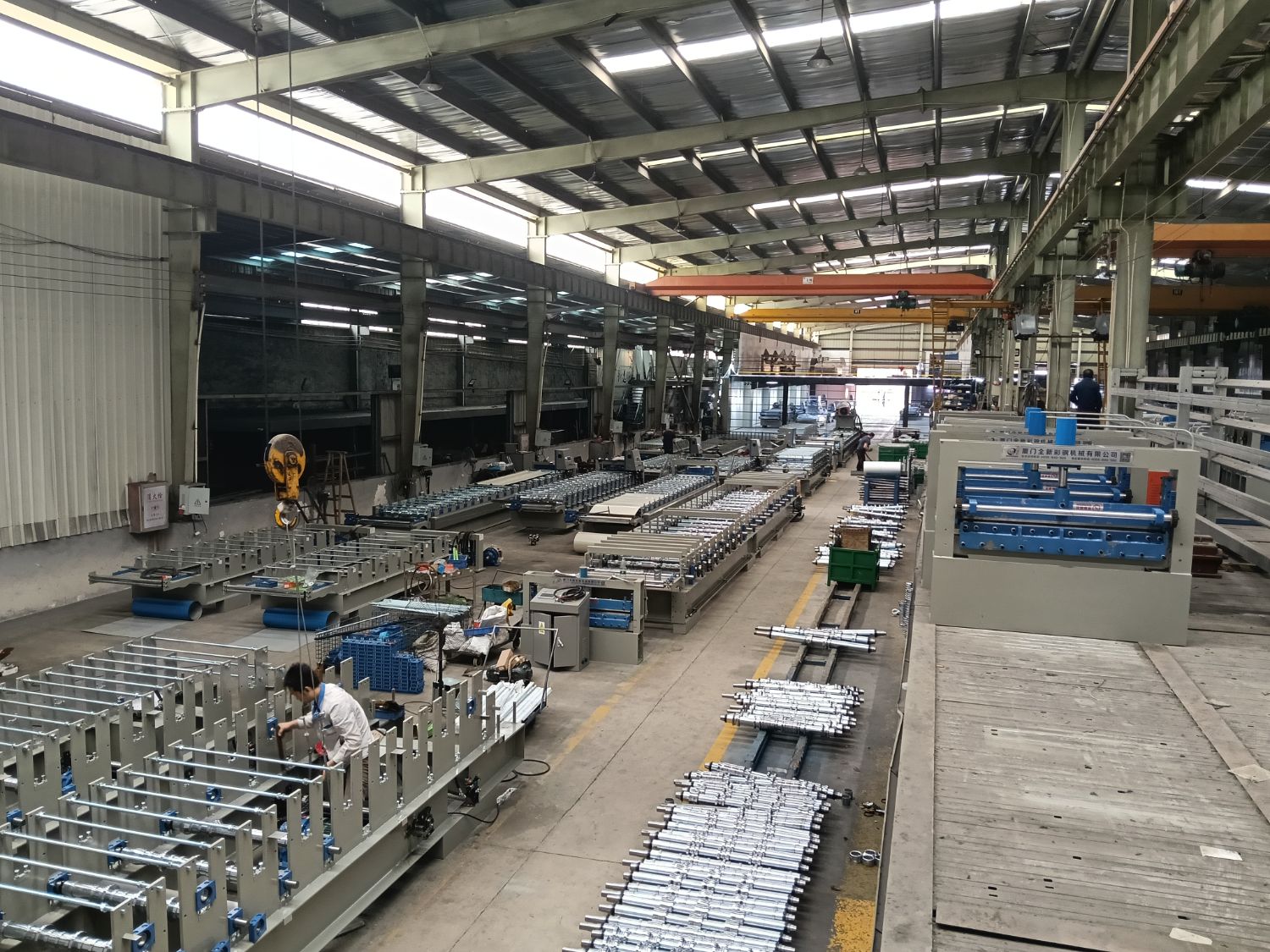
When a supplier sends a video that is supposed to show their own factory, it pays to look a little closer. If the exact same footage appears on another supplier's website, that video was probably borrowed or downloaded. The person you are talking with may not own or operate the facility at all. This is one of the clearest signs that you are dealing with a middleman rather than a direct manufacturer.
Cross-check the details in the video against the images on the supplier's own site. Wall colors, floor markings, machine placement, and worker uniforms rarely match up perfectly when footage is copied. If a factory name or logo visible in the background belongs to a different company, ask for a live walk-through on a video call. A refusal usually confirms what the mismatched video already suggests.
Questions About Galvanized Steel Coating Go Unanswered
Walk through any fabrication shop and you'll hear the same conversations about galvanized steel coating: how thick is too thick, what happens at the weld points, and why one batch looks shiny while another turns dull gray overnight. Most suppliers hand over a spec sheet and hope that settles it. But on the floor, those answers rarely match what workers actually see after the first weather cycle.
The trouble starts with accelerated lab tests that don't line up with real-world corrosion patterns. A coating can pass a salt spray chamber with flying colors, then show early rust at cut edges six months into service. When that happens, nobody can say with certainty whether the problem came from the zinc bath chemistry, the cooling rate, or something as simple as how the steel was stored before dipping.
Field inspectors tend to fill the gap with rules of thumb, not hard data. One may reject a part for a slightly rough surface while another waves it through because the thickness gauge reads acceptable. Until the industry pins down why these inconsistencies keep appearing, the questions will keep circulating without clean answers.
Every Quote Has a Different Frame Thickness
One of the first things you'll notice when comparing picture frames is that the thickness of the moulding can vary dramatically from one design to the next. A slim, barely-there profile lends a modern, understated feel, while a chunky, deep-set frame commands attention and gives the piece a more substantial presence on the wall. Because each quote or artwork carries its own visual weight, the frame's depth plays a quiet but critical role in how the finished piece feels in a room.
Frame thickness isn't just about aesthetics—it also affects how the piece sits against the wall and how light falls across the edges. Thinner frames tend to keep the focus on the words or image itself, almost disappearing into the background. Thicker frames, on the other hand, create a distinct border that can echo architectural details or furniture proportions, adding a layer of intentionality to the display. The same quote can shift from delicate to bold simply by swapping the frame profile.
When choosing a frame for a quote, consider not only the size of the print but also the surrounding décor and the distance from which it will be viewed. A large, high-ceilinged space may benefit from a thicker frame to anchor the piece, while a narrow hallway or a small reading nook might call for something slimmer to avoid visual clutter. There is no universal rule—only the understanding that each quote finds its own balance between frame depth, wall space, and personal taste.
No One Can Name the Hydraulic System Components
Ask a room full of equipment operators to point out the pump, and every hand goes up. Ask them to identify the accumulator, the relief valve, or the directional control valve, and the room falls quiet. This is the strange reality in many shops: hydraulic systems run the machines, yet the people working around them daily often can't name more than a handful of the parts that make them move. The reservoir, the filters, the actuators, the pressure-compensated flow control — these terms stay buried in manuals while the hardware itself keeps doing the heavy lifting.
Part of the problem is that hydraulic components rarely look like what they do. A cartridge valve disappears inside a manifold. A heat exchanger looks like a radiator. An accumulator might be mistaken for a tank or a filter housing. Without a clear visual hook, names don't stick. Add to that the habit of referring to everything as "the thingy near the cylinder" or "that silver canister," and the proper terminology fades further into the background.
Even experienced technicians sometimes stumble over less common items like a sequence valve versus a counterbalance valve, or a suction strainer versus a return-line filter. The words blur together because the functions overlap and the shapes are often identical. But every one of those unnamed components has a job: protecting the pump, holding pressure, controlling speed, or keeping contamination out. The machines don't care what we call them — they just keep working, waiting for someone to finally learn their names.
The Factory Tour Disappears After You Pay the Deposit
You hand over the deposit, the sales rep's smile widens, and the factory visit you were promised suddenly becomes impossible to schedule. The date shifts, the contact goes quiet, and soon the tour disappears from the conversation entirely. That's not an accident. A genuine manufacturer with nothing to hide will let you walk the floor before you commit real money. If the tour evaporates right after payment, you're likely dealing with a trading company posing as a factory, or worse, a setup with no real production line at all.
Watch for the pattern. Before the deposit, the supplier talks about quality control, invites you to see the machines, and maybe even sends photos of a busy workshop. After the money lands, the reasons start stacking up: equipment is being upgraded, the factory is in a remote area, or the production manager is away. Each excuse pushes the visit further out, and eventually the topic is dropped. You're left with a sales contract and no way to verify the goods are actually being made where you were told.
To protect yourself, never wire a large deposit on the promise of a future tour. Insist on visiting first, or at least request a live video walkthrough of the production line before any payment. If the supplier refuses or keeps delaying after you've paid, treat that as a major red flag. The disappearing factory tour isn't just bad communication; it's often the first sign that your money is funding something very different from what was sold to you.
FAQ
Watch for vague answers about their production floor or constant excuses when you ask for a live video. A genuine factory won't hesitate to walk the line with a phone.
If they promise delivery in half the time their competitors need without explaining how, it's usually a bait to get your deposit. Realistic timelines account for tooling, testing, and shipping.
Legitimate suppliers are proud of their installations and can usually connect you with at least one or two customers. Refusal often means their past projects didn't end well.
It can signal they lack true OEM capability and are just reselling generic machines. A real OEM partner will adapt to your dimensions, materials, and output requirements.
Look for vague line items like 'installation assistance' or 'optional accessories' that later become mandatory. Ask for a breakdown that includes voltage, dies, and control upgrades before you sign.
Absolutely. Any competent manufacturer needs those details to size rollers and motor power correctly. If they skip that conversation, you're likely getting a one-size-fits-all machine.
If the contract lacks clear terms for spare parts delivery, remote troubleshooting, or warranty scope, walk away. A supplier that goes silent after the invoice is paid will cost you more later.
Yes. If every image looks like a stock photo or recycled render and there's no evidence of a physical workshop, it's often a trading company posing as a factory.
Conclusion
When sourcing an OEM downspout machine, certain warning signs are easy to rationalize but often point to deeper problems. A supplier that cannot pin down roll forming tolerances is essentially admitting they lack control over their own tooling. If their "factory" video appears on someone else's website, you are not dealing with the manufacturer you think you are. Vague answers about galvanized steel coating thickness usually mean the material spec will shift once the order is placed. You might also notice that each revised quote lists a different frame thickness, which suggests the sales team is guessing rather than working from a fixed engineering standard.
Some red flags only surface after commitment. If no one at the company can name the hydraulic system components, maintenance and replacement parts become a gamble. The most telling moment often comes when the promised factory tour quietly disappears after the deposit clears. At that point, the supplier is betting you will accept whatever machine eventually arrives. None of these issues exist in isolation; they compound. A shop that blurs tolerances, reuses media, dodges coating questions, and shifts frame specs is not ready to build long-lasting roll forming equipment. Trust your instincts when the details stop adding up.
Contact Us
Contact Person: Sophie
Email: [email protected]
Tel/WhatsApp: 8615959271231
Website: https://www.beenew-rollformer.com/