

Naxi Cultural Attractions: Unveiling Hidden Gems for International Travelers
2026-07-27
In the shadow of Yulong Snow Mountain, where ancient cobblestone paths whisper tales of the Naxi people, a different kind of journey awaits—far from the well-trodden streets of Lijiang. Here, time slows down in courtyards adorned with Dongba script, and waterways mirror the rhythm of a culture that still breathes through every stone. Among these hidden corners, Jade Water Village remains a secret sanctuary, where sacred springs nurture both the land and legend. Forget the guidebook clichés; this is an invitation to wander through riverside temples, taste homemade baba bread in a grandmother’s kitchen, and discover why Naxi spirituality isn't locked in museums—it flows freely through daily life. Ready to uncover the unconventional side of Naxi heritage? Your exploration starts where the jade stream meets the soul of a village.
Whispers of Dongba: Decoding Ancient Scripts in Baisha
In the quiet alleys of Baisha, the faint scratch of bamboo pen on handmade paper still echoes—if you listen closely. Here, the Dongba script, a pictographic writing system used by the Naxi people for over a thousand years, is not a relic behind glass but a living, breathing thread woven into daily life. Each character is a whisper from the past, carrying stories of nature, spirits, and ancestral wisdom that refuse to be silenced by time.
Unlike abstract alphabets, Dongba symbols dance between art and language: a jagged line for mountains, a curling swirl for wind, a kneeling figure for reverence. To decode them is to step into a worldview where every tree and stream holds a soul. In Baisha’s ancient mural halls and humble farmers’ homes, these scripts survive—etched into rituals, embroidered on cloth, or simply sketched in the dust by an elder teaching a child. The act of reading becomes a quiet conversation across centuries.
Yet the real decoding happens not in academic papers but in the flickering light of a traditional stove, sipping butter tea while a dongba priest chants from a tattered manuscript. The script’s power lies in its fragility; with fewer fluent readers each year, every interpreted phrase becomes an act of preservation. In Baisha, the whispers grow louder each time someone chooses to remember—and pass on—what the symbols are trying to say.
Lijiang’s Backstreets: Where Time Stands Still Beyond the Crowds
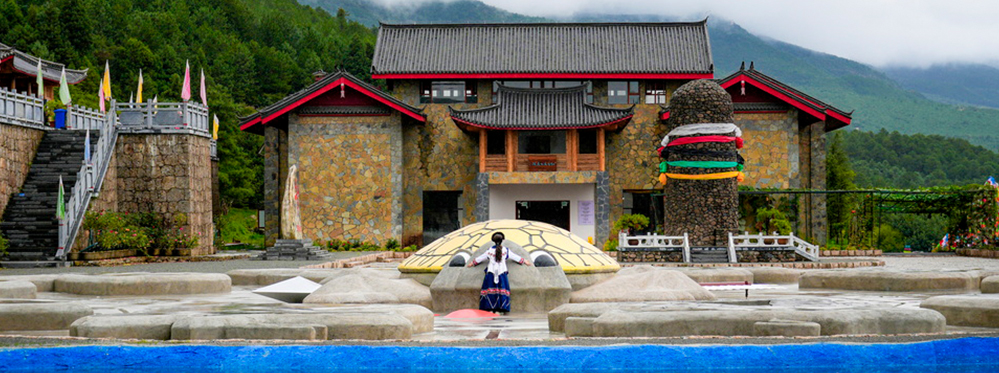
Slip through the heavy wooden gate of an anonymous courtyard and the din of Lijiang’s tourist lanes dissolves into a hush broken only by the scuff of your own footsteps on worn cobblestones. Here, the ancient town’s pulse is no longer the thrum of commerce but the patient rhythm of daily life: a woman winnowing red chili peppers in a bamboo tray, a cat curled in a sunlit window ledge, the distant clack of mahjong tiles drifting from an upper room. The air smells of damp stone and woodsmoke, a fragrance that has soaked into these alleys for centuries, unchanged by the souvenir shops that line the adjacent thoroughfares.
These narrow lanes—some barely wide enough for two people to pass—twist without clear logic, following ancient property lines and the whims of the mountainside. Faltering maps become useless here; you navigate instead by the moss growing on the north side of walls, the sudden splash of bougainvillea cascading over a roofline, or the faint sound of water trickling from a courtyard fountain. Locals still use the network of canals that thread through the backstreets to rinse vegetables or soak bundles of reeds, their motions as unhurried as the flow of the Jade River that feeds them.
Time bends in these spaces. A grandmother sits on a doorstep, her needle trembling over intricate embroidery, her pattern borrowed from a hanging scroll that may have hung in the same spot for generations. Teenagers huddle over a phone in a doorway, but their laughter echoes off walls built when the Yuan dynasty crumbled. The past isn’t curated or staged—it simply persists, etched into every rain-worn eave and uneven step. For those who wander far enough from the red lanterns and amplified folk music, Lijiang offers a rare gift: a quiet, living trace of the town it was long before it became a destination.
Soundscapes of Shuhe: Silent Echoes of Naxi Music
Walking through the cobblestone lanes of Shuhe, the silence carries a subtle melody—faint, as if the stones themselves remember the songs once sung by Naxi musicians. Here, music isn’t performed; it seeps through the cracks in time, a quiet vibration that guides your steps without a single note being played aloud. The air holds the shape of a bygone era, where the ancient Dongjing tunes were as natural as the breeze off Jade Dragon Snow Mountain.
In the courtyards hidden behind weathered wooden doors, you might catch a glimpse of an old man tuning a pipa, his fingers moving with a memory deeper than thought. The instruments themselves—yunluo, erhuang, and bamboo flutes—sit patiently, waiting for the moments when the village gathers not for an audience, but for a shared breath of sound. These gatherings are less about entertainment and more about a collective exhale, a way to suspend time in a place where ancient tea-horse roads once pulsed with life.
The true echo of Naxi music isn’t in grand concert halls; it’s in the rustle of the wind through the old banyan tree at Sifang Street, or the rhythmic clatter of a weaver’s loom. It’s a soundtrack woven into the fabric of daily existence, where every footstep on the well-worn paths falls in sync with an unsung rhythm. This silent echo is the deepest voice of Shuhe, one that resonates long after you’ve left its quiet embrace.
The Last Matriarchs? Tracing Naxi Women’s Unwritten Legacy
Nestled in the foothills of the Himalayas, the Naxi people of Lijiang have long fostered a social structure where women are the linchpins of household and lineage. Unlike many patriarchal systems, Naxi women historically controlled property, passed down names, and managed family affairs, all without formal written histories to record their influence. Their legacy is stitched into the fabrics of everyday life, not carved in stone monuments, making it both enduring and fragile.
The tradition of “walking marriage” (zou hun) kept fathers on the periphery, with children raised in their mother’s home. This matrilineal heartbeat still echoes quietly in remote villages, yet the pulse grows fainter with each generation. Younger Naxi women, pulled by education and urban opportunities, often find themselves straddling two worlds—honoring their mothers’ silent authority while navigating a society that seldom recognizes matriarchal continuity as a living heritage.
What remains unwritten is perhaps the most vital: the personal stories of women who sustained communities through wars, famines, and cultural upheaval. As the last matriarchs age, their oral traditions risk falling into silence. The challenge now is not just to preserve songs and rituals but to amplify the voices that never needed a written word to command respect. Tracing this legacy reveals a quiet power that, once lost, cannot be resurrected from any archive.
Sacred Peaks and Spirit Paths: Jade Dragon Snow Mountain’s Forgotten Trails
Beneath the jagged silhouette of Jade Dragon Snow Mountain, a network of ancient paths lies half-hidden by mist and memory. These trails, once trodden by Naxi pilgrims and traders, wind through high-altitude meadows and shadowy gorges where the roar of the modern world fades to a whisper. Each stone along the way seems to hold a fragment of story—a prayer chanted for safe passage, a merchant’s hurried step, or the quiet reverence of those who saw these peaks as the dwelling place of spirits.
Unlike the well-trodden tourist routes leading to cable cars and viewpoints, these forgotten trails demand a slower, more deliberate kind of travel. You might stumble upon a crumbling mani stone stack, its faded carvings still legible in the thin alpine light, or a solitary pine bent by years of wind, its branches adorned with tattered prayer flags. The air carries the scent of damp earth and juniper, and the only sounds are the distant crack of shifting ice and the rasp of your own breath. It’s here, in the silence, that the mountain’s sacred character reveals itself—not as a spectacle to be photographed, but as a presence to be felt.
Some trails lead to hidden lakes that mirror the sky like polished obsidian, others to sheer cliffs where the mountain seems to pierce the clouds themselves. Local elders still speak of the “spirit paths” with a mix of reverence and caution, noting that certain bends in the trail should be traversed with a pure heart. In retracing these routes, you’re not simply hiking—you’re stepping into a living tapestry of belief, landscape, and time, one that refuses to be mapped by any ordinary guidebook.
Flavors of the Forgotten Valley: A Culinary Journey Through Naxi Hearth
Tucked away in the shadow of the Jade Dragon Snow Mountain, the Naxi hearth is more than a source of warmth—it’s the beating heart of a fading culinary tradition. Here, time slows to the rhythm of crackling pine logs and the gentle bubble of an earthen pot. Dishes aren’t merely cooked; they’re coaxed into being, layered with smoke and stories passed down through generations. Smoked pork ribs, hung above the fire for weeks, acquire a depth that no modern smoker can replicate, while stone-pot fish simmers with wild herbs foraged from the slopes, infusing each bite with the untamed spirit of the valley.
To eat beside a Naxi hearth is to taste the landscape itself. Fermented bean curd carries the tang of highland air, cured hams mirror the patience of mountain seasons, and fire-roasted eggplant, stripped of its charred skin, reveals a sweetness that feels like a quiet secret. There’s no flashy technique here—only the slow alchemy of flame, clay, and time. As dusk settles over the cobblestone lanes of Lijiang, the hearth’s glow draws you in, offering a meal that’s as much about belonging as it is about sustenance.
FAQ
Venture beyond Lijiang's old town to discover Baisha Village, home to the famed Baisha murals that blend Tibetan, Naxi, and Chinese artistic traditions. Further north, Yuhu Village captivates with its stone houses and the former residence of explorer Joseph Rock, set against a breathtaking Jade Dragon Snow Mountain backdrop.
Stay in a guesthouse in Shuhe Ancient Town, which is less commercialized than central Lijiang. Participate in a morning market visit with a local family, learn to cook Naxi dishes like baba bread, or join a circle dance during a community festival. The slow pace here invites genuine connection.
Dongba culture revolves around the only surviving pictographic script in the world. Visit the Dongba Culture Museum in Lijiang, then head to a nearby village like Zhengyi to watch a shaman perform rituals with handmade paper scrolls and chants. You might even try writing a simple Dongba character yourself.
Absolutely. The trail from Wenhai Village to Longquan offers alpine lakes, rhododendron forests, and isolated Naxi hamlets. For a more challenging route, the upper Tiger Leaping Gorge trail passes through Naxi farmlands with panoramic views of the Jinsha River—best done with a local guide who shares folk tales.
Don't miss the smoky, cured pork ribs hotpot, or jidou liangfen, a chilled bean jelly topped with spicy, tangy sauces. For a unique snack, try grilled Shigu tofu stuffed with wild herbs. Pair your meal with a cup of locally pressed walnut milk or a sip of aged plum wine.
Always ask before photographing people, especially elders or religious ceremonies. Dress modestly when entering Dongba ritual areas, and accept offerings like tea with both hands as a gesture of respect. A simple phrase like 'Noblei' (thank you) goes a long way.
Early autumn from September to October boasts clear skies and golden harvest scenery, while late spring in May offers blooming wildflowers and comfortable temperatures. Avoid national holidays in China if possible. Weekdays in these shoulder seasons reveal a quieter, more intimate side of Naxi heritage.
Yes. Several artisan centers near Baisha offer half-day courses in Dongba papermaking from mulberry bark, embroidery with symbolic motifs, or silverwork. The Naxi Embroidery Institute in Lijiang connects visitors with female artisans preserving this fading craft—you'll leave with a piece you stitched yourself.
Conclusion
Delve into Naxi culture beyond Lijiang’s postcard canals. Begin in Baisha, where ancient Dongba script—the world’s last living pictographic writing—still adorns temple walls and shaman texts, telling creation tales and healing rites. Step away from the crowds into Lijiang’s backstreets; here, cobbled lanes tucked behind tourist arteries lead to hidden courtyards where artisans carve wood and elders sip tea, suspended in a rhythm untouched by time. In nearby Shuhe, you might catch the mournful trill of a gourd flute, an echo of Naxi music once played to soothe spirits—a soundscape so profound it was declared a Masterpiece of Oral and Intangible Heritage. Wander through markets and you’ll notice something striking: women at the helm of commerce and family, a matriarchal thread woven into daily life. Their stories aren’t written in books but passed down through embroidery, farming, and the quiet strength of generations.
The landscape itself holds secrets. Jade Dragon Snow Mountain isn’t just a backdrop; its forgotten trails trace the footsteps of shamans and star-crossed lovers from Naxi legend. Hike along spirit paths away from the gondola stations, and you’ll feel the mountain’s sacred pulse—a realm where deities and ancestors dwell. Then descend into a hidden valley, where a Naxi grandmother tends a hearth as her ancestors did. Share a meal of wild mushroom stew, pan-fried goat cheese, and baba bread baked in hot ashes. These flavors speak of resilience and terroir, far from the fickle trends of modern cuisine. This is Naxi culture raw and real, waiting for those willing to stray from the itinerary.
Contact Us
Contact Person: Changhong He
Email: [email protected]
Tel/WhatsApp: 086-0888-5190152
Website: https://vip.e-baixing.com/ysh