

Metal Tags Wholesaler Guide to Custom Bulk Orders and Pricing
2026-10-13
Sourcing metal tags in bulk shouldn’t feel like a gamble. Yet between vague pricing tiers, inconsistent finishes, and suppliers who treat customization as an afterthought, too many buyers settle for what’s available instead of what they actually need. This guide cuts through that noise. Whether you’re ordering engraved serial plates or embossed logo tags, understanding how true wholesale pricing works—and where Kingming fits into the equation—can save you both money and headaches. We’ll break down what drives per-unit cost, how to ask for quotes that reflect real volume, and the customization options that separate a generic tag from a durable brand asset. Ready to make your next bulk order the simplest one yet?
Comparing Metal Tag Materials: Aluminum vs. Brass vs. Stainless Steel
Aluminum tags often win on weight and price. They're light enough for equipment that moves frequently, and the material takes anodizing well, so you can get bright colors without paint that chips. The trade-off is durability: aluminum dents and scratches more easily than the other two, and in salty or highly acidic environments it can pit unless you add a protective coating.
Brass brings a warmer, more traditional look that ages into a distinctive patina. It's softer than stainless, which means it's easy to stamp or engrave with deep, legible marks, but that same softness makes it a poor choice for abrasive conditions. Brass also handles moisture reasonably well, though it can tarnish quickly if exposed to certain chemicals or frequent handling.
Stainless steel is the workhorse when tags face heat, corrosion, or rough handling. It resists rust far better than aluminum or brass, and it holds up to high temperatures without warping. The downside is cost and machinability: stainless is harder to cut and engrave, so custom shapes or fine detail often add time and expense. For most demanding industrial or outdoor uses, the extra cost pays off over years of service.
Bulk Order Math: How Quantity Drops Your Price Per Tag
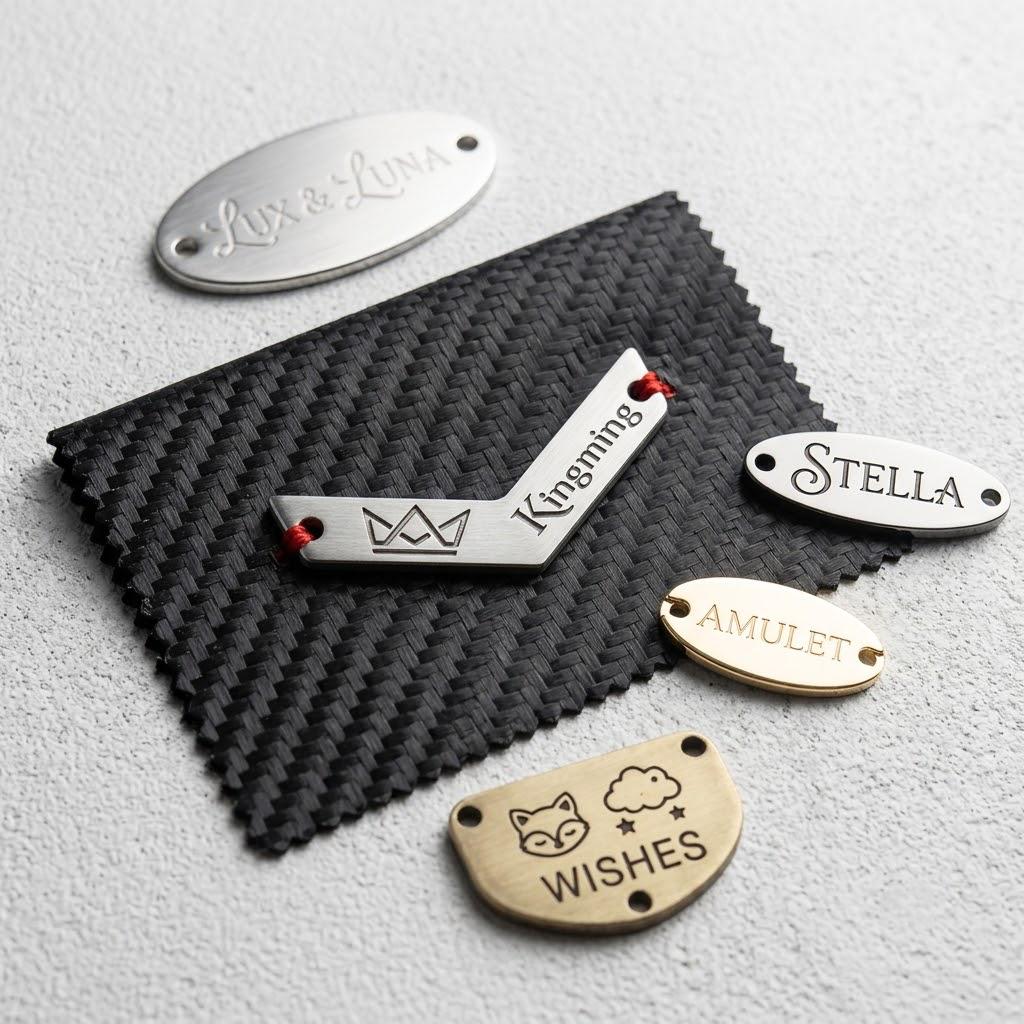
When you order 100 hang tags, the price per piece might sit around $0.85. Jump to 1,000 units and that same tag can drop to $0.42. The reason is simple: setup fees, plate charges, and machine time are spread across more items. A $45 setup cost is $0.45 per tag at 100 pieces, but only $0.045 at 1,000.
Material costs also get friendlier at higher quantities. Suppliers often buy paper, twine, or plastic in larger rolls, and they pass those savings down. So while the total invoice grows, the cost per tag shrinks noticeably, which matters if you're reselling or managing a retail budget.
A useful rule of thumb: doubling the order size typically cuts the per-tag price by 12% to 20%, depending on finishes like foil stamping or die-cutting. Run the numbers before you buy; sometimes the next quantity tier pays for itself within a few extra sales.
Artwork Prep That Avoids Production Delays and Extra Charges
Most artwork-related delays start long before the file reaches the press. We routinely get PDFs with missing bleeds, images under 150 dpi, or color profiles switched between pages. Those aren't just technical annoyances—they mean the job stops while we ask for a new export, and that interruption can add same-day or after-hours charges.
A couple of minutes of prep on your end prevents that. Check that your document size matches the final trim exactly, then extend backgrounds and fills a full eighth-inch past the edge. Convert all text to outlines (or embed the fonts) and keep linked images embedded rather than referenced. If you're working with spot colors, write down the exact Pantone codes somewhere on the file or in the order notes.
Also worth keeping: the original layered file. When a tiny adjustment is needed, a native file lets us make it ourselves instead of sending the job back. That one habit consistently saves production time and keeps the invoice where you expected it.
Reading Between the Lines of Wholesale Tag Quotes
A wholesale tag quote rarely tells the whole story. The printed number is a starting point, not a promise. Suppliers expect experienced buyers to look past the sticker and question what isn't shown: order minimums, freight terms, packaging costs, and whether the unit price shifts after the first few hundred pieces. A low headline figure can quietly turn expensive once those missing details surface.
Certain phrases deserve a second look. "Subject to availability" often means the supplier reserves the right to substitute materials or delay shipment without penalty. "Tiered pricing available" hints that the quoted rate applies only at a volume you may not reach. "FOB origin" pushes freight risk onto you the moment goods leave the warehouse. When a tag says "call for current pricing," treat it as an invitation to negotiate rather than a fixed offer.
Smart buyers turn these hidden signals into leverage. Ask for a line-item breakdown before committing. Compare the base price against landed cost, including duties and last-mile delivery. Watch how quickly a supplier revises a quote when you mention a competitor's terms. The gap between the tag and the final invoice often reflects how well you read the silence around the numbers.
Realistic Turnaround Times for Custom Bulk Tags
When you order custom bulk tags, the turnaround can vary more than most people expect. A standard run of simple, single-color printed tags might leave the shop within five to seven business days, but that clock only starts once your artwork is approved and all material details are locked in. If you need a specific substrate, a special finish, or a larger quantity, add another two to four days to the estimate.
One factor that often gets overlooked is the proofing stage. Every revision you request adds time, not because the shop is slow, but because each change has to go back through the prepress workflow. To keep things moving, have your dieline, colors, and copy finalized before you submit. Also ask about batch production slots—many manufacturers group similar jobs together, and if you miss the weekly slot for your tag type, your order waits until the next cycle.
Finally, be realistic about shipping. A tag order that is finished on Thursday afternoon will not necessarily leave the building until Monday, especially if the shop is closed on weekends. If your deadline is firm, tell the vendor up front and ask for a production schedule, not just a generic seven-to-ten-day quote. A clear conversation about actual working days, proof approval, and shipping cutoffs will save you from last-minute surprises.
Small Design Tweaks That Make Budget Tags Look Expensive
Most budget tags give themselves away with glossy cardstock and crowded layouts. Swapping to a lightly textured matte paper instantly changes the perceived value. Add a blind deboss or a single foil accent along the edge and the tag starts to feel like something from a boutique rather than a clearance bin.
Typography does more heavy lifting than people expect. A petite serif or a clean sans with generous letter-spacing reads calm and considered. Keep the type small, cap the line length, and leave plenty of empty space. The quiet composition makes the tag feel intentional, even if the materials cost pennies.
Small hardware decisions matter just as much as the paper. Replace plastic loops with thin cotton twine or a narrow satin ribbon in a muted tone. If the tag shape allows, round the corners slightly or add a subtle border that sits inside the edge. These quiet tweaks create a more expensive first impression without inflating production cost.
FAQ
We work with stainless steel, brass, aluminum, and copper. Most customers pick stainless for durability or brass when they want a warmer finish. Each material behaves differently with engraving and printing, so the choice often comes down to where the tags will be used.
Yes, but it depends on the design and size. Smaller blank tags might start around 100 pieces, while fully custom shapes with unique cutouts usually need at least 250 to 500 pieces. It is best to send your artwork first and we can tell you the exact minimum.
Material choice, tag size, thickness, attachment hardware, and the level of personalization all play a role. Laser engraving costs less than full-color printing. Adding sequential numbering or barcodes also changes the price. Generally, the more you order, the lower the cost per tag.
Absolutely. We encourage it. You can order a small sample batch with your exact materials and finishes. There is usually a setup fee for custom samples, but that fee is credited back when your full production order is confirmed.
Standard production runs take about two to three weeks after final artwork approval. If you need a rush, we can often cut that down to five business days for an additional charge. Peak seasons around trade shows can add a few extra days.
We offer split rings, ball chains, cable ties, adhesive backing, and custom holes for screws or rivets. If you are tagging equipment that moves or vibrates a lot, we usually recommend a stainless steel cable tie or a heavy-duty split ring.
You do not need finished artwork. Most wholesale clients send a rough sketch, a logo file, or even a photo of an old tag. Our in-house team cleans it up and sends a digital proof before anything is cut. There is no charge for basic vector conversion.
Send us an email with the tag dimensions, material, quantity, and any notes about numbering or finishing. We usually reply within one business day with a line-item breakdown. If you only have a rough idea, that is fine too, we can suggest a few cost-effective options based on common uses.
Conclusion
When you're sourcing metal tags in bulk, the material choice is more than a look—it sets the floor for both price and longevity. Aluminum keeps things lightweight and affordable for large runs, while brass adds a richer tone and stainless steel handles moisture or chemicals with far less wear. The unit cost drops as the order grows, but not in a straight line; quotes often sharpen around 250, 500, or 1,000 pieces, so it pays to ask for breakpoints before committing. Clean vector artwork with outlined fonts and clear layer notes avoids a lot of back-and-forth that quietly adds setup fees. Some suppliers charge separately for die creation, proofs, or rush adjustments, so those line items need a hard look.
Reading a wholesale quote means separating one-time tooling from per-tag pricing, and confirming whether finishing, plating, or packaging is bundled or billed later. Realistic lead times for custom runs usually stretch beyond the initial promise, especially if embossing, doming, or color fill is involved. Budget tags don't have to look cheap: small moves like a brushed texture, a beveled edge, or selective etching add perceived value without heavy tooling costs. Matching the design to standard blank shapes and sizes also trims waste and keeps the project moving. In the end, the best bulk tag deal balances material, quantity breakpoints, and artwork readiness rather than chasing the lowest sticker price alone.
Contact Us
Contact Person: Jamie Zeng
Email: [email protected]
Tel/WhatsApp: +86 13728219269
Website: https://www.kmhardware.com