

Large Format Printing Masterbatch Recommended Options for Superior Print Quality
2026-09-02
Getting vibrant, consistent colors on large format prints isn't just about the printer—it's about what goes into the filament. If you've struggled with uneven pigment dispersion, clogged nozzles, or dull results on banners, signage, or wide-format graphics, the masterbatch you choose makes all the difference. Xinwancai has been quietly engineering high-performance masterbatches for exactly these challenges, and the options below are the ones we'd actually recommend for prints that need to look sharp from a distance and up close.
Why Pigment Dispersion Decides Whether Large Format Prints Look Crisp or Muddy
At the heart of every large format print is a suspension of pigment particles in liquid. When dispersion is incomplete, those particles clump together, altering how light hits the surface. Instead of a smooth layer of color, you get micro-sized clusters that scatter wavelengths unevenly. That's what turns a sharp edge into a slightly fuzzy boundary and makes overlapping inks look gray or brown rather than clean secondary hues.
Proper dispersion keeps each particle separate and uniform, so the ink film dries with a consistent optical density. On wide media, any variation becomes obvious—banding, patchy solids, or colors that shift depending on viewing angle. A well-dispersed ink lays down predictably, letting fine text and vector lines hold their shape. Without that stability, even a high-resolution file can't save a print from looking soft, dirty, or just off.
The Filtration Step That Separates Reliable Masterbatch from Printhead Nightmares
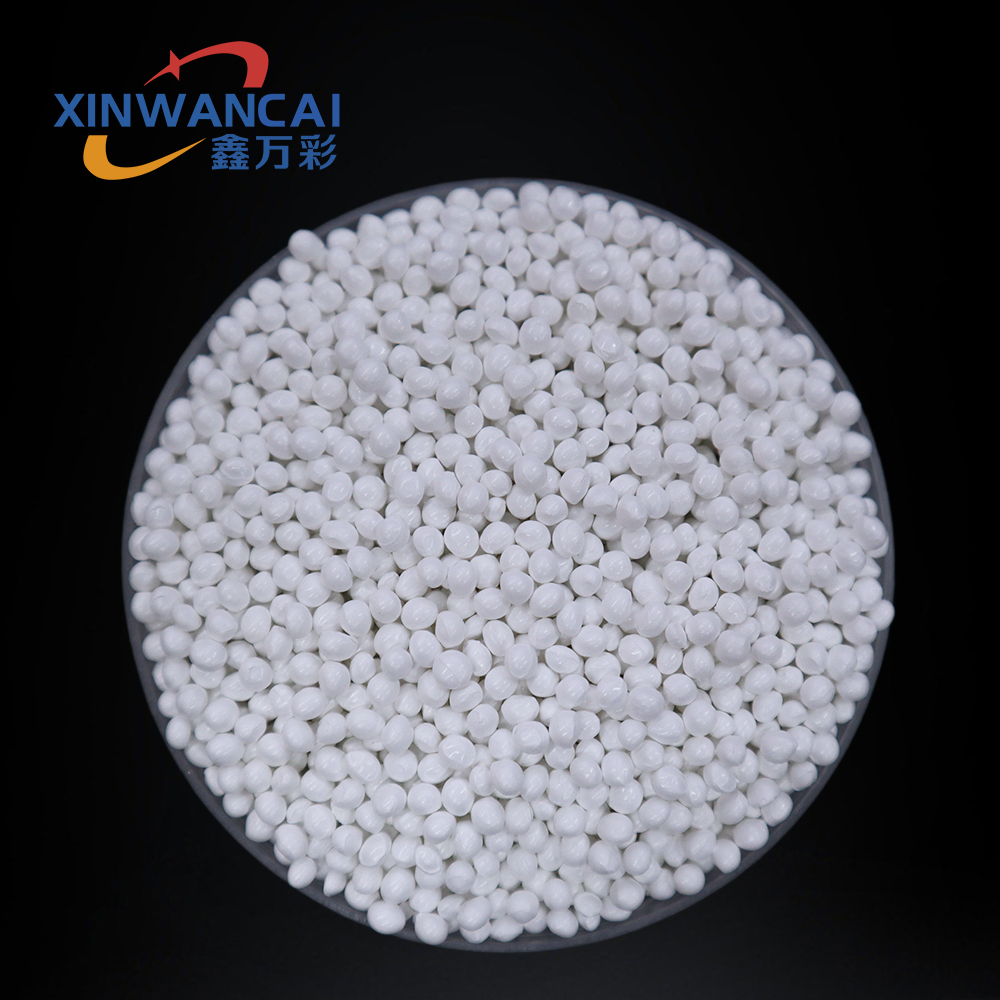
A 50-micron agglomerate that survives compounding isn't an inconvenience—it's a future clog waiting to idle your printer. Most printhead failures blamed on temperature drift or filament diameter actually originate upstream, where pigment dispersion in masterbatch was only visually smooth. Without a controlled melt filtration pass, undispersed carbon black or titanium dioxide clusters pass straight into the extrusion line.
The reliable step is not a single screen but a staged pressure-driven sequence. Coarse breaker plates open the melt, then progressively finer Dutch-weave packs catch particles down to 25 microns. Operators who only check the first screen miss the real signal: a rising differential pressure across the final mesh indicates agglomerates are accumulating, not passing through.
What separates dependable masterbatch is not the filter brand but the discipline of replacing packs on a pressure curve rather than a fixed schedule. That shift prevents catastrophic bypass—when a blinded screen forces melt around the seal—and keeps every downstream pellet within tolerance. For printhead longevity, the filtration stage is where quality is either locked in or quietly abandoned.
How Melt Flow Tuning Prevents Banding on Wide-Format Jobs
Wide-format jobs expose every small inconsistency in the melt stream, and that's exactly where banding starts. When the filament isn't arriving at the nozzle at a steady rate—or the temperature fluctuates enough to change viscosity mid-layer—the extruded line width shifts slightly. Those shifts repeat on each pass and produce the horizontal ridges that are so hard to sand out. Tuning melt flow means dialing in the temperature, extrusion multiplier, and feed rate until the polymer leaves the nozzle in a uniform ribbon rather than a pulsing bead.
On large flat areas, the long uninterrupted toolpaths give the hotend time to drift, so a fixed temperature curve often isn't enough. Slight reductions in speed near corners or after retractions let the melt chamber stabilize, and adjusting pressure advance keeps the flow from spiking when the print head changes direction. Materials with a narrow melt flow index range also help, since they respond more predictably to these small corrections. Once the melt flow is tuned to the job, the layer lines flatten out and the surface stops showing that repeating band pattern.
The same idea applies to the first layer and the top skin. If the initial bead width varies because the melt flow is off, the error propagates upward through every subsequent layer. A quick test strip with a range of flow multipliers can reveal the sweet spot before committing to a full wide-format run. That calibration step may take a few extra minutes, but it removes the single most common cause of banding on large prints.
Weather Resistance Without the Chalky Finish: A Smarter Formulation Path
Anyone who has watched a once-vibrant coating turn ghostly white after a few seasons outside knows the frustration. Traditional weather-resistant formulas lean heavily on high pigment loadings or rigid crosslinkers to buy time against UV and moisture, but that trade-off often shows up as surface chalking. The pigment particles, once protected, get exposed as the binder erodes, and what remains is a dusty, faded film that looks older than it really is.
A smarter path starts with rethinking the binder architecture rather than simply adding more stabilizers. By using flexible acrylic backbones with carefully tuned glass transition temperatures, you can maintain film integrity under thermal cycling without becoming so hard that microcracking invites moisture in. Pair this with encapsulated UV absorbers that migrate to the surface slowly, and you get continuous protection without the concentration spikes that lead to bloom or chalking. The result is a coating that sheds rain and shrugs off sunlight while keeping its color depth and gloss retention for years, not months.
Formulators who embrace this approach often find they can reduce overall additive packages, which lowers cost and viscosity. Instead of fighting chalk with extra hindered amine light stabilizers that may exude, the film itself resists degradation from within. It is a quiet shift—less about bullet-point ingredients and more about balancing molecular mobility, crosslink density, and pigment surface treatment. When done right, the outside of a building or a piece of outdoor furniture just stays looking clean, with no chalky residue to wipe off on your hand.
Color Consistency Across Runs: The Hidden Cost of Cheaper Masterbatch
A lower price per kilogram rarely tells the full story when it comes to masterbatch. Suppliers that cut corners on pigment dispersion, carrier resin consistency, or raw material sourcing tend to produce noticeable batch-to-batch variation. Even if the formulation is identical on paper, the color that comes off the extruder in March can look slightly warmer, cooler, or lighter than the run from January. That drift may be subtle, but on a retail shelf or in an assembled product, the mismatch is immediately visible to the human eye.
When color starts shifting between runs, the production team scrambles. Operators tweak letdown ratios, processing temperatures, and screw speeds to compensate, which creates downtime and turns a predictable process into guesswork. Quality control then has to quarantine questionable lots, pull retained samples, and often reject finished goods that no longer match the approved master standard. Each of those steps consumes labor hours, warehouse space, and material that quietly erodes any upfront savings.
A more dependable masterbatch may carry a higher sticker price, but it pays for itself by holding the same color within a narrow tolerance across months of production. Consistent pigment loading, stable carrier resins, and proper melt filtration keep the output on target without constant manual correction. Over time, that reliability reduces scrap, protects brand appearance, and keeps customers from noticing a difference that should never have existed.
Low Loading, High Opacity: When Less Masterbatch Actually Prints Better
The assumption that higher masterbatch loading automatically improves opacity doesn't hold up on press. When pigment concentration climbs too far, particles crowd, agglomerate, and scatter light unevenly. The result is a film that looks dense in the bag but prints with mottled coverage, pinholing, or ink adhesion problems. Cutting the loading back can actually tighten the pigment network, giving a smoother surface and more uniform color development.
A smaller amount of well-dispersed masterbatch often delivers better hiding power than a heavier dose of poorly distributed pigment. Modern dispersion aids and resin carriers let individual particles stay separated, so a 3% loading can outperform a 5% one for opacity. This also reduces plate wear, lowers viscosity drift in inks, and keeps the extruder torque manageable. Printers notice fewer registration errors and cleaner reverses because the substrate itself stays more consistent.
The key is not simply using less; it's rethinking what "less" means. When the masterbatch is engineered for high tinctorial strength and fast wet-out, the lower loading becomes an advantage rather than a compromise. Trials on white and black concentrates show measurable gains in opacity at half the traditional addition rates. That frees up formulation space, cuts raw material cost per square meter, and often improves mechanical properties of the printed film.
FAQ
For wide-web or sheet-fed large format work, the formulation has to balance pigment loading, dispersion quality, and melt flow. A well-designed masterbatch keeps viscosity stable during extrusion or injection, prevents die lines, and delivers consistent opacity without compromising the substrate's mechanical properties. Carrier resin compatibility matters more than pigment percentage alone.
It depends on the base polymer. For polyolefin-based boards and films, LLDPE or PP carriers are common because they blend readily and maintain throughput. For styrenic or acrylic substrates, a carrier matched to that chemistry prevents delamination or surface haze. The real recommendation is to use a carrier with a melt flow index close to the host resin.
Poorly dispersed pigments create micro-agglomerates that show up as fisheyes or uneven color density after printing. High-quality dispersion means each pigment particle is fully wetted and separated, giving uniform light reflection and a smoother surface for ink adhesion. It also reduces filter pressure build-up during processing.
For outdoor signage and displays, high-performance organic pigments like phthalocyanine blues and greens, quinacridone reds, and selected inorganic pigments such as rutile titanium dioxide are reliable. They resist fading and maintain color strength under UV exposure. Avoid low-cost dyes or poorly stabilized pigments if the printed piece will face sunlight.
Rarely without adjustment. Flexible films need a masterbatch with lower viscosity impact and often better compatibility with slip or anti-block additives, while rigid boards tolerate a slightly higher melt viscosity. A universal grade might work for short runs, but for superior print quality it is better to tune the carrier and pigment loading to each substrate.
Melt temperature, screw speed, and back pressure deserve close attention. Overheating can degrade the pigment or carrier, causing yellowing or surface defects. A consistent feed rate and proper mixing section geometry prevent color streaks. Many processors also monitor screen pack pressure to catch dispersion issues early.
Selecting a masterbatch with low moisture content and avoiding volatile additives reduces pinholes and surface irregularities. Good dispersion and a carrier that matches the substrate surface energy improve ink wetting. Adding a small amount of a processing aid or adhesion promoter in the masterbatch can also help, but it must not interfere with the final print coating.
Yes, white masterbatches designed for high-opacity base layers often use a rutile titanium dioxide loading of 50-70% with a tailored carrier. The key is achieving high hiding power without excessive viscosity increase. Some grades include optical brighteners or bluing agents to create a neutral white point that makes printed colors look more vivid.
Conclusion
For large format work, the real difference between crisp edges and a muddy mess often comes down to pigment dispersion. When masterbatch carries well-dispersed pigment, even a small amount spreads evenly through the polymer, preventing agglomerates that show up as specks or streaks on wide panels. At the same time, filtration matters just as much—think of it as insurance against printhead clogs. Passing the masterbatch through fine screens removes oversized particles that would otherwise survive the melt and jam nozzles mid-run. Add in melt flow tuning, and you address banding directly: tailoring the masterbatch's viscosity to match the base resin helps maintain steady extrusion pressure, so the printed layer stays uniform from start to finish across a multi-meter sheet. These three factors work together, not as isolated specs but as a system that determines whether your large format output looks professional or needs rework.
On the weather side, the goal is usually a print that holds up outdoors without turning chalky after a season. The trick is choosing a formulation that uses light stabilizers and antioxidants in the right balance—too much filler or a cheap carrier can degrade into a powdery bloom, ruining the finish. Meanwhile, color consistency across batches is where cheaper masterbatch quietly fails: if pigment concentration drifts by even a few percent, the same job printed on Tuesday won't match the one from Monday. That hidden cost shows up as wasted substrate and lost production time. Finally, low loading with high opacity is a modern advantage: advanced pigment technologies allow you to use less masterbatch while still hitting full coverage. This not only reduces overall material cost but also minimizes the impact on mechanical properties, so your printed sheets remain tough and flexible. The recommended option, then, is a balanced masterbatch built around these six practical angles.
Contact Us
Contact Person: JACK
Email: [email protected]
Tel/WhatsApp: 86 18650130917
Website: https://www.xinwancai.com/