

Insole Vendor Secrets: How to Choose the Best Orthotic Insoles for All-Day Comfort
2026-08-31
Finding orthotic insoles that actually keep your feet happy all day can feel like a guessing game—too many options, too much hype, and no clear way to tell what really works. That's where a trusted insole vendor like YONGFENG changes the equation. Instead of chasing gimmicks, you'll learn the few details that separate genuine all-day comfort from short-lived cushioning, so your next choice is based on what actually matters underfoot.
What Your Current Insoles Aren't Telling You
Most insoles give up long before you notice. The foam compresses, the arch flattens, and what felt like cushioning turns into a thin layer of false confidence. By the time your knees or lower back start complaining, the insole has already stopped doing its job.
A quick look at the heel and ball-of-foot areas tells a story nobody reads. Deep creases, shiny compressed spots, and edges that no longer spring back are signs the material has lost its ability to absorb shock. You're essentially walking on packed cardboard while your shoes still look fine from the outside.
Replacing insoles isn't about chasing novelty, it's about resetting the baseline support your feet rely on every day. If you track mileage or hours worn, most off-the-shelf options tap out around three to six months. Ignoring that timeline means your body quietly adjusts to less support, and those compensations rarely stay local.
The Arch Support Sweet Spot Most Brands Miss
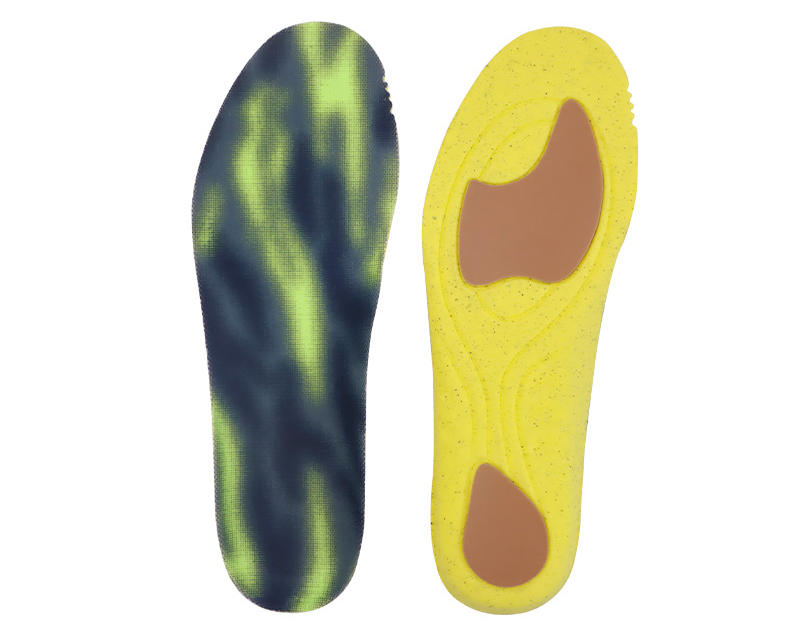
Arch support usually falls into two camps: too rigid, and your foot feels like it's fighting a brick; too soft, and you sink with zero structural payoff. The real sweet spot sits between those extremes. It's where the midsole has enough give to follow the natural curve of your arch without collapsing under load, yet enough rebound to push back at the exact moment your stride rolls forward. Most brands miss this because they tune for the average foot last, not for how an actual arch flexes, pronates, and recovers mile after mile.
That narrow zone of support isn't just about cushioning depth either. It's about timing — the point in your gait cycle where the arch needs a firm nudge rather than constant pressure. Think of it like a spotter at the gym: too eager, and you never engage your own muscles; too passive, and you risk injury. The best arch support works with that rhythm, staying quiet during initial contact, then firming up through midstance, and easing off as you toe off. That dynamic response is what keeps your foot feeling fresh instead of braced.
If you've tried insoles or shoes that promise "maximum support" and ended up with sore arches or tired calves, you've probably experienced the miss firsthand. The fix isn't adding more material or cranking up density — it's finding that pliable-but-present zone where your arch gets guidance without being locked in place. Once you feel it, the difference is undeniable: your foot does less work to stabilize, but never feels like it's resting on a plank.
Materials That Work With Your Feet, Not Against Them
The best shoe uppers feel less like a shell and more like a second skin. Stiff leather or tight synthetics force your toes into a fixed position, which leads to pinching and fatigue. Look for materials with built-in stretch zones—engineered knit, soft suede, or flexible mesh—that bend where your foot actually bends. When the forefoot area gives just enough, your toes can spread naturally with each step instead of fighting the fabric.
Midsole foam gets a lot of marketing hype, but what matters is how it responds to your stride. A block of overly firm cushioning sends impact straight up your joints, while something too squishy makes your feet work harder to stabilize. The right materials, like tuned EVA blends or lightweight TPU, compress on landing to take the sting out and then rebound quickly as you push off. That timing keeps your foot's natural roll intact rather than interrupting it.
Even the best outer materials won't save you if the inside feels like sandpaper. Friction blisters and hot spots usually start where seams, labels, or rough linings press into the skin. Shoes that work with your feet use smooth, moisture-wicking linings and low-profile seam taping in high-rub areas like the heel and toe box. This keeps the foot cool and dry, so the only thing your skin feels is the sock, not the shoe fighting back.
Why Soft Cushioning Often Fails by Noon
Soft cushioning has a seductive first step: it sinks just enough to feel like relief, especially in the early hours when your legs are fresh. But that same plushness works against you as the day unfolds. The foam compresses under repeated load, losing its rebound faster than firmer materials would. By late morning, what felt like a cloud is now a flattened layer offering little pushback, forcing your arches and ankles to pick up slack they weren’t prepared for.
The real trouble shows up in micro-adjustments. A shoe that’s too soft lets the foot travel further on every stride, delaying the moment your muscles can stabilize and move on. That tiny lag adds up to thousands of extra eccentric contractions before noon. Your calves and the small muscles in your feet start to fatigue, and suddenly a cushioned ride feels more like walking in loose sand. The support you assumed was there has quietly faded, leaving your joints to absorb impact that the foam no longer manages.
It’s easy to blame tiredness on the day itself, but the pattern is predictable if you know what to look for. Soft cushioning tends to perform best in the first hour or two, then degrades along a curve that’s hard to notice until your feet are already aching. A firmer, more responsive midsole might feel less impressive in the store, but it holds its character much longer. That trade-off — initial plushness versus mid-day integrity — is often the difference between shoes that only feel good at the register and shoes that still feel capable when lunch rolls around.
The Try-Before-You-Buy Fit Test Nobody Mentions
A mirror will happily tell you a shirt looks fine while you stand like a mannequin, but it stays quiet about what happens when you reach for a coffee cup. The fit test that actually matters is motion: sit in a chair, cross your legs, twist to grab something behind you. If the seams strain or the hem rides up during those simple moves, the fit won't get better after purchase.
Try doing the things your day already demands, not the pose you strike for a photo. Raise both arms as if hanging a jacket on a high hook, then drop into a low squat. Walk the length of the room and notice whether the item shifts side to side or stays anchored. These unglamorous movements expose tight shoulders, short rises, and bad pocket placement faster than any static twirl.
This same logic works for gear you don't wear. A backpack that feels padded when you slip it on empty can dig into your spine once a laptop and water bottle are inside. A chair might feel supportive for ten seconds but numb your legs after five minutes of actual sitting. Before you buy, recreate the real conditions you'll face—not the showroom conditions.
Vendor Claims Worth Ignoring and the Two That Matter
Every vendor deck has at least one slide promising “world-class support” or “unlimited scalability.” Unless they can hand you a client reference who actually used that support to recover from a major outage, those words mean nothing. The same goes for “best-in-class security” without a recent third-party audit you can read.
The first claim that actually matters is a concrete, measurable outcome. Ask for a before-and-after metric from a customer in your industry—something like a 40% drop in manual reconciliation time, or a 25% faster month-end close. If the vendor can’t produce that specific number tied to a named account, treat the rest of the pitch as noise.
The second claim worth your attention is integration depth. “Seamless integration” appears in nearly every brochure, but what really counts is whether the vendor will connect to your actual systems during the evaluation. Request a two-hour working session with your sandbox—not their demo environment. If they hesitate or start talking about “future roadmap items,” you already have your answer.
FAQ
It usually comes down to how the foam rebounds after hours of compression. Cheaper EVA can feel plush for twenty minutes, then flatlines. A vendor who focuses on all-day wear will talk about slow-rebound foam or polyurethane blends that keep about 80% of their cushioning after eight hours instead of collapsing by lunch.
Think about what your foot does when it gets tired. If your arches roll inward and your knees start aching, a semi-rigid shell with a deep heel cup helps block that motion. If you mostly get hot spots and pressure under the ball of the foot, a softer metatarsal pad does more than a hard arch plate ever will.
Only if your foot shape is genuinely unusual, like a very high instep, a leg length difference, or bunions that change your weight line. For most people, a good off-the-shelf orthotic with a heat-moldable arch or adjustable cushioning gets 90% of the benefit at a third of the price, as long as the sizing matches your arch length, not just shoe size.
That often means the insole changed your gait too abruptly. A thick heel lift or aggressive arch support can tilt your pelvis a few degrees, and your back muscles work overtime to compensate. Start with a lower-profile insert for a couple of hours a day, then build up. If the back ache fades after a week, it was adaptation; if it sharpens, the support is fighting your natural stride.
The top cover material. A slick nylon cover makes your sock slide, which forces your toes to grip and creates friction blisters. A brushed microfiber or cotton-blend top keeps the foot planted on the support, so the arch actually does its job instead of your foot drifting off it by mid-afternoon.
Ignore the six months rule of thumb. Check the heel and arch area for permanent compression lines. If the heel cup no longer cups and the arch feels softer than a fresh pair, replace them. For daily 10,000-step wear, that is usually every four to eight months, but a quality polyurethane base can stretch to a year.
Rarely. Stacking layers can create a lump under your heel that throws off your balance and shortens your stride. If you are on a tight budget, look for a single-piece insole with a nylon support frame and a real arch shape, not a flat foam slab plus add-ons. That one-piece design will survive a full shift better than multiple pads taped together.
Conclusion
Most insoles quietly work against you. The factory foam in your shoes is already dead by the time you notice, and the brand's marketing story rarely matches what your arches actually need. Real support isn't about maximum squish or a dramatic heel cup—it's about a firm, targeted lift under the midfoot that most vendors miss because it's easier to sell plushness than precision. Materials matter more than adjectives: dense EVA and cork composites respond to heat and pressure, shaping themselves to your stride instead of collapsing after a month. That cloud-soft cushioning you loved in the store? By noon it's packed down and tilted your weight forward, which is why your knees ache by three o'clock.
The honest way to choose is embarrassingly simple. Before you buy, yank out the factory insole and stand on it. If your arch hangs over the edge or the foam compresses flat under your thumb, it's telling you nothing. Then ignore the vendor claims about "medical-grade" or "podiatrist approved"—those are noise. Only two things actually predict all-day comfort: a firm arch contour that matches your foot's natural curve, and a top layer that wicks moisture without gluing your sock to the insole. Try the insole in both shoes, walk ten minutes, and check if your heel settles instead of sliding. That's the whole secret most brands won't tell you.
Contact Us
Contact Person: Mr Deng
Email: [email protected]
Tel/WhatsApp: +86-18926872657
Website: https://www.uniyongfeng.com/