

Halogen-Free Flame Retardant Exporter Vendor Guide for Global Sourcing
2026-10-13
Finding a truly halogen-free flame retardant supplier isn’t just about checking a box—it’s about tracing raw materials, testing consistency, and knowing which exporter won’t ghost you after the first shipment. This global sourcing guide strips away the usual fluff and focuses on the signals that matter. X.X.F.R has turned those signals into a repeatable vendor selection process, and we’re sharing the framework here.
Pre-Shipment Checks That Separate Consistent Halogen-Free FR Exporters from One-Time Suppliers
A dependable halogen-free FR exporter treats every shipment as a verification event, not a paperwork exercise. Before anything leaves the loading dock, each batch is screened for total chlorine and bromine using oxygen-bomb combustion followed by ion chromatography. The pass mark is not a loose promise; it is the strict limit in IEC 61249-2-21. Results are logged against the exact resin lot, filler batch, and pressing date, so a single out-of-spec panel can be traced back to its mixing record within minutes.
Consistent suppliers also run vertical burn tests on random samples from every production run. A UL 94 V-0 rating can drift when a new mineral filler disperses unevenly or when the curing oven profile shifts by a few degrees, so these checks catch variations that a one-time supplier would never look for. The same pre-shipment routine includes ion contamination and moisture uptake measurements, because halogen-free laminates are more prone to delamination later if they leave the factory with residual acid or a broken vacuum seal on the barrier bag.
What really separates the repeat exporter is that the test data travels with the goods. Every pallet carries a traceable production code, and the accompanying documents match the physical labels on the boards. If a buyer asks for third-party witnessing or random sampling before loading, a consistent manufacturer opens the line without hesitation. A one-time supplier tends to offer a generic certificate after the container has already sailed, which is precisely the moment the pre-shipment check has lost its value.
Mapping Halogen-Free FR Compliance to Regional Flame Retardant Standards
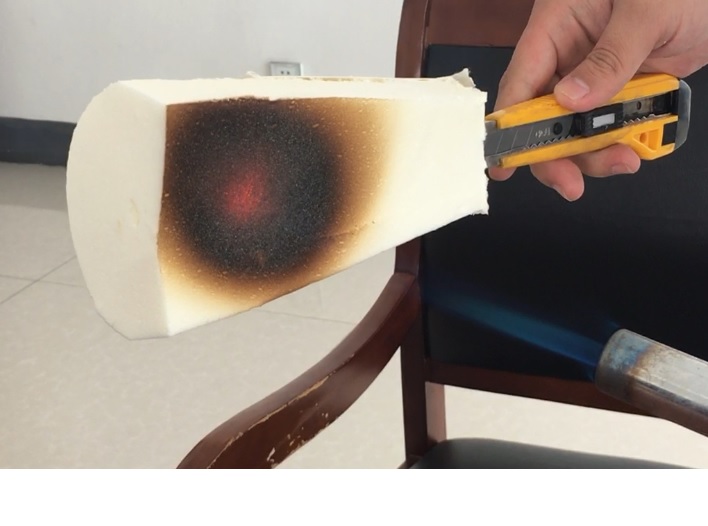
Compliance with halogen-free flame retardant requirements rarely means meeting one universal benchmark. Regional standards impose different thresholds, test methods, and documentation expectations. A material that passes a European railway standard may not automatically satisfy a North American electronics code, and vice versa. Mapping these obligations starts with distinguishing between outright bans on specific halogens, voluntary ecolabels, and sector-specific fire safety regulations.
For example, IEC 61249-2-21 sets the widely referenced definition of halogen-free for printed circuit boards, capping chlorine and bromine at 900 ppm each and total halogens at 1500 ppm. But the EU's Restriction of Hazardous Substances (RoHS) limits only certain brominated flame retardants, not all halogens, while China's GB/T 26572 follows a similar restricted substance list but with its own marking rules. In rail and construction, EN 45545 and NFPA 130 focus on smoke density and toxicity, pushing material choices toward inherently char-forming polymers and mineral fillers rather than simply removing halogens.
A practical mapping approach uses a matrix that logs each target market, the relevant standard, the halogen limits or banned substances, and the test evidence required. This avoids over-engineering a product for the strictest market when cost matters, while ensuring no regional requirement is overlooked. It also helps when a single global part must cover multiple regions; the design can then default to the most demanding halogen-free definition that still meets all fire safety performance levels.
Questions to Ask Before Signing a Long-Term Halogen-Free FR Supply Agreement
Before committing to a multi-year supply contract, you need to pin down exactly how the supplier defines "halogen-free" and which test standards they use. Request a detailed breakdown of their flame retardant package—whether it relies on phosphorus, nitrogen, or mineral fillers—and ask for third-party lab reports from the last three production runs. This prevents surprises if a formulation quietly changes after the first year.
Ask about raw material contingency plans. Many halogen-free FR grades depend on a narrow set of additives, and a single upstream shortage can halt shipments. Get a written commitment on lead times, minimum order quantities, and whether they hold safety stock. Also clarify how price adjustments work: are they tied to a published index, or can the supplier renegotiate annually without transparency?
Finally, dig into the legal and technical support side. What happens if a batch fails your ignition or smoke density tests? Who covers the cost of rejected material, and what is the replacement timeline? Also ask for references from other long-term customers in similar industries, and review the exit clause—if your product line shifts or performance drops, you don't want to be locked into a contract with no realistic way out.
Why Some Halogen-Free Flame Retardants Fail in High-Temperature Polymer Processing
Halogen-free flame retardants often rely on mechanisms like endothermic decomposition, char formation, or release of inert gases. However, many of these mechanisms are thermally activated and tuned for a specific temperature window. When polymers are processed at temperatures exceeding 300°C—common for engineering plastics such as polyamides or polyesters—the retardant can decompose prematurely. This not only consumes the active species before a real fire scenario, but also generates acidic or volatile byproducts that degrade the polymer matrix, reducing mechanical strength and surface quality.
A second failure route comes from poor dispersion or migration. Metal hydrate fillers like aluminum trihydroxide, for instance, require loadings above 50 wt% to be effective. At high processing temperatures, the polymer viscosity drops sharply, and the filler particles can agglomerate or settle, creating uneven flame protection. Moreover, some phosphorus-based or nitrogen-based synergists are partially soluble in the molten polymer, causing them to migrate to the surface during extrusion or injection molding. This surface enrichment may look promising in small-scale tests but leads to inconsistent performance in larger parts and can interfere with downstream bonding or painting.
Finally, the chemical environment during high-temperature processing can deactivate the flame retardant. Trace moisture, residual catalysts, or reactive end groups in the polymer can hydrolyze or oxidize the additive. For example, certain phosphate esters undergo transesterification with polyester chains at elevated temperatures, permanently binding the phosphorus into the polymer backbone where it no longer functions as a gas-phase radical scavenger. The result is a material that passes initial UL 94 testing on thin plaques but fails when reprocessed or when thicker sections are molded, because the active flame-retardant species has already been consumed or transformed during compounding.
Cost Drivers Behind Halogen-Free FR Grades That Buyers Often Overlook
Switching to halogen-free flame retardant grades rarely stops at a simple additive swap. The overlooked costs often start on the production floor: narrower processing windows force lower line speeds, higher melt temperatures wear down screws and barrels faster, and the more abrasive filler packages can double or triple tool maintenance intervals. These aren't one-time charges; they accumulate with every run.
Material pricing gets most of the attention, but buyers miss the compounding effects. Phosphinate or melamine-based synergists cost more per kilo than legacy brominated systems, and they typically need higher loadings to hit the same UL 94 rating. Add in density shifts that change how many parts you get from a tonne of compound, and the real cost per finished piece can jump well beyond the quoted resin price.
Then there's the qualification burden. Every new halogen-free grade has to earn its own glow wire, CTI, and UL yellow card documentation, and those tests don't run themselves. For smaller annual volumes, the recertification and batch consistency checks can easily exceed the raw material surcharge, yet they rarely appear on a purchase order.
Building a Shortlist of Exporters with Proven Halogen-Free FR Technical Support
The real filter isn't whether an exporter lists halogen-free FR grades—it's whether their technical team can talk through UL 94 ratings, comparative tracking index, and processing window adjustments without going quiet. Start by requesting specific case data: which connectors, wire insulation, or enclosure materials they've helped customers re-qualify after switching from brominated systems. Ask for named contacts at past projects, not just a generic capability statement.
Build the shortlist around evidence of on-the-ground support. That means documented trial reports, screw/barrel wear feedback, mold temperature recommendations, and answers on how their FR package affects elongation at break or dielectric strength. The exporters worth keeping are the ones who send an application engineer into the call before you sign—not after a delay. Check whether they can supply small-batch pilot material and reference formulas tuned to your processing method, because proven support shows up before the first container ships.
Finally, pressure-test the shortlist with a straightforward request: ask each candidate to outline a migration plan from a halogenated FR grade to one of their halogen-free options for a part you already produce, and see who returns a realistic answer within a week. That exercise separates sales teams leaning on datasheets from suppliers who have actual compounding and troubleshooting depth. Keep the list to exporters who treat the technical conversation as a working session, not a brochure handoff.
FAQ
Ask for the full technical data sheet, including phosphorus and nitrogen content, thermal decomposition temperature, moisture level, and melt flow impact on common resins. Request batch-specific test reports rather than generic brochures, since real export consignments can vary more than lab-scale samples.
Look for IEC 61249-2-21 or EN 50642 test reports from an ISO/IEC 17025 accredited lab, not just a supplier declaration. Also check if the product stays below 900 ppm total chlorine and bromine, and ask how the exporter controls cross-contamination in shared production lines.
Average particle size can hide a wide spread that causes poor dispersion, nozzle clogging, or uneven flame retardancy in thin-wall parts. Ask for D10, D50, and D90 values and a sieve residue figure. A tight distribution usually means better consistency across production batches.
Direct exporters often offer better technical support and custom formulation work, but may have higher minimum order quantities. Distributors can provide smaller lots and faster regional delivery, though traceability of the original production batch can be weaker. The right choice depends on whether you need development support or just replenishment stock.
Run your own compounding trial in the exact polymer and processing window you use, then test UL 94 vertical burn, glow wire ignition temperature, and tensile or impact retention. Pay attention to mold deposit and screw wear over a short production run, since those issues often appear only after a few hours of processing.
Moisture absorption can change feeding behavior and cause hydrolysis in some phosphorus-based systems. The exporter should use moisture-barrier bags, include desiccant, and mark pallet stacking limits. Ask for a storage stability statement covering at least 12 months under tropical or marine climate conditions.
Negotiate a phased trial order with agreed acceptance criteria, then move to a supply agreement that locks technical specifications rather than just price. Include a clause that any unannounced formula change requires written approval, and agree on retained samples from each shipment to resolve quality disputes quickly.
Lab compounding often uses ideal shear and short residence times, while mass production exposes the material to longer heat history, higher moisture, and different screw configurations. The flame retardant may degrade, migrate, or react with additives. A reliable exporter will offer on-site trial support or at least a detailed compounding guideline for industrial extruders.
Conclusion
Global sourcing of halogen-free flame retardants demands more than a competitive price list; it requires a vendor who can prove consistency under fire. Pre-shipment checks separate the dependable exporters from the one-time suppliers: true partners offer batch-level thermal stability data, documented particle size distribution, and third-party verification of halogen content below detectable limits. Mapping regional standards—such as UL 94 V-0 for electronics, EN 45545-2 for rail, and IEC 60332 for cables—reveals whether a supplier understands that a single FR grade rarely satisfies every market. Long-term agreements hinge on asking the right questions about raw material sourcing, reformulation flexibility, and capacity during supply crunches. Without these, buyers inherit compliance risk.
Performance failures in high-temperature processing often trace back to improper phosphinate synergist ratios or moisture-sensitive melamine derivatives. A supplier with technical depth will explain why a grade survives 320°C extrusion while another degrades into corrosive byproducts. Cost drivers extend beyond base resin: particle surface treatment, carrier resin compatibility, and logistics for heat-sensitive powders all inflate landed cost. The strongest shortlist emerges from exporters who offer application testing, failure analysis, and regulatory update alerts—not just certificates. Such vendors turn a chemical purchase into a supply chain advantage.
Contact Us
Contact Person: Guohua Wang
Email: [email protected]
Tel/WhatsApp: 8613003442895
Website: https://www.xxflameretard.com