

Film Sandpaper Exporter Best Practices for Global Abrasive Sourcing
2026-10-02
Sourcing film sandpaper globally is rarely as straightforward as comparing price lists. A single overlooked detail—whether it’s inconsistent grit calibration, weak backing adhesion, or unclear export documentation—can stall an entire production line. That’s why procurement teams are shifting from transactional buying to a more rigorous set of exporter best practices. SHENZHEN SUN ABRASIVES has spent years refining what it takes to ship high-performance abrasives across borders without surprises. In this guide, we unpack the practical steps that separate reliable film sandpaper exporters from costly guesswork.
What Experienced Buyers Check Before Committing to a Film Sandpaper Exporter
Seasoned buyers rarely sign with a film sandpaper exporter without first digging into the coating consistency. They request batch samples from different production runs, then test them under the same pressure and speed they use on their own lines. A supplier that delivers uniform grain distribution and steady adhesive bonding across those samples is worth a second look. Uneven scratch patterns or premature loading usually surface within hours, not days, which saves a lot of downstream trouble.
Beyond the product itself, experienced buyers ask about the exporter's handling of edge damage and roll tension. Film backing is more sensitive than paper to humidity swings and rough handling, so they want to know how rolls are packed, whether interleaving is used, and what the typical defect rate per container looks like. A transparent answer with real shipment data beats a polished brochure every time. Many will also request a trial run with their own converting equipment before placing a full order.
Finally, they look at how the exporter manages specification drift. A trustworthy supplier keeps a clear record of base film thickness, grit type, and resin formula for each order, and notifies the buyer before making any change. Buyers who have been burned before will ask pointed questions about raw material sourcing and whether the same production line is used for different grades. If the exporter hesitates or gives vague assurances, that is usually the end of the conversation.
Grain Bonding and Backing Flexibility Tests That Predict Real-World Lifespan
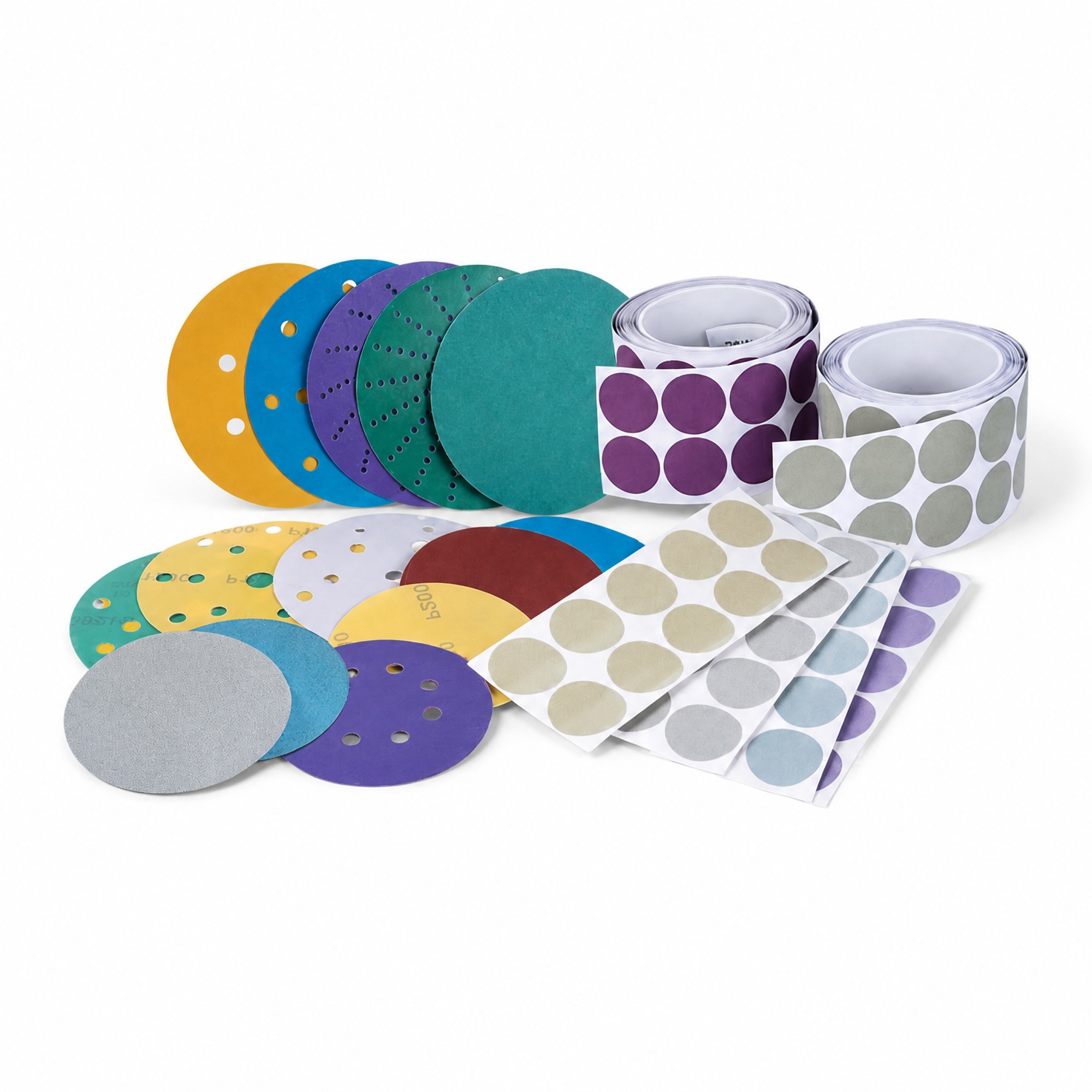
The longevity of coated abrasives under daily wear rarely hinges on a single property. Grain bonding strength and backing flexibility each tell part of the story, but their interaction matters more. A disc that holds its abrasive grains firmly yet remains too stiff will crack under repeated bending, while a highly flexible backing with weak grain adhesion sheds abrasive before it ever wears down. The most reliable lifespan predictions come from tests that measure both together, simulating the flexing and stress patterns of actual use.
Standard pull-out tests quantify how much force a single grain can withstand before detaching from the resin bond. However, real failures often begin at the resin-backing interface, not the grain-resin junction. Adding a mandrel flex test reveals whether the backing delaminates or the bond coat fractures as the abrasive bends over rollers or conforms to curved surfaces. When both tests are run in sequence on the same sample batch, a clear pattern emerges: abrasives that survive high pull-out forces after repeated flexing cycles are the ones that last longest on the shop floor.
No single number predicts real-world lifespan perfectly, but combining grain bonding and backing flexibility into one evaluation protocol closes much of the gap between lab results and field performance. Operations that rely on edge work, contoured parts, or frequent disc changes benefit most from this dual testing approach. It filters out products that look strong on paper but fail under the combined demands of adhesive durability and mechanical give — exactly the combination that determines whether an abrasive lives up to its expected service hours.
Packaging Details Reliable Exporters Use to Protect Rolls in Transit
Rolls face real risks during long-haul shipping—edge crushing, moisture wicking through end faces, and surface abrasion from container movement. That's why seasoned exporters don't just wrap them in plastic and hope for the best. They start with a moisture-resistant inner layer sealed tightly against the roll ends, then add a corrugated or hardboard end protector that spreads pressure evenly across the core and edges. This combination stops the most common damage before it starts, especially when rolls are stacked or shifted in transit.
The next layer is all about stability inside the container. Reliable exporters use custom-cut wooden or engineered plastic cradles that match the roll diameter, preventing any rolling or sliding during rough seas or bumpy truck rides. For heavier rolls, steel strapping or polyester lashing is threaded through the core and anchored to the container floor or side rails, not just wrapped around the outer wrap where it can bite into the surface. Some also add a breathable outer cover that blocks dust and light rain while letting trapped humidity escape, avoiding a sweaty microclimate that leads to rust or mold on sensitive materials like paper or coated films.
Finally, the details make the difference. Experienced shippers mark each roll with a clear orientation label and include a simple diagram showing where fork tines should enter—not grab the roll body. They also add edge corner boards under the strapping, so the tension cuts into the protector instead of the product. These small choices cost almost nothing but signal to the buyer that the exporter has handled enough returns and claims to know exactly where failures happen.
Negotiating Minimum Order Quantities Without Triggering Hidden Cost Add-Ons
Pushing back on a supplier's minimum order quantity often feels like a zero-sum game. You ask for a smaller batch, they agree, but suddenly the unit price jumps or new fees appear for warehousing, handling, or "small lot production." The trick is to reframe the negotiation around your long-term value, not just this single order. Instead of simply demanding a lower MOQ, propose a phased commitment: start with a trial quantity that meets your cash flow needs, then offer a rolling forecast or a modest deposit toward future orders. This gives the supplier confidence to reduce the MOQ without baking in hidden penalties, because they see a reliable revenue stream coming.
Another angle is to ask for transparency on what actually drives their MOQ. Often the number is tied to raw material purchases, machine setup time, or shipping container utilization. If you can identify which cost lever is pushing the MOQ up, you can negotiate around it. For example, agree to use a standard material that's already in their inventory instead of a custom blend, or accept a slightly longer lead time so they can batch your order with another client's. These trade-offs lower their real cost, so they don't need to tack on hidden add-ons to make the smaller order profitable. You get the lower quantity without the nasty surprises.
Finally, don't accept vague language like "volume surcharge may apply." Ask for a written breakdown of every fee that would kick in below the stated MOQ, then challenge each one individually. Some suppliers use hidden add-ons as a bluff to keep you at the higher quantity. If you push for specifics and offer to share shipping costs or provide your own packaging, those phantom charges often disappear. The key is to negotiate the total landed cost, not just the unit price or the MOQ number. That way you avoid agreeing to a low MOQ on paper only to get hit with "administrative fees" on the invoice.
Regional Compliance Hurdles That Delay Global Abrasive Shipments
Abrasive shipments often stall at customs for reasons that have little to do with the product itself. A single pallet of coated discs might clear Germany in two days, then sit for three weeks in Brazil because the local authority demands a different set of test certificates for the same resin bond. Some markets require physical samples to be sent to government labs for hardness and density checks, while others accept a manufacturer’s declaration without blinking. The mismatch between what a shipper prepared in the country of origin and what an inspector expects on arrival is a recurring source of demurrage charges and missed delivery windows.
Beyond certificates, there are quiet rules around packaging and labeling that trip up even experienced exporters. Turkey may insist on Turkish-language hazard symbols printed on each individual sleeve, not just the outer carton. Saudi Arabia can reject a container if the grit size is listed in a format that differs from their national standard, even when the measurement is technically identical. These are not always published in English, and updates can appear in local gazettes without any notification to foreign suppliers. Freight forwarders often learn about a new requirement only after a shipment has been flagged for inspection.
The practical result is that lead times for abrasive products stretch from days into months, not because of manufacturing capacity but because of paperwork churn and unpredictable border holds. Companies that route through regional distribution hubs still face the final-mile compliance burden, since each destination country applies its own interpretation of safety and environmental rules. Until there is a mutual recognition agreement between major abrasive-producing and consuming regions, shippers will continue to absorb the cost of re-testing, re-labeling, and waiting.
Running Small-Batch Pilots to Lock In Consistent Grit Distribution
Small-batch pilots are where the real calibration happens. A sack of grit that meets the spec on paper can still shift once it hits your feeder, especially if humidity or storage conditions have altered how it flows. Running a limited quantity through the actual blast or coating line lets you see whether the distribution stays within the target band under your specific air pressure and nozzle setup.
Rather than trusting a single sieve analysis from the supplier, collect samples at multiple points during the pilot. A quick dry-sieving pass will reveal if fines are accumulating or if oversized particles are sneaking through. When the spread drifts, adjust the blend ratio or screen mesh before committing to a full run—small corrections here prevent surface profile swings later.
The goal is repeatability, not perfection on one lucky batch. After three consecutive pilots land inside your control limits without mid-run tweaks, you can lock the parameters into the work instruction. That kind of discipline keeps grit distribution consistent from job to job, which is what actually determines anchor pattern and coating adhesion.
FAQ
Look at how they handle lot control and pre-shipment samples. A dependable partner will assign batch numbers to each production run, retain physical samples for at least two years, and send pre-shipment swatches cut from the actual cargo, not a master sample pulled months earlier.
It usually traces back to humidity exposure or poor curing. Film-backed abrasives need controlled drying before packing, and the rolls or sheets should be sealed with desiccant inside moisture-barrier bags. If an exporter skimps on that, the adhesive bond can weaken and the film can curl in transit.
Ask for a cross-section breakdown of the backing film, bond resin, and abrasive mineral weight. Some suppliers lower costs by using a thinner polyester film or reducing the mineral coating density. Requesting a lab test report from an independent third party per batch neutralizes that risk.
Harmonized code classification and anti-dumping duties are the big ones. Film sandpaper may fall under different codes depending on whether it is roll, sheet, disc, or belt form. An experienced exporter will provide the exact HS code and any relevant origin certificates before the order ships.
Film wins when you need tear resistance, water resistance, or a more consistent scratch pattern. It is the standard for automotive refinishing and precision metalwork. Paper may cost less per unit, but film's longer life and flexibility often lower total abrasive spend per finished part.
Use moisture-barrier bags with desiccant packs, stiff cardboard cores, and edge protectors for sheets. For rolls, avoid placing them flat for weeks; store upright on pallets with wrapping that does not press into the roll ends. A good exporter will also include a temperature indicator on high-value shipments.
Request a sample pack with a known grit range and run it against your current material on the same substrate. Pay attention to loading, heat buildup, and scratch depth. Then ask the exporter which mineral supplier they use and whether they blend recycled or virgin abrasive grain.
It includes a technical contact who can read surface finish data, not just a salesperson. They should offer joint problem-solving for issues like edge wear or clogging, and provide replacement stock quickly from a bonded warehouse or regional hub rather than waiting for the next production cycle.
Conclusion
Experienced buyers rarely commit to a film sandpaper exporter without first digging into the technical evidence behind the product. They ask for grain bonding and backing flexibility test data, because those two factors often predict how long the abrasive will survive under real shop-floor stress. A supplier that can explain its adhesion methods and show flex-test results is far more credible than one that only quotes a low unit price. Packaging is another quiet signal of professionalism: reliable exporters use reinforced cores, moisture-barrier wrapping, and edge protectors to prevent roll damage during ocean freight or long truck hauls. When minimum order quantities come up, seasoned buyers negotiate not just the number of rolls but also what is included in that figure—freight, customs documentation, re-labeling, and palletization—so hidden cost add-ons do not appear later.
Global abrasive sourcing also runs into compliance hurdles that can stall shipments for weeks if ignored. Experienced importers confirm ahead of time whether the film backing, resin system, or packaging materials meet the destination country's chemical and labeling rules. Running a small-batch pilot before placing a full container order is another practice that separates careful buyers from reactive ones. By testing a limited quantity on actual production lines, buyers can verify consistent grit distribution and surface finish, then lock in those specifications with the exporter. The best sourcing relationships emerge when technical validation, protective logistics, and clear commercial terms are handled together rather than treated as separate afterthoughts.
Contact Us
Contact Person: Amanda Wang
Email: [email protected]
Tel/WhatsApp: +86-13602569854
Website: https://www.sunabrasives.com.cn