

Custom Oil Mist Collector Factory Delivers High-Performance Filtration Solutions
2026-10-30
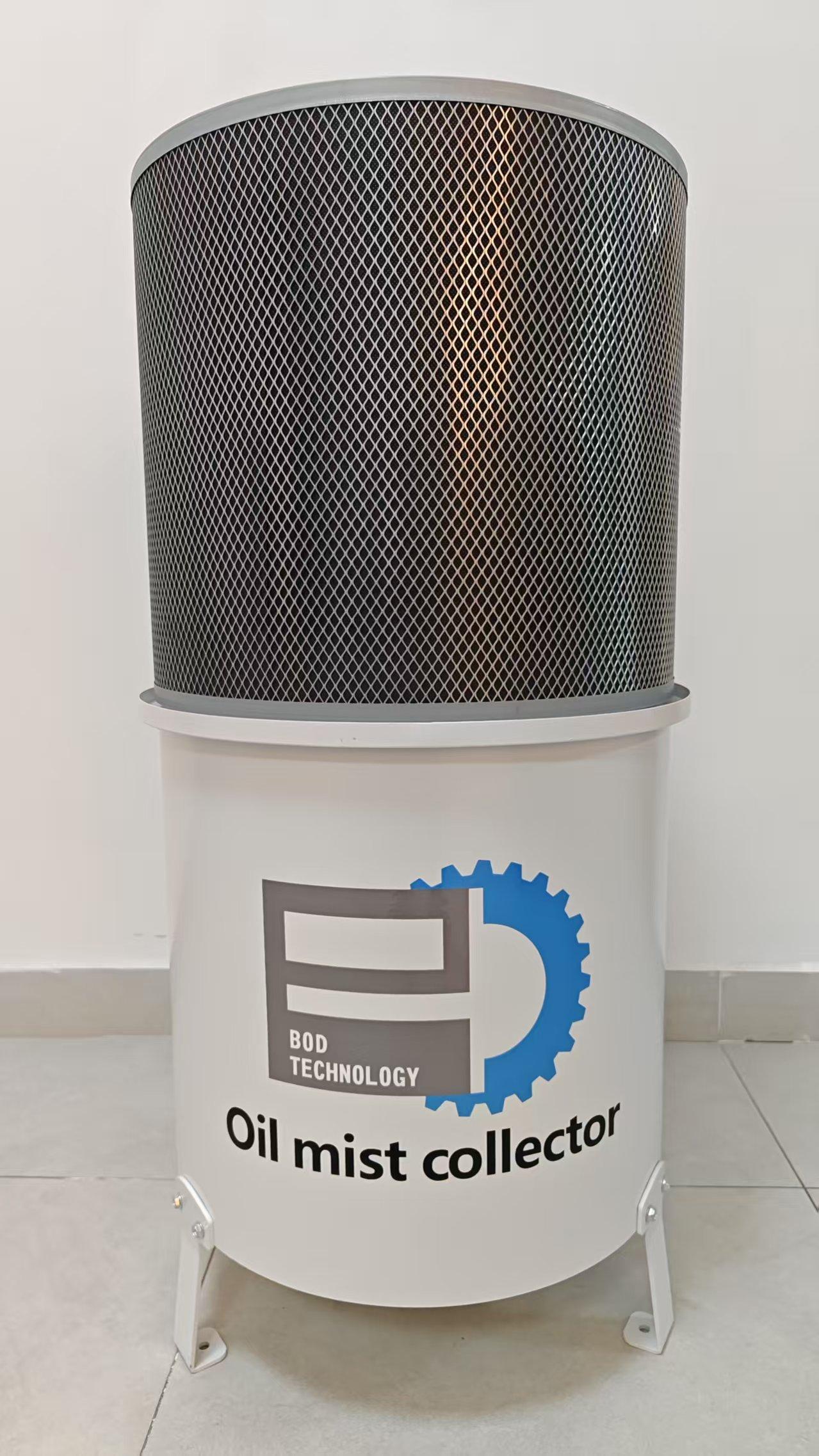
Walk into any busy CNC machine shop and you'll likely smell it before you see it: the fine, sticky haze of oil mist hanging in the air. It clings to equipment, coats surfaces, and finds its way into operators' lungs. Standard off-the-shelf collectors rarely fit the exact layout or workload of your floor. That's exactly why WINNRUI CNC built a custom oil mist collector factory capable of delivering high-performance filtration solutions tailored to real production environments. In this post, we'll break down what to look for, what sets custom engineering apart, and how the right collector can pay for itself faster than you think.
How We Size a Collector to Your Exact Mist Load
Rather than pulling a standard unit off the shelf, we start by mapping the actual mist conditions in your process. That means looking beyond total airflow at the droplet size distribution, peak loading spikes, temperature swings, and whether the mist contains sticky oils, water-soluble coolants, or corrosive mists. A quick site survey or a detailed data sheet usually gives us enough to build a realistic load profile.
From there we work backwards from the required capture efficiency and allowable pressure drop. We size the filter area and internal velocities so that droplets have enough residence time to coalesce and drain, instead of pushing the collector to run constantly near its nominal rating. This leaves a buffer for batch peaks or seasonal changes without overbuying capacity.
The Weekday Reality of Oil Mist (and What It Does to Your Shop)
Monday morning, you walk onto the shop floor and the air feels heavy. That thin haze near the CNC machines isn't just steam—it's oil mist, and by Tuesday it's settled onto every horizontal surface. Your toolboxes get a greasy film, the overhead lights look dimmer, and the concrete floor turns into a slip hazard that nobody mentions until someone nearly goes down.
By midweek, the real cost shows up in ways you can't just wipe off. Operators squint through fogged safety glasses, the machine enclosures need constant degreasing, and the mist creeps into electrical cabinets, coating connections and inviting erratic faults. You start noticing a faint metallic taste in the air, and the guy running the lathe complains about a cough that only happens at work.
Friday inspection rolls around, and you're scrubbing parts that should have left the spindle clean. Oil mist doesn't just sit on surfaces—it re-condenses on finished pieces, in gauges, inside tool changers. Your maintenance crew spends more time cleaning filters and less time on actual upkeep. Nobody planned for this when they bought the machines, but it's the weekday reality that quietly eats into quality and morale.
Inside the Factory: Where Custom Means Custom
Walking the floor here, you quickly realize custom isn't a label slapped on at the end. It starts at the cutting table, where each order gets its own pattern layout, not a stack of pre-cut blanks waiting for minor tweaks. A single work order might call for an unusual depth, a non-standard joinery angle, or a fabric you won't find in any catalog, and the team adjusts the saws, clamps, and stitching lines on the fly.
What surprised me most was how little gets outsourced or batch-processed. Even the hardware is often milled in small runs to match a specific finish, rather than pulled from a bulk bin. The workers keep handwritten notes taped to the jigs, listing quirks for repeat clients—like a slight left-handed bias on a drawer pull or an extra inch of clearance for wheelchair access. That kind of institutional memory only builds when you're actually making each piece to order, not assembling variants of a base model.
The real test comes at the shipping dock. I watched a finished cabinet roll past with a tag listing its destination, the client's name, and a checklist of nine custom alterations. None of them were options on a website. If the factory had been chasing efficiency alone, that piece would never have made it off the line. Instead, it left wrapped in reusable blankets, with a note inside explaining how to adjust the soft-close hinges—because even the aftercare is part of the custom contract.
Why Our Filters Don't Clog Like the Cheap Ones
Most budget filters rely on a single dense layer that traps everything at the surface. Once that top layer fills up, flow slows to a crawl and you're stuck replacing the cartridge far earlier than expected. Our design spreads the workload across a graduated matrix—larger particles get caught near the outer edge while finer debris moves deeper into the media. That means the visible surface never turns into a solid wall of gunk.
We also paid close attention to how water actually moves through the housing. Instead of forcing it through one narrow channel, the internal baffle system evens out pressure across the entire element. No dead zones, no high-velocity jets carving a single path. The result is a filter that loads up gradually and keeps passing water long after a cheaper unit would have choked.
From CNC Lathes to Grinders: Matching Filtration to Each Machine
Filtration isn't one-size-fits-all on the shop floor. CNC lathes typically produce long, stringy chips and a mix of fine particles suspended in coolant, so they benefit from a system that can handle high chip volume with a conveyor or scraper first, then polish the fluid with a bag or cartridge filter. Without that pre-separation step, the fine media clogs fast and maintenance eats into spindle time.
Grinders, on the other hand, generate abrasive swarf and metal fines that are much smaller and often magnetic. Here, magnetic separators or hydrocyclones work better because they pull tiny particles out without relying on disposable media that would need constant changing. Pairing a magnetic drum with a fine polishing filter gives the coolant a longer life and keeps wheel loading down.
The real trick is sizing the filtration to the machine’s dirt load and flow rate. A lathe running heavy roughing cuts needs robust chip handling, while a precision grinder demands extremely clean coolant to avoid surface finish defects. Matching the right combination of primary separation and secondary polishing pays off in longer tool life, less downtime, and consistent part quality.
What 'High-Performance' Actually Looks Like on Your Floor
High performance rarely announces itself with grand gestures. It shows up in the quiet consistency of someone who clears a bottleneck before most people even notice it exists. On your floor, it might look like a technician who calibrates a machine without being asked, or a team lead who reroutes a stalled order before the delay hits the customer. The work itself is unglamorous, but the downstream effect is unmistakable: fewer fire drills, steadier output, and a pace that doesn't burn people out by Thursday.
What separates genuinely high-performing teams from merely busy ones is the way they handle friction. Instead of working around a recurring issue, they name it, pull the right people into a five-minute huddle, and try a small fix. That fix usually isn't perfect, but it's real. You'll see this in how they treat mistakes: not as blame triggers, but as data points. A pack line that jams every third shift becomes a design conversation, not a shouting match. Over time, these micro-adjustments compound into a floor that runs with noticeably less wasted motion.
You can also spot high performance in the absence of drama. Tools are where they're supposed to be, handoffs happen without confusion, and people actually know why their task matters to the next station. It doesn't mean everyone is smiling or that problems vanish. It means the floor has a kind of shared rhythm, where information moves as fast as the product does. That's the real marker: not heroic individual effort, but a system where ordinary people can do extraordinary work without needing to be extraordinary every single day.
FAQ
Custom units are engineered around the specific airflow, particle size, and workspace constraints of each application. Instead of forcing a generic design to fit, the factory adjusts housing dimensions, filter media, inlet/outlet positions, and even mounting options to match the machining process. That often translates to better capture at the source and longer filter life, because the system isn't working harder than it needs to.
We use multi-stage filtration that combines impingement, coalescing, and final HEPA or H13 media depending on the mist type. The actual performance is verified through airflow testing and particle counting before shipment. Since the units are built to order, each one is tuned to the specific oil type, coolant concentration, and operating temperature rather than relying on a single universal design.
Yes, but the internal configuration changes. Oil mist tends to be stickier and needs drainage paths that prevent clogging, while water-based mist requires corrosion-resistant materials and different coalescing layers. The factory asks about the exact fluid chemistry upfront, then selects the appropriate media and drain system accordingly. This avoids the common problem of a collector that works fine for one fluid but fails quickly with another.
Precision machining, automotive parts production, aerospace component manufacturing, and any CNC operation that runs high-speed cutting or grinding. These environments produce fine mist that standard units often miss, especially when multiple machines are connected to a central system. Custom collectors also show up in gear hobbing, thread grinding, and cold heading where mist density is unusually high.
Without middlemen, changes to the design can be approved directly with the engineering team, which often shortens the pre-production back-and-forth. Pricing is also more transparent because you are paying for the fabrication, filtration package, and testing—not distributor margins. Lead times still depend on current workload and complexity, but a straightforward custom unit typically ships in three to six weeks after drawings are signed off.
Since the collector is built specifically for your process, support includes a start-up checklist, filter replacement schedule, and remote troubleshooting if performance drops. If your process changes, for example you switch to a heavier oil or add a second machine, the factory can recommend retrofits like larger pre-filters or a different fan curve. That is usually faster than starting over with a new system.
Look for visible haze around the machine, oil residue on nearby walls or lighting, unusual filter clogging, or a rise in maintenance complaints from operators. Sometimes the fan is running but the pressure drop is too high, meaning capture velocity at the hood has fallen off. A quick airflow measurement at each inlet will tell you whether the system is still pulling the rated volume. If it is not, a custom redesign is often the most durable fix.
Conclusion
We build oil mist collectors one way: around your shop's actual load. Sizing starts with airflow, particle density, and shift patterns—not a guess based on machine horsepower. The weekday reality of oil mist is harsh: haze settles on every surface, coolant drips into walkways, and operators breathe what they shouldn't. That's why a collector has to be matched to the machine, not just bolted on. From CNC lathes to grinders, each unit gets filtration media and inlet geometry tuned for the specific process, so you aren't paying for overkill or living with underperformance. We've seen shops where mist collectors run 24/5 and still leave a film on tooling by Wednesday; that's the clue the sizing was wrong.
Inside the factory, custom means the housing is folded, welded, and tested to your layout, not picked from a shelf. Our filters hold up because we use depth-loading media and a staged drainage path that cheap units skip. On your floor, high-performance looks like clear sightlines across the bay, dry machinery at end of shift, and a collector that runs for months without a pressure drop alarm. That's the difference between a box that moves air and a system that actually removes the mist.
Contact Us
Contact Person: Tim
Email: [email protected]
Tel/WhatsApp: +86 15522553731
Website: https://www.winnrui-cnc.com/