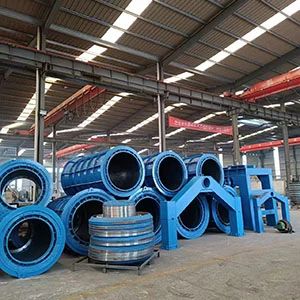

China Precast Concrete House Mold Manufacturer Delivers Cost Effective Building Solutions
2026-08-16
Most builders underestimate how much a precast concrete mold shapes the entire budget—until a single design flaw shows up on-site. That's exactly why the shift toward Chinese precast concrete house mold manufacturers is more than a cost story. It's about engineering precision. Among them, Qianfeng Electromechanical Equipment has carved out a reputation for turning complex housing designs into cost-effective building solutions that arrive ready to pour.
Why a Chinese Precast Mold Maker Focuses on Reusable Steel Instead of Wood Forms
For many precast operations, wood forms are the default because they are cheap up front. But a Chinese precast mold maker that has spent years supplying panels, columns, and beams for high-rise projects keeps coming back to steel for one simple reason: wood does not stay true. Timber warps after a few pours, swells when wet, and needs frequent replacement or repair. Steel holds its dimensions cast after cast, so the edges stay square and the face stays flat. That consistency matters when you're stacking wall panels or connecting floor slabs to columns.
Reusability changes the economics. A well-built steel mold might cost several times more than a timber equivalent on day one, but it can handle hundreds of cycles without major rework. Wood forms often start showing rounded corners and surface defects after a dozen uses. The Chinese manufacturer tends to look at total cost per pour rather than initial purchase price. Fewer replacements, less downtime for stripping and cleaning, and tighter tolerances mean fewer rejected units. Over the life of a project or a factory's production run, steel usually comes out ahead.
Custom Cavity Designs for Insulated Panels and Load-Bearing Walls
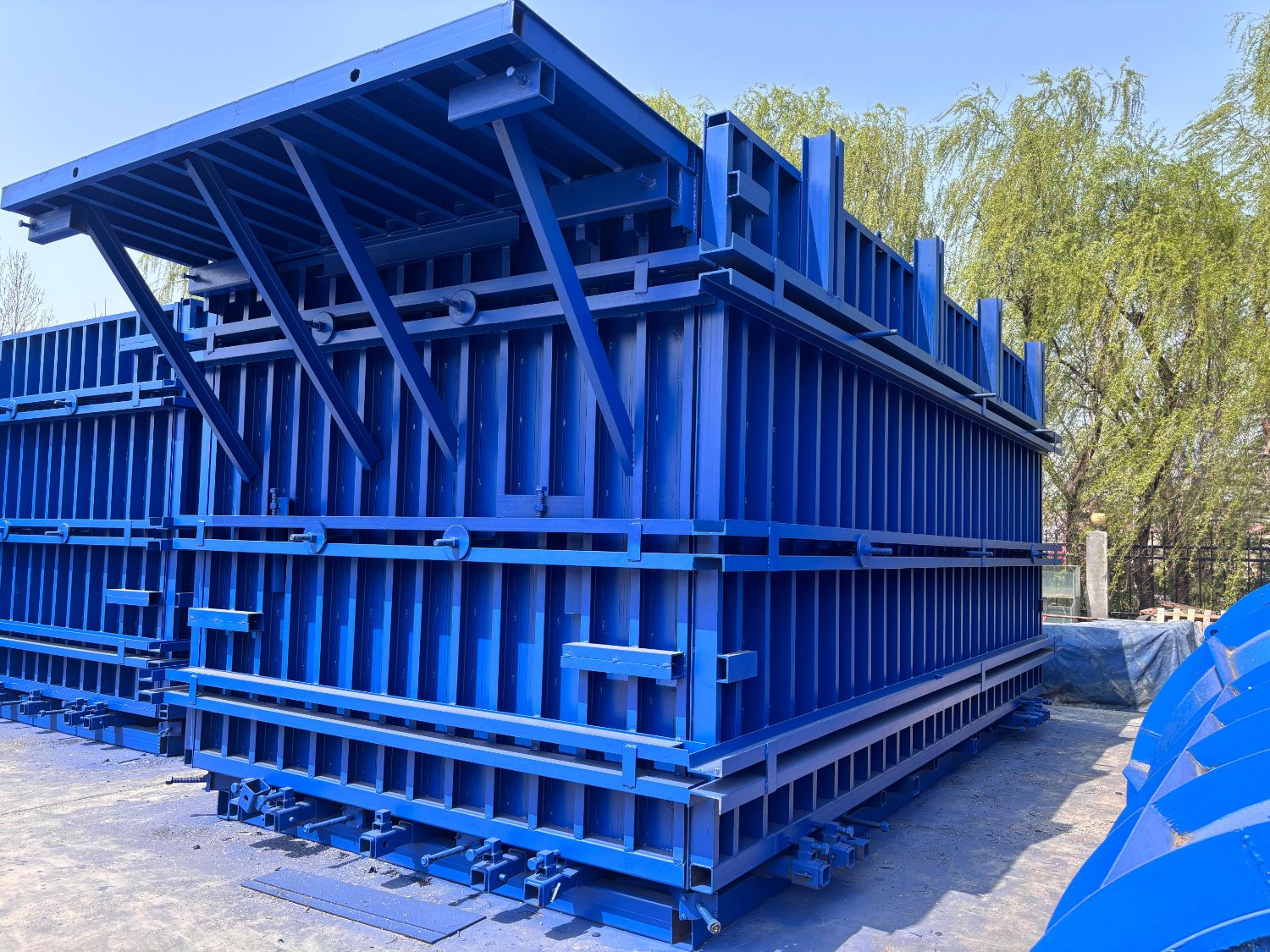
Every building envelope has its own thermal and structural demands, and off-the-shelf cavity dimensions rarely fit perfectly. Custom cavity designs let you align the core thickness with the exact R-value you need, while also shaping the space to accommodate wiring, plumbing, or reinforcement without compromising load-bearing capacity. Instead of forcing standard panels into irregular openings or awkward transitions, the cavities are drawn to the project's specific geometry, which reduces on-site cutting and keeps the insulation continuous.
For load-bearing walls, the cavity isn't just a void for insulation—it becomes part of the structural logic. By varying the cavity depth or adding internal ribs only where the load path requires them, the panel can carry more weight while still allowing generous insulation in non-critical zones. This approach avoids the common trade-off between thick walls for strength and thick walls for warmth; you get both in the same section, with material placed only where it earns its keep.
The real advantage shows up in complex facades or mixed-use buildings where different wall segments face different conditions. A single custom cavity design can transition from a high-load corner to a highly insulated spandrel without visible seams or thermal bridges. This keeps the exterior uninterrupted and the assembly simpler, because the insulation and structure already work together from the first drawing rather than being patched together on site.
The Real Cost Difference Between Factory Molds and On-Site Formwork
When comparing factory molds to on-site formwork, the upfront numbers rarely tell the whole story. A factory mold might appear twice as expensive on paper, but it eliminates the repeated assembly, alignment, and bracing work that eats up labor hours on a job site. On-site formwork demands skilled carpenters day after day, and weather delays or crew turnover can quietly inflate costs far beyond the initial estimate. Factory molds, by contrast, arrive ready to use and can be reused across dozens or even hundreds of pours without recalibration, spreading their cost over a much larger volume of concrete.
The hidden expenses of on-site formwork often surface in the form of material waste and inconsistent finishes. Plywood and timber get cut, nailed, stripped, and then thrown away after a few uses. Each new pour requires fresh materials and more labor to rebuild what was just dismantled. Factory molds, engineered from steel or high-grade composites, hold their shape precisely, reducing the need for patching, grinding, or additional finishing work. That translates into fewer callbacks and a lower total cost per square foot of finished concrete, even if the mold itself was a larger initial investment.
At the end of a project, the real cost difference shows up in the schedule and the final quality. A crew using factory molds can move from foundation to walls to slabs without waiting for formwork to be built on site. This acceleration often means earlier occupancy, lower financing costs, and fewer days of rented equipment sitting idle. On-site formwork, while flexible for one-off custom shapes, rarely competes on repeatability or long-term durability. For any project with repetitive concrete elements, factory molds almost always win when you add up labor, waste, rework, and time.
How Local Steel Sourcing Keeps Mold Prices Stable Across Batches
When a mold shop buys steel from nearby mills or distributors, the cost structure isn't at the mercy of long-haul freight swings or port delays. A shorter supply chain means fewer emergency purchases at premium rates, and the shop can lock in material costs for an entire production run instead of re-quoting every time a shipment gets stuck.
Working with a local supplier also builds familiarity. The mill or service center gets to know the shop's tolerance limits and surface finish expectations, so they can set aside consistent heats or pre-stage inventory for repeat molds. That kind of consistency reduces scrap and rework, making it realistic to hold the same price from batch one to batch five.
When a quality issue does come up, a local source can resolve it in days rather than weeks. A replacement bar can be delivered quickly, or a metallurgical question answered without a transcontinental return. That tight feedback loop stops small problems from turning into expensive delays. As a result, mold pricing stays stable instead of drifting upward due to hidden logistics or quality-control costs that often appear with distant suppliers.
Packing Nestable Mold Kits for Ocean Freight Without Losing Alignment
Nestable mold kits look efficient on paper until they hit open water. The same stacking geometry that saves container volume also lets vibration and swell work the halves against each other. Without hard stops or shear pins, a few degrees of roll can shift guide pins, parting lines, and shutoffs enough to turn a precision tool into a rework project. The goal is to make the stacked assembly behave like a single block rather than a set of loosely mated plates.
Start by reversing the usual logic: don't rely on the mold's own alignment features for transport. Fit purpose-cut timber or steel cradles that lock each level in place, then run threaded rod through the cribbing to pull the stack into compression. Add high-density foam only where it can't creep under sustained load, and seal the open faces with bolted plates instead of stretch film. Mark the orientation and torque sequence so the receiving crew can strip the bracing without disturbing the tool's tram. A crate that survives a rough Pacific crossing is the difference between installing a mold in hours and chasing tenths for days.
Post-Delivery Support That Includes Assembly Guides and Tolerance Checks
Every delivered assembly ships with a set of guides that reflect the actual batch measurements, not just the nominal CAD model. These guides walk the receiving team through the correct sequence of positioning, fastener torque, and alignment steps, with callouts where a specific tolerance band is tighter than standard. Because the documentation references the same serial numbers found on the parts, there is no need to cross-check against a generic manual.
Tolerance checks are performed at the first mating surface, before any permanent fastening takes place. The support team records deviation data for each interface and compares it against the expected stack-up, flagging any drift that could affect downstream fits. This early verification prevents small misalignments from becoming larger problems after final assembly.
If a discrepancy shows up weeks later, the same measurement records are used to trace the issue back to a specific part or setup. Support engineers can pull the batch history and the original tolerance reports, then advise whether a shim, rework, or replacement is the fastest path back to a conforming assembly.
FAQ
They cover the main structural and architectural pieces for a house: solid or sandwich wall panels, hollow-core and solid floor slabs, staircases, columns, beams, and even complete room-sized modules. If you need a specific non-standard shape, the mold can usually be adapted rather than built from scratch.
Most customers see savings in three areas: the mold itself can be reused 200 to 500 times with proper maintenance, assembly and stripping take fewer labor hours than timber or steel formwork, and the dimensional accuracy cuts down on grout, plaster, and rework after casting. In projects with repeated house layouts, the per-unit mold cost often drops below 10 percent of the precast element cost.
Yes, that is a standard part of the process. After receiving your drawings, they adjust the side rails, blockouts for windows and doors, and connection plates to match the geometry. For curved or angled features, they can add adjustable segments so one mold handles several variants of the same wall type.
The main mold faces and frames are typically made from Q345 or Q355 structural steel plate, with hardened wear strips on edges that see frequent vibration. Weld seams are ground flush and stress-relieved where needed. With normal use and periodic lubrication, the molds are designed to maintain dimensional tolerance within plus or minus 2 millimeters across several hundred pours.
For standard wall panel and slab molds that are already in the design library, production takes about 20 to 30 days. Fully custom sets with multiple mold types usually take 40 to 55 days, plus shipping time to your nearest port. They can send progress photos and inspection reports at key fabrication stages if you ask for them.
They make two versions. Fixed production line molds are heavier and include connection points for automated tilting and vibration tables. Site versions are split into smaller modules with lifting lugs, so they can be assembled with a mobile crane and used for casting near the building footprint. Both versions are designed for the same concrete mix and demolding process.
You receive a full set of assembly drawings, a casting sequence document, and a list of recommended release agents. For the first production run, their engineers usually stay available by video call to check alignment and stripping angles. If the problem is serious, an engineer can be sent to your site, though travel and accommodation costs are typically separate.
Molds are coated with a removable anti-rust oil, then wrapped in plastic film and secured to steel or wooden pallets. Exposed threads and precision surfaces get extra edge protectors. Containers are loaded with the heaviest sections at the bottom and gaps filled to prevent shifting. You also get a packing list with photos so you can verify everything before customs clearance.
Conclusion
A concrete house mold factory in China has shifted its entire production approach to reusable steel, moving away from timber forms that warp and wear out after a handful of pours. This switch means contractors receive molds that keep their shape over dozens of cycles, and because each mold is built around the client’s panel layout, the same set can produce insulated panels and load-bearing walls without extra carpentry on site. The pricing picture changes once you compare factory-built steel molds to traditional on-site formwork: labor, material waste, and repeated setup costs disappear, while the mold itself becomes a long-term asset. Local steel sourcing also removes the price swings that often come with imported raw materials, so the cost per mold stays predictable from one batch to the next.
What makes the delivery practical is the way these molds are packed. Nestable mold kits are arranged to save space inside shipping containers, but they are also braced and pinned so alignment is not lost during ocean freight. Once the molds arrive, the manufacturer does not disappear. Clients get assembly guides that show the correct sequence of setting up panels, along with tolerance checks that catch small deviations before concrete is poured. That kind of support reduces the learning curve for new precast operations and keeps production running without long trial-and-error periods.
Contact Us
Contact Person: Bill
Email: [email protected]
Tel/WhatsApp: 8615063653526
Website: https://www.qianfengjd.com