

China Plywood Die Board Laser Cutting Machine Boosts Precision and Efficiency
2026-09-17
What if your plywood die boards could be cut with surgical precision while doubling your throughput? That’s no longer a hypothetical question—ADEWO, a leading Chinese manufacturer, has turned it into everyday reality with advanced laser cutting technology.
Beam Profile Tweaks That Keep Die Board Slots Square
When cutting die board slots, the beam profile determines whether the kerf walls stay parallel or drift into a subtle taper. A beam that's slightly overfocused at the entry face often digs a wider mouth while leaving the bottom tight—just enough to pull the slot out of square after a few thousand cycles. The practical fix isn't always more power. Shifting the focal point a few tenths of a millimeter toward the board's mid-thickness, then flattening the power distribution with a mild top-hat profile, keeps the energy density more even through the cut. Operators who track slot width at three depths usually spot the drift early and can correct it with a small beam expander tweak rather than a full optical realignment.
Another overlooked variable is the beam's edge definition. A Gaussian profile with soft shoulders tends to round the top corners of the slot because the lower-intensity fringe heats the board face without removing material cleanly. By trimming the beam margins with an aperture or adjusting the collimating lens spacing, the focused spot holds a crisper boundary. That reduces sidewall melting and helps the slot remain square when the board is flipped for the opposite cut. Even minor changes—tightening the air assist nozzle, checking the final mirror's thermal drift—can make the difference between a slot that measures parallel and one that slowly opens up under production load.
Laser Cut Edges With No Secondary Trimming Step
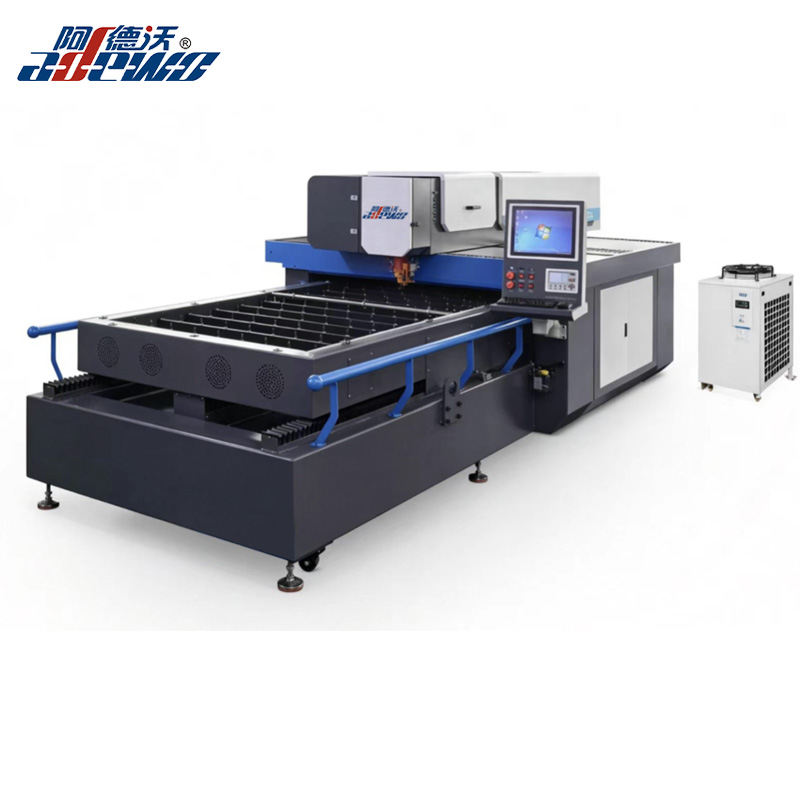
Laser cutting produces edges that are clean enough to skip secondary trimming altogether. The focused beam melts and vaporizes material in a single pass, leaving a smooth, dross-free finish on most metals and plastics. This eliminates the need for deburring or edge conditioning that traditional mechanical cutting methods often require.
Because the heat-affected zone is narrow and controlled, the cut edge retains its original material properties without warping or hardening. Tolerances stay tight, and parts can move directly to assembly or welding without an extra step. This saves time, reduces labor, and keeps production flow uninterrupted.
Unlike punching or shearing, laser cutting does not introduce micro-fractures or distortion along the edge. The result is a ready-to-use part straight off the machine, which is particularly valuable for high-volume runs where consistency and speed matter more than anything else.
Cutting Speed Doubles When the Focus Lens Is Right
A focus lens is not a one-size-fits-all accessory. On thin materials, a shorter focal length shrinks the spot diameter and concentrates power into a much smaller area, which can push a cut from sluggish to aggressive. For example, moving from a 5.0-inch to a 3.75-inch lens on 1 mm stainless often raises energy density enough to double the feed rate without changing laser power. But that same short lens can turn a 6 mm mild steel job into a fight, because the tight beam diverges rapidly and leaves the bottom of the kerf starved for energy. The right lens is the one whose spot size and depth of field match the material thickness, not the one with the smallest spot.
The underlying trade-off is between spot diameter and Rayleigh range. A long focal length gives a larger spot but a long, forgiving depth of focus, so the beam stays roughly the same width through a thick plate. A short focal length produces a tiny spot and a very shallow focus zone, which works brilliantly on thin sheet but creates taper and dross on thicker sections if the focus wanders by even a millimeter. When the lens matches the job, the beam waist sits inside the material with enough depth to maintain a clean kerf from top to bottom. That stability often doubles cutting speed because the operator can run one clean pass instead of slowing down for a second pass or adding excessive assist gas to blow out stubborn dross.
In practice, the speed gain shows up after a basic focus test and a hard look at the actual focal position. Thermal lensing can shift the focus during long runs, and a worn nozzle or the wrong standoff can make a perfectly chosen lens look bad. Checking the focus position with a simple burn test on scrap, then adjusting the lens or collimator so the beam waist sits slightly below the surface on thin material and near the middle on thick plate, often yields immediate improvement. Operators who treat the lens as a fixed setting leave speed on the table; those who match it to the material and verify it under load can see the cut rate jump without touching the resonator.
A Day on the Floor With a Chinese Plywood Die Board Laser
The 6 a.m. shift starts with a low hum that builds into the familiar hiss of the laser tube firing up. I slide a fresh 18mm birch plywood sheet onto the cutting bed, check the vacuum hold-down, and load yesterday's die board file. The red dot traces the first few kerf lines before the beam bites in, sending up thin wisps of smoke that smell like campfire and hot glue. Within twenty minutes the outline of a folding carton die takes shape, and I use a small brush to clear the charred dust from the cut channels.
Midday is where this Chinese plywood die board laser earns its keep. A client sent over a nested layout with knife slots barely 0.8mm wide and bridge gaps that need to stay razor thin. I dial the speed down slightly and watch the head move across the sheet in smooth arcs, pivoting at corners without overshooting. The cut edges come out dark brown, not black, which tells me the power setting is right. Occasionally a small knot in the plywood sends a tiny flare, but the air assist knocks it back before it spreads.
By end of shift, the waste bin holds a pile of laser-cut skeletons, and the cutting table is streaked with fine soot. I shut off the chiller, wipe the lens with a lint-free cloth, and run a quick test square on a scrap corner. The last die board of the day drops out cleanly, ready for rule bending tomorrow. Not a quiet job, but the rhythm of the beam and the smell of cut plywood become a routine you stop noticing until the floor goes silent.
Automatic Nesting Cuts Material Waste by a Third
In sheet metal fabrication and CNC machining, how parts are arranged on a raw sheet determines how much of that expensive material ends up in the scrap bin. Automatic nesting software replaces manual layout guesswork with algorithms that rotate, mirror, and fit shapes into the tightest possible arrangement. The result isn't marginal—many shops see their offcut volume drop by roughly a third, which directly lowers per-part cost and reduces the number of sheets ordered each month.
The savings go beyond raw stock. Less waste means fewer disposal trips, less storage space for remnants, and shorter cutting time because the machine follows a more efficient path across a denser layout. Engineers also spend far less time rearranging parts by hand, freeing them to focus on tolerances and toolpaths instead of puzzle-solving. The one-third reduction in scrap is often the headline figure, but the ripple effects through the entire production workflow are what make automatic nesting a practical upgrade rather than a software gimmick.
Adopting this approach doesn't require a complete overhaul of existing equipment. Most modern CAM packages include nesting modules, and even standalone tools can import DXF or DWG files from common design software. The key is to feed the system accurate material dimensions and kerf allowances—then let the algorithms iterate through thousands of possible layouts in seconds. Once operators trust the output and stop overriding it with manual tweaks, the material waste numbers tend to stabilize right around that one-third reduction.
Clean Slots, Faster Rule Insertion, Fewer Rejects
Keeping slot states clean isn't just housekeeping—it's what lets your rule engine breathe. When every slot is either clearly occupied or truly empty, the insertion path shortens dramatically. No more guessing whether a half-written record is blocking the next write. Instead, you get a predictable flow where new rules slide into place the moment they arrive, without waiting on cleanup jobs or manual overrides.
Faster insertion comes from eliminating the silent checks that usually run in the background. Traditional systems often spend more time validating slot integrity than actually committing data. By enforcing clean slot transitions at the source—such as atomic state flips and immediate tombstone removal—you remove the need for those expensive pre-insertion scans. The result is a noticeable drop in latency, especially under bursts where every millisecond counts.
Fewer rejects follow naturally once the slot model becomes strict. Instead of rejecting a rule because a slot looks dirty due to a stale flag or a leftover lock, the system only rejects genuine conflicts. That means your accept rate climbs without loosening the rules—you're simply no longer punishing good requests for bad bookkeeping. Operators stop chasing phantom failures, and the pipeline starts feeling less like a traffic jam and more like a clean merge lane.
FAQ
It uses a focused laser beam to cut slots, creases, and other profiles into plywood sheets that become die boards for packaging, printing, and label converting. The laser vaporizes wood precisely, so the resulting die board holds steel rule and creasing matrix with tight tolerances.
Many Chinese manufacturers have invested heavily in laser source integration and motion control, offering machines that match precision of established brands at a noticeably lower price. Support networks and spare parts availability have also improved, making them practical for mid-size converters.
The laser beam has almost no mechanical force, so it doesn't deflect or wander in plywood layers. Kerf width stays consistent, often around 0.1–0.3 mm, and corners come out sharp. That means steel rule fits snugly without oversized gaps that cause die failure during repeated cutting.
A laser machine can cut a full sheet of die board in minutes, not hours. Since there's no blade wear or bit breakage, uptime stays high. Many shops also use the same machine to etch alignment marks or cut ejection rubber, reducing secondary steps and material handling.
The learning curve is moderate. The software usually accepts DXF or AI files, and operators adjust power, speed, and focus based on plywood thickness. However, understanding laser safety, exhaust, and lens cleaning is crucial; most suppliers provide on-site or video training.
Corrugated packaging, folding carton, label printing, and leather or gasket cutting often need custom die boards quickly. Laser-cut plywood dies perform well for short to medium runs, sample making, and intricate designs where traditional methods struggle with fine details.
Regular cleaning of the lens and mirrors if using a CO2 laser, checking the water chiller, and cleaning the exhaust duct are the main tasks. The motion system needs periodic lubrication. Neglecting exhaust can cause resin buildup on optics, which degrades cutting quality faster than anything else.
Check the laser tube brand and rated lifespan, the motion system's repeatability, the software's compatibility with existing design files, and the availability of local service. A thicker machine bed and reliable auto-focus probe also matter more than advertised wattage alone.
Conclusion
Fine-tuning the beam profile on a Chinese plywood die board laser cutting machine does more than just avoid charred edges—it keeps every slot perfectly square, which matters when steel rule strips need to seat without rocking. The optimized beam shape eliminates the slight taper often left by older CO2 setups, so the cut walls are straight and the bottom corners crisp. Operators report that boards come off the table with edges clean enough to skip any secondary trimming step, meaning the rule bending and insertion team starts work immediately. Slots that are uniform in width also let the rule slide in with a satisfying resistance, not a hammering struggle, and that alone cuts down on rejects from loose or bent rules. In a busy shop, this precision translates to fewer paused jobs and less scrap rework.
On the efficiency side, swapping in the correct focus lens for the material thickness can literally double cutting speed without bumping up laser power. Paired with automatic nesting software, the machine rearranges die board shapes on each plywood sheet to reduce kerf waste by roughly one third, which adds up fast when you are burning through dozens of boards a day. A typical day on the floor shows the operator loading a 12 mm sheet, letting the autofocus probe set the head height, and watching the gantry fly through the nested pattern. The resulting slots are so clean that rule insertion becomes a quick, repetitive motion rather than a corrective task, slashing the reject rate and keeping the whole die making line moving. It is not flashy automation for its own sake—these are practical tweaks that show up in the final tally of usable dies per shift.
Contact Us
Contact Person: KAELYN LEE
Email: [email protected]
Tel/WhatsApp: +86 15012673758
Website: https://www.china-adewo.com