

China PE Protective Film Manufacturer Sourcing Guide for Quality Buyers
2026-09-28
Finding a reliable PE protective film manufacturer in China can feel like navigating a maze—especially when quality, consistency, and communication are non-negotiable. Whether you're a procurement specialist or a business owner, this sourcing guide cuts through the noise. We'll explore the key criteria that separate top-tier suppliers from the rest, and along the way, you'll see why Shire has earned trust among quality buyers worldwide. Let's dive in.
The Hidden Factory Audit Questions That Expose Weak PE Film Suppliers
Most supplier audits stop at the front office, the polished sample room, and the carefully rehearsed tour. But the real story of a PE film manufacturer lives in the places nobody plans to show you: the regrind corner behind the extrusion line, the unmarked bins of edge trim waiting to be reprocessed, the calibration sticker peeling off a thickness gauge that hasn't been checked in months. Walk toward the back of the plant and ask questions that sound simple but cut deep: "What percentage of your output goes back into the grinder? Show me the batch records for the last three shifts." A weak supplier will hesitate, look at the floor, or tell you that data is "confidential." A strong one will pull up the numbers before you finish the sentence.
Then look at the raw material staging area. Weak operators mix virgin pellets with reclaimed scrap using nothing but a rough ratio someone wrote on a whiteboard three weeks ago. They trust the operator's "feel" for film properties. When you press them on tensile strength variance or dart impact consistency across different lot numbers, you'll get vague answers about "industry standard" and "proven processes." Ask to see their process capability index for film gauge across a full production week. If they can't produce a histogram or a control chart, or if the data shows wild swings between 42 and 58 microns on a nominal 50-micron film, you've found the hidden factory: one that compensates for poor control by shipping thicker film than necessary, quietly eating into your cost per square meter while claiming to meet spec.
Finally, check the quarantine area and the scrap yard. Every plant generates off-spec rolls, transition scrap, and startup waste. The question isn't whether they have it; it's whether they know exactly how much, why it happened, and what prevented it from reaching a customer. A weak PE film supplier will show you a tidy baling machine and say "full recycling," but they won't tell you that the same contaminated edge trim keeps finding its way back into food-contact film because nobody labels the bins. Ask for a traceability test: pick a finished roll on the warehouse floor and ask them to trace every resin lot, every regrind addition, and every shutdown event that touched it. If that exercise takes more than an hour or involves someone shouting across the production hall, you've exposed the hidden factory for what it is: a place where luck is the main quality control tool.
Why Your PE Film Thickness Specs Rarely Survive Contact with Reality
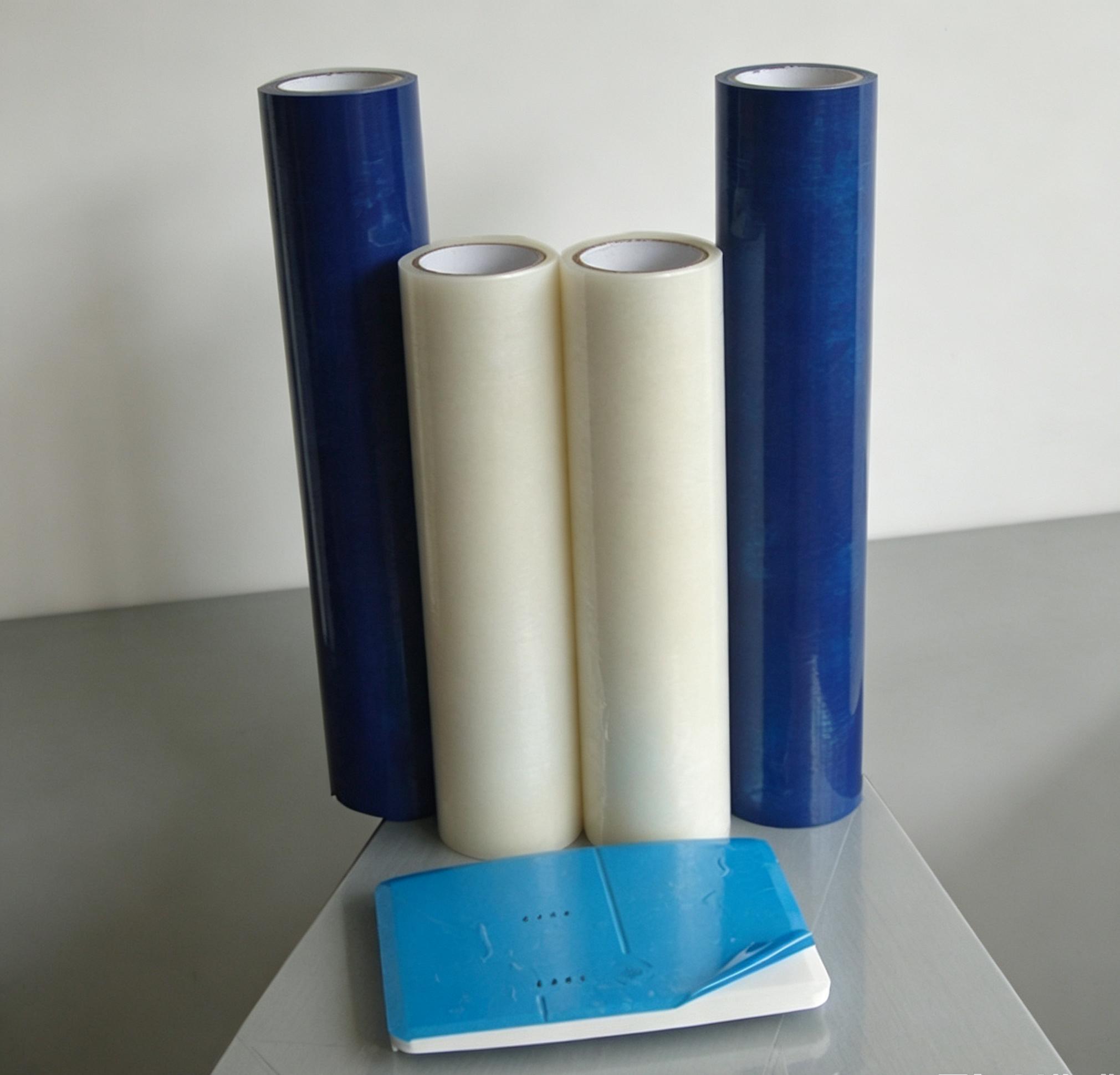
A PE film spec sheet looks clean on a desk: 50 microns, uniform tolerance ±5%, all edges perfectly parallel. Then you unroll the actual roll at the converting line and discover the center is 58 microns while the edges hover at 47. The reason isn't sloppy extrusion—it's that molten polyethylene behaves more like honey on a tilted plate than a precision sheet. During the blown film process, the bubble cools unevenly as ambient air eddies around the tower. Slight draft from a forklift passing by, a five-degree shift in cooling air temperature, or even the operator opening a bay door changes how fast the frost line forms. That frost line wobble directly translates into thickness variation you can measure with a hand micrometer at the unwind station.
Most spec sheets assume a static world where die gap, air ring pressure, and haul-off speed stay locked. In practice, every variable breathes. The extruder screw itself pulses slightly with each revolution, creating a rhythmic thick-thin pattern along the web that rarely shows up in a one-meter lab sample. Add in recycled resin blends—now common for cost reasons—and the melt flow index drifts batch to batch, which changes how the bubble stretches. You end up with localized thin spots that pass a lab test but fail on a high-speed pouch machine, where a 3-micron dip creates a weak seal or a blowout. The spec survives on paper, not on the floor.
Then there's the measurement illusion. Many converters still check thickness with a capacitance gauge or a simple dial indicator at a few points across the web. That gives a nice average number for the report, but PE film isn't uniform at the micro-scale. Gels, fisheyes, and tiny unmelted particles create local thickness anomalies that a point measurement misses entirely. When you run that film through a printing press or laminator, those hidden variations show up as wrinkles, tunneling, or uneven coating weight. The thickness spec didn't fail because the film is bad—it failed because the testing method never captured what actually happens when the film contacts rollers, tension, and heat. Reality has a way of ignoring the number stamped on the core label.
Adhesive Types and the Residue Problems No Sales Rep Mentions
Most sales reps will talk about peel strength and shear resistance, but nobody mentions what happens after six months in a warm warehouse. Pressure-sensitive adhesives—especially the ones used on masking tape and protective films—can oxidize and crosslink over time. Once that happens, the adhesive stops peeling off cleanly and starts smearing into a sticky, gummy layer that resists every solvent you try. It is not a failure you notice during a demo; it shows up after the job is already installed.
Hot melt adhesives have their own quiet problem. The initial bond feels strong, but when exposed to heat cycling or even moderate UV exposure, some formulations break down and leave a brittle, yellowed residue that looks like old varnish. Sales data rarely includes this because most users never report it—they just assume they used the wrong product. Cyanoacrylates are worse in a different way: the fumes can settle on nearby surfaces and create a white, chalky bloom that cannot be wiped off without abrasives.
Even labels marketed as “removable” create residue on matte or textured surfaces. The adhesive fills the microscopic valleys, and removal tears the adhesive film instead of lifting it from the surface. Add plasticizer migration from vinyl or rubber substrates, and you get a greasy, transparent stain that permanently alters the surface. Anyone who has tried to clean old gaffer tape off a painted wall knows exactly what I am describing. The only reliable fix is to test on a hidden area before trusting the label.
How to Negotiate with Chinese Manufacturers Without Killing Quality
Most buyers walk into negotiations with a cost-down mindset and leave with a hollow victory: a lower unit price that quietly gets paid back through substituted materials, skipped inspections, or vanishing after-sales support. If you want better terms without gutting the product, start by anchoring the conversation around total cost rather than sticker price. Ask the manufacturer to break down labor, raw material, component sourcing, and QC time. When they see you understand the cost structure, they stop treating you like a price shopper and start protecting the areas that actually determine durability.
One underused lever is committing to a longer production window or a rolling forecast. Chinese factories live and die by line utilization. A buyer who can promise stable volume often gets better component choices, more careful changeovers, and first access to experienced workers—without demanding a single yuan off the quote. Pair that with a clear boundary: you will not accept unapproved material substitution, and you will pay for third-party inspection at the supplier's facility before shipment. The inspection cost is small, but it changes the factory's risk calculation because defects get caught before they become your problem.
Finally, negotiate the things that are cheap for the factory but valuable for you: packaging reinforcement, moisture protection, batch traceability, or a longer warranty on specific failure modes. These concessions rarely threaten their margin the way a direct price cut does, so they are more willing to say yes—and they often improve quality more than squeezing another 3% off the unit price. If a supplier refuses even these low-cost items, that's a signal you're dealing with someone who cannot hold quality under pressure, not a negotiation partner worth chasing.
Sampling Tactics That Separate Serious Suppliers from Catalog Resellers
When you request a sample from a supplier who actually builds or stocks for production, the first thing you notice is that they want to know the context before they ship anything. They ask about your target operating conditions, annual volume, and whether the sample will be used in a prototype or a pre-compliance test. A catalog reseller, by contrast, tends to skip those questions and just confirm a shipping address. That difference alone tells you whether the sample is meant to start a technical conversation or simply move inventory.
Pay attention to what arrives in the box. Serious suppliers usually include a packing slip that references a specific lot or batch, sometimes with date codes that match a recent production run. They might also send a short note on sample-to-production tolerances or a link to an updated datasheet. Resellers often ship generic parts that have been repackaged without traceability, and the only paperwork is a commercial invoice. If the sample feels like it could have come from a random shelf, it probably did.
The last signal shows up after delivery. A supplier with real engineering support will follow up with technical questions about how the sample performed in your setup. They may offer application notes or suggest a slightly different variant if your results are borderline. A reseller’s follow-up is usually just a discount code or a reminder to leave a review. That shift from engineering dialogue to promotional messaging is one of the clearest markers of which kind of supplier you’re dealing with.
Shipping and Storage Rules That Keep PE Film Rolls Factory-Fresh
Every roll leaves our facility wrapped in a breathable, tear-resistant film that blocks dust but never traps moisture. We then slide each roll into a heavy-gauge poly sleeve, seal both ends with reinforced tape, and place it inside a corrugated core protector that prevents edge crushing during transit. Pallets are stretch-wrapped in a crisscross pattern with corner boards, and if the destination is humid or coastal, a desiccant pouch goes under the wrap before the final layer. Drivers are instructed to keep the trailer vents closed and the temperature below 30°C — anything hotter and the film can soften just enough to pick up a permanent set from the core pressure.
Once the rolls arrive, the real work begins. We tell every warehouse team to store PE film vertically, never flat, and always on a clean, dry surface at least 15 cm off the floor. Sunlight is the silent killer here: UV exposure degrades the polymer chains, causing brittleness long before the roll is used. If the storage area has windows, we require blackout curtains or UV-filtering film on the glass. Temperature swings are another issue — keep the room between 15°C and 25°C, and avoid placing rolls near dock doors, heaters, or cold air returns. A sudden drop in temperature can cause condensation on the film surface, leading to blocking or surface tack.
Rotation matters more than people think. We label every roll with a two-year shelf life from the production date, and we enforce a strict first-in, first-out system. Older rolls go on the top racks or the pick aisle closest to the shipping area. If a roll has been sitting for more than six months, we recommend a quick unwind test before use: check the film for any waviness along the edges, listen for a crackling sound that signals brittleness, and feel the surface for tackiness. A roll that fails any of those checks goes back to the supplier rather than into a customer's machine. These small habits — vertical storage, UV control, temperature stability, and honest rotation — are what keep a PE film roll printing clean and sealing tight months after it leaves the factory.
FAQ
Look for independent production records: ask for a video tour of the extrusion line, request the actual machine models and their output capacity, and cross-check business license scope. A real factory will usually offer custom gauge and adhesion ranges without hesitation, while traders often try to steer you to stock specifications.
Focus on four numbers: film thickness tolerance (ideally within plus or minus 5%), peel adhesion range in g/25mm, tensile strength at break, and elongation. For films used on delicate surfaces like acrylic or painted metal, request a low-adhesion version with a clean-release test report over 30 days.
Ask for a roll-to-roll peel force chart instead of a single sample reading. A serious manufacturer will measure adhesion at the start, middle, and end of a master roll. If they refuse or only provide a lab certificate from three years ago, treat that as a red flag.
The usual issues are premature peeling on curved edges, ghosting or adhesive residue after UV exposure, and unwinding tension that stretches the film unevenly. These often come from recycled PE resin or inconsistent corona treatment, not from a simple defective batch.
Request a three-tier sample set: one A4 sheet for basic visual and tack check, a 10-meter roll for application trials on your actual product, and a pre-production master roll segment from the same line that will run your order. Skip manufacturers that charge high sample fees or only send tiny swatches.
A common and fair structure is 30% deposit via bank transfer, with the balance paid after a detailed pre-shipment inspection report and video of the finished rolls. Avoid 100% upfront unless the order is under $2,000. For larger volumes, consider a 30/70 split with third-party inspection as a condition.
Yes. Most high-volume extrusion lines cluster in Guangdong (Dongguan and Shenzhen) for fast prototyping and electronics-grade films, while Shandong and Jiangsu host large petrochemical-integrated producers for lower-cost industrial films. Choosing a manufacturer closer to raw material supply often gives you a 5 to 8 percent cost edge on thick gauges.
Insist on a clause for adhesion retention over 6 months under normal storage, and a replacement or refund for rolls that show telescoping, blocking, or gel streaks. Also define claim evidence: photos of the defect, remaining meters on the roll, and a retained sample from each batch.
Conclusion
Sourcing PE protective film from Chinese manufacturers rarely fails because of price—it fails because buyers trust the glossy spec sheet. Push for factory audits that go beyond the tour: ask how they handle raw resin changes, what their coating tolerance really is, and how they document rejected lots. Thickness numbers look precise on a PDF, but edge variation of 5–10% is common if nobody checks. Demand measurements from actual rolls, not just certificates. The adhesive side is even trickier. Sales reps gloss over residue risk, but a low-cost acrylic can turn into a nightmare after UV exposure or a hot container ride. Make them show aging data for the exact film and surface you're protecting.
When it comes time to negotiate, don't chase the lowest unit price—Chinese factories know exactly how to shave microns or switch adhesives to meet a number. Talk instead about total rejection rates and rework costs. Serious suppliers will volunteer multiple sample batches without being asked; catalog resellers will send one perfect swatch and hope you won't notice the difference later. Finally, treat shipping and storage as part of the quality chain: climate-controlled containers, horizontal roll stacking, and first-in-first-out rotation keep factory-fresh properties intact. A film that leaves the plant perfectly is worthless if it arrives telescoped or sticky from heat. Quality buyers define the standard, verify it in person, and hold suppliers accountable from extrusion to unloading.
Contact Us
Contact Person: Jack Xu
Email: [email protected]
Tel/WhatsApp: 8615257328825
Website: https://www.temporaryprotectivefilm.com/