

China GMP Cleanroom Construction: Key Standards and Best Practices
2026-08-03
Navigating the complexities of China’s GMP cleanroom landscape means grappling with evolving standards and a maze of local practices. At the heart of these challenges, GENO Pharmatech has been quietly redefining what compliance and efficiency look like. But what really separates a compliant facility from one that merely ticks the boxes? In this post, we unpack the key standards and share best practices that often go overlooked—insights that could reshape how you approach your next project.
Navigating China’s GMP Framework for Cleanroom Projects
China’s pharmaceutical landscape operates under a distinct set of Good Manufacturing Practice (GMP) regulations that directly shape cleanroom design and validation. Unlike the more principle-based guidelines in some Western markets, Chinese GMP blends international standards with local mandates, placing strong emphasis on detailed documentation and risk-based environmental controls. For cleanroom projects, this means every material, airflow pattern, and monitoring point must align with codified expectations, often requiring deeper engagement with provincial-level inspectors who interpret the rules with regional nuance.
One of the most challenging aspects is the dynamic regulatory environment. Updates to annexes on sterile manufacturing or cleanroom classification can emerge with little lead time, forcing project teams to build in adaptability from the start. We often advise clients to look beyond the current code and consider future trends—such as the push toward continuous environmental monitoring and stricter particle count limits—to avoid costly retrofits. Successful navigation hinges on early collaboration with local engineering firms who understand the unwritten norms, like the preference for stainless steel finishes on certain surfaces or the specific qualifications required for cleanroom certification bodies.
Beyond compliance, the cultural expectation of “guanxi”—the network of relationships—can subtly influence project timelines and approvals. Building trust with local authorities and maintaining transparent communication channels often turns a rigid inspection process into a collaborative review. Ultimately, approaching China’s GMP framework not as a hurdle but as a rigorous quality driver allows cleanroom projects to exceed minimum requirements, yielding facilities that are both globally competitive and firmly grounded in local reality.
Core Structural and Layout Principles That Actually Work
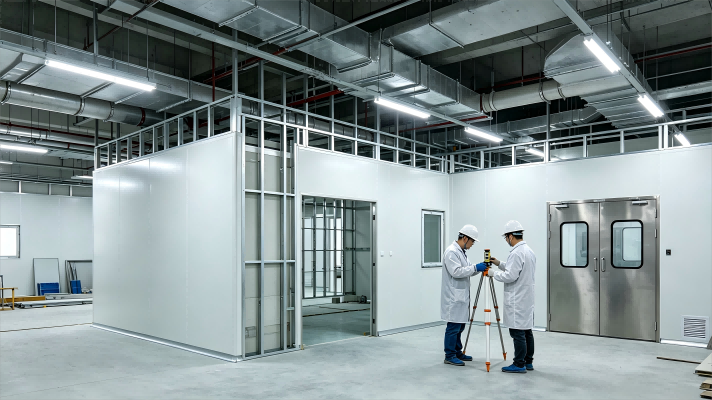
Structurally, a page needs to feel like a well-organized conversation, not a data dump. That means establishing a clear hierarchy where the most important elements demand attention without shouting. Instead of relying on size alone, contrast and spacing guide the eye naturally. Think of a well-built scaffold: headers, subheadings, body text, and interactive bits all have their place, and nothing competes unnecessarily. When the structure mirrors the user’s mental model, navigation becomes intuitive, and the content actually gets absorbed. It’s less about rigid rules and more about giving each piece of information a logical home.
Layout principles often get reduced to columns and grids, but the real magic lies in purposeful asymmetry and breathing room. White space isn’t empty—it’s a tool that shapes focus and eases consumption. Breaking out of perfect symmetry can inject energy, as long as the underlying skeleton remains balanced. Visual weight matters just as much as alignment: a heavy image on one side might need a lighter text block on the other to keep things from tipping. The goal is to create a silent rhythm that pulls people through the content without them ever thinking about the design itself. When something feels right, it’s usually because the proportions and flow were tuned to the content, not forced into a template.
What makes these principles actually work is their adaptability. A rigid framework fails the moment real-world content lands—unexpected images, variable text lengths, or shifting priorities. Strong layouts anticipate chaos and build in flexibility: modular components that can reflow without breaking, spacing that adjusts, and a visual language that holds together under pressure. Testing with messy data reveals whether the structure truly supports the message. Ultimately, the difference between a page that just looks nice and one that works is whether users can effortlessly find what they came for. When the structure and layout fade into background, that’s when they’re doing their job.
HVAC and Air Handling Tweaks for Reliable Cleanliness
Getting consistent cleanliness from your HVAC system isn’t about massive overhauls—it’s often the small, deliberate adjustments that make the biggest difference. Tweaking the air handling setup to match the actual contamination challenges of your space can turn a so-so environment into a reliably clean one. Simple changes, like recalibrating pressure relationships between rooms or adjusting fan speeds to avoid turbulence, can dramatically reduce particle spread without replacing major equipment.
Filtration choices matter more than most realize. Moving beyond standard MERV ratings to consider filter media depth, seal integrity, and change-out schedules can keep fine particles in check. Also, don’t overlook the ductwork: leaks or stagnant pockets undo the best filtration efforts. A periodic smoke study or particle count can uncover hidden airflow issues that cause sporadic cleanliness failures, letting you address root causes instead of chasing symptoms.
Automation adds another layer of reliability when done thoughtfully. Instead of relying on fixed setpoints, use real-time particle sensors to adjust air change rates or pressure differentials dynamically. Even tweaking the sequence of operations—like boosting exhaust during peak contamination events—can maintain cleanliness without wasting energy. The goal isn’t perfection; it’s building a responsive system that stays within your target cleanliness range day in and day out.
Choosing Surface Materials That Balance Compliance and Longevity
Striking the right balance between a surface that feels forgiving underfoot and one that endures years of heavy use is never a straightforward task. Too often, the most compliant options—those with ample shock absorption and a soft tactile quality—break down prematurely in high-traffic zones, leading to costly replacements and unsatisfied users. Conversely, materials celebrated for their brute durability can feel harsh and unyielding, sacrificing the very comfort that makes a space inviting. The secret lies in looking beyond single-layer solutions and instead evaluating how composite structures, advanced polymers, and careful density gradients can uphold both physical ease and structural resilience without forcing a compromise.
Material selection demands a nuanced understanding of how compliance is engineered into a surface without creating long-term weaknesses. Integrated cushioning layers that are chemically bonded rather than simply glued, for example, maintain their rebound properties far longer than traditional foam-backed products. Poured-in-place systems that marry polyurethane binders with rubber granules allow for precise control over hardness while eliminating seams that trap moisture and accelerate deterioration. Even within seemingly uniform materials, subtle variations in cross-linking during manufacturing can yield a floor that softens impact without succumbing to compression set—the permanent flattening that plagues many cushioned surfaces after just a few seasons of use.
Longevity, however, isn’t purely a matter of chemistry; it also hinges on the environment the surface will inhabit and the type of abuse it’s expected to absorb. Outdoor installations exposed to freeze-thaw cycles and UV radiation demand permeable yet tear-resistant formulations that commercial-grade artificial turf or certain open-cell systems provide. Indoor settings with rolling loads, like warehouses or gyms, benefit from high-molecular-weight polymers that distribute stress so effectively that surface deformation remains elastic rather than permanent. By matching the material’s recovery rate and tensile strength to the specific fatigue patterns of the space, it becomes possible to achieve a surface that stays both comfortable and intact long after conventional choices would have failed.
Documentation Habits That Save You During Audits
Audits have a way of surfacing every loose thread you forgot to tie. The difference between a smooth review and a stressful scramble often comes down to your daily documentation habits. When you treat documentation as a living record rather than a chore, it becomes your best defense. Instead of scrambling to remember why a decision was made months ago, you can point to a clear, timestamped entry that speaks for itself.
One of the most overlooked habits is capturing the reasoning behind changes, not just the change itself. An auditor isn't just checking that you updated a policy or a configuration—they want to know why. A brief note like “Updated firewall rule per change request #452 to allow new vendor access, after confirming with compliance” does more than a simple “Updated firewall rule.” It shows intent and due diligence. Pair that with linking to supporting emails, tickets, or meeting notes, and you've created a thread that's easy to follow when memories have faded.
It also pays to standardize where and how you document. Scattered notes in chat messages, sticky apps, or personal folders are invisible during an audit. Choose a shared, searchable space—a wiki, a project log, a dedicated channel—and stick to it. When the process is habitual, you stop debating where something belongs and just log it. That consistency means an auditor can trace a timeline without having to decipher different formats or hunt across tools. And when you're the one being questioned, that effortless recall can turn a tense interrogation into a simple conversation.
Common Pitfalls in Validation and How to Sidestep Them
Many teams treat validation as a last-minute checkbox, rushing through it only to discover late-stage surprises that disrupt timelines. A common trap is assuming that internal logic matches user behavior, which often leads to overlooked edge cases when real people interact with the product. To avoid this, weave validation into your process from day one—engage actual users or domain experts in informal walkthroughs early on, and watch how they instinctively use (or misuse) the feature. This proactive approach catches misalignments before they harden into costly fixes.
Another frequent mistake is over-relying on quantitative data while ignoring the stories behind the numbers. High engagement metrics might mask deep usability frustrations that only surface in qualitative conversations. Instead of celebrating raw stats, complement them with contextual feedback: run lightweight interviews, examine support tickets, or observe a handful of users navigating your solution. These insights often reveal why drop-offs happen and point to improvements that pure data can’t articulate.
Finally, teams sometimes fall into the trap of seeking validation solely from friendly stakeholders who already believe in the project. This echo chamber reinforces assumptions rather than testing them. Broaden your feedback circle to include skeptics, new users, or even people from unrelated teams. Their fresh perspective acts as a healthy stress test, exposing blind spots you’ve normalized. By embracing discomfort and actively hunting for disconfirming evidence, you turn validation from a rubber stamp into a genuine learning loop.
FAQ
China GMP for pharmaceutical cleanrooms is a set of regulations enforced by the National Medical Products Administration (NMPA). It defines requirements for facility design, environmental control, personnel flow, and contamination prevention to ensure drug safety. Unlike general building codes, it zeroes in on minimizing risks of cross-contamination and particulate matter, with an emphasis on validated, reproducible conditions.
The primary standard is the Good Manufacturing Practice for Pharmaceutical Products (2010 Revision), which aligns closely with EU GMP Annex 1 but includes China-specific nuances. This document references ISO 14644 for cleanroom classification and specifies limits for airborne particles and microorganisms. Additional sector-specific guidelines, like those for sterile products or biopharmaceuticals, further refine the requirements.
Chinese GMP classifies cleanrooms into four grades—A, B, C, and D—mirroring EU GMP. Grade A is for high-risk operations like aseptic filling, requiring ISO 5 conditions at rest and in operation. Grade B (ISO 5 at rest, ISO 7 in operation) serves as background for Grade A. Grades C and D correspond to ISO 7 and ISO 8 respectively for less critical steps. The key difference is the mandatory testing at both rest and operational states, with locally defined sampling points and frequencies.
During construction, the integrity of the cleanroom envelope is paramount. All joints and penetrations must be sealed to prevent leaks. Attention to detail in door sweeps, pass-throughs, and utility connections is critical. Builders must follow strict protocols for material handling to avoid introducing contaminants, and the sequence of construction should progress from cleaner to less clean areas. Real-time monitoring of environmental parameters during build-out helps catch issues early.
Walls and ceilings typically use smooth, non-shedding, and easily cleanable materials like high-pressure laminate panels or epoxy-coated steel. Floors are often seamless epoxy or vinyl to eliminate crevices where microbes can hide. All surfaces must resist frequent cleaning agents and disinfectants without degrading. Cove bases at wall-floor junctions and rounded corners are standard to prevent dust accumulation and simplify cleaning.
HVAC design must maintain precise temperature, humidity, and pressure differentials. HEPA or ULPA filters are mandatory for air supply in higher grades. Airflow patterns, often vertical unidirectional in Grade A, must be carefully modeled. The system should ensure sufficient air changes per hour (e.g., 20–30 for Grade C), with regular monitoring and alarm capabilities. Recirculation with properly filtered fresh air make-up balances energy efficiency with contamination control.
Validation follows a lifecycle approach: Installation Qualification (IQ) checks that equipment is installed correctly; Operational Qualification (OQ) tests system performance under specified ranges; and Performance Qualification (PQ) demonstrates that the cleanroom consistently meets specifications under simulated production. Airborne particle counts, microbial monitoring, pressure differentials, and recovery tests are keys. Only after successful completion and NMPA review can the cleanroom be used for manufacturing.
Conclusion
Building a GMP cleanroom in China means more than just following a checklist. The local regulatory framework blends international guidelines with unique national standards, so understanding how to navigate these overlapping requirements is essential from day one. Before breaking ground, you need to pin down the exact classification and intended use of each zone because that shapes everything else — from the layout to the air handling strategy. We’ve found that the most successful projects design for unidirectional flow not only of air but also of personnel and materials, with clear segregation between preparation, processing, and support spaces. This isn’t just about theory; practical touches like minimizing horizontal surfaces, avoiding tight corners that trap particles, and building in enough mechanical space for filter access make a real difference. On the HVAC side, getting the pressure cascade right across gowning rooms and buffer zones is non‑negotiable. Tweaks like using variable speed drives on fans, pre‑cooling outdoor air in humid climates, and installing properly sized terminal HEPA boxes stop a lot of headaches before they start.
Then there’s the less glamorous side — the surfaces, the paperwork, and the testing. Material selection is a constant trade‑off: you need something that handles frequent chemical disinfection without degrading, but you also want it to last more than a couple of years. Epoxy and polyurethane flooring systems often work well, but only when applied by crews who actually understand moisture‑cure dynamics in southern China. Walls and ceilings should be flush‑mounted with coving at all joints; any gap, no matter how small, becomes a contamination risk and a regulator’s favorite target. Documentation habits either become your best friend or your worst enemy during audits. A good rule is to write things down as if the inspector is reading over your shoulder — batch records, maintenance logs, training files, all dated and signed with no room for ambiguity. Finally, validation itself trips up many teams. The most common mistake is rushing the environmental performance qualification before the HVAC system has been properly balanced. Another is assuming that a one‑time test proves long‑term stability. Instead, building in ongoing monitoring from the start, and treating validation as a living process rather than a one‑off event, keeps you compliant and saves explanations later.
Contact Us
Contact Person: Amy Yang
Email: [email protected]
Tel/WhatsApp: 008619330882686
Website: https://www.genopharmatech.com/