

China Cylinder Head Assembly: Your Complete Guide to Quality and Performance
2026-07-28
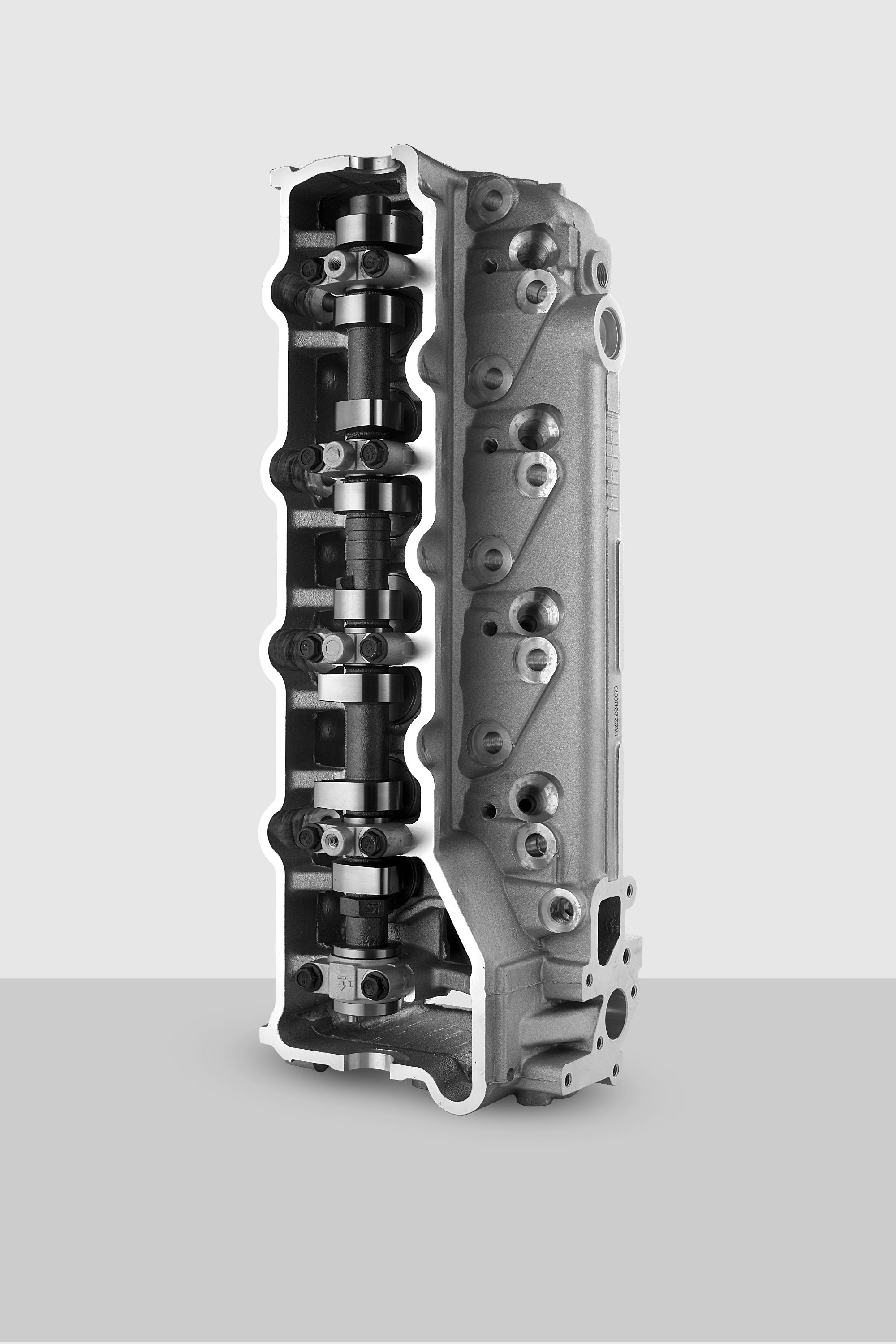
When it comes to engine performance, the cylinder head assembly quietly does the heavy lifting—yet it’s often overlooked until something goes wrong. If you’re sourcing from China, you already know the market is flooded with options, but not all deliver the quality your build deserves. That’s where DDR changes the game, blending precision engineering with real-world reliability. In this guide, we’ll cut through the noise and show you exactly what to look for, so you can make a confident choice without the guesswork.
What Goes Into a Top-Tier Cylinder Head Assembly
A truly top-tier cylinder head assembly starts with the raw material. Premium aluminum alloys, often A356 or similar, are favored for their balance of strength and thermal conductivity. The casting process—typically low-pressure or gravity casting—must minimize porosity and ensure uniform density. After casting, the head goes through a heat treatment cycle to relieve internal stresses and lock in the alloy’s optimal properties. This step isn’t glamorous, but it lays the foundation for everything that follows. Without meticulous material science, even the best port design or valvetrain will underperform.
Next, the port and combustion chamber geometry take center stage. This is where engine builder's philosophies diverge. Some chase raw airflow numbers on a bench, while others focus on velocity and fuel shear to keep mixture quality high throughout the lift curve. A top-level head will have smooth, gradual transitions from the intake entrance to the valve seat, with no sharp angle changes that could separate the fuel from the air. The combustion chamber shape isn’t an afterthought either; it needs to complement the piston crown and spark plug location to promote fast, knock-resistant burn. Every radius and surface finish is an intentional piece of a larger combustion puzzle.
Finally, the hardware that finishes the assembly has to perform under relentless abuse. Valve guides from modern sintered alloys control oil while lasting hundreds of thousands of cycles. Valves themselves are often one-piece forgings with polished stems and back-cut faces to improve flow. The valve job—the cutting of multiple seat angles—directly affects sealing and initial flow, and it’s a craft that separates mass-produced heads from the hand-finished pieces that win races. Seat concentricity, spring pocket depth, and installed height all get checked with or more precision than factory tolerance charts allow. When everything comes together, the cylinder head stops being a collection of parts and starts acting like a tuned instrument.
The Shift in Global Sourcing Dynamics for Engine Components
The landscape for procuring engine components has undergone a quiet but profound transformation over the past decade. Traditional sourcing hubs that once dominated supply chains are now sharing the stage with a new wave of manufacturing centers, driven by shifting cost structures and evolving technical capabilities. Companies are moving beyond a singular focus on unit price, weighing factors like supply chain resilience, proximity to end markets, and the ability to meet tightening emissions standards. This recalibration has made the sourcing map more fluid than at any point in recent memory.
One of the most striking developments is the rise of specialized producers in Southeast Asia and Eastern Europe, who have moved up the value chain from simple machined parts to complex assemblies. Their growing expertise in precision casting and advanced metallurgy is enabling them to win contracts that were once the exclusive domain of established players in Western Europe and Japan. At the same time, political instability and trade barriers are prompting manufacturers to adopt a “plus one” strategy, spreading risk across multiple regions instead of relying on a single country for critical components. This hedging approach is reshaping contract structures and supplier relationships.
Meanwhile, the push for sustainability is adding another layer to the sourcing equation. Engine component buyers are increasingly prioritizing suppliers that can demonstrate lower carbon footprints and adherence to circular economy principles, even if it means paying a slight premium. This shift is accelerating investment in green manufacturing processes and encouraging collaboration across borders to develop lighter, more efficient parts. The result is a sourcing ecosystem that values long-term viability over short-term cost advantage, signaling a permanent change in how the industry thinks about its supply base.
Material Choices That Define Durability Under Pressure
Selecting materials for high-pressure environments goes beyond basic strength metrics—it demands an understanding of how substances behave when every square inch is subjected to relentless force. Metals like hardened stainless steel and titanium alloys dominate due to their exceptional tensile strength and resistance to deformation, but the real secret lies in their microstructure. Through controlled heat treatments and alloying, crystalline lattices can be engineered to absorb stress without cracking, ensuring components remain reliable even under cyclic loads that would fatigue lesser materials.
Polymers and composites often surprise designers with their pressure-handling capabilities. Advanced thermoplastics like PEEK and reinforced PTFE offer chemical inertness paired with remarkable creep resistance, maintaining dimensional stability when metal alternatives might corrode or seize. The stacking sequence in carbon fiber laminates, for instance, can be tailored to redirect stress vectors along predicted paths, transforming a brittle material into a pressure vessel that fails predictably and safely. It's this orchestration of fiber orientation and matrix bonding that turns lightweight materials into durable contenders.
Ceramics and cermets occupy a niche where extreme hardness meets thermal stability, but their innate brittleness requires cunning engineering. By grading composition from pure ceramic surfaces to tougher metallic cores, components resist both wear and sudden fracture. The real-world performance of such materials often hinges on the interface between layers—too sharp a transition creates a weak point, while a gradual gradient distributes stress smoothly, allowing the material to thrive under pressures that would crush homogenous alternatives. Choosing the right material is ultimately a balance of intrinsic durability and thoughtful design integration.
Design Tweaks That Unlock Hidden Engine Potential
Most factory engines are built with a wide margin of safety, leaving substantial room for improvement without ever touching the internals. A simple cold-air intake can reduce inlet temperatures by up to 20 degrees, meaning denser air and a fatter fuel mixture that often translates to 5–10 extra horsepower. Pair that with a free-flowing exhaust, and you’ve already cut through the biggest bottlenecks that choke stock motors.
Beyond bolting on parts, the real hidden gains come from optimizing what you already have. Swapping to a lighter flywheel or underdrive pulleys reduces parasitic losses, making the engine rev faster and feel more responsive. Even something as mundane as indexing spark plugs—aligning the electrode gap toward the intake valve—can improve flame front propagation and yield a couple of free horsepower.
Don’t overlook the engine’s brain, either. A simple ECU reflash can adjust timing, fuel curves, and throttle mapping to suit your specific hardware changes, sometimes unlocking double-digit gains that the factory tune left on the table for emissions or fuel economy. These tweaks aren’t rocket science, but together they can transform a mild-mannered engine into something that breathes fire, all while staying street-legal and reliable.
Vetting Suppliers Without the Guesswork
Bringing structure to supplier evaluation eliminates the uncertainty that comes with relying on instinct alone. A clear scoring framework—weighted by production quality, lead time reliability, and communication responsiveness—allows you to compare potential partners side by side. This data-driven approach not only saves time but also surfaces hidden risks early, so you can focus on building relationships with suppliers who consistently meet your thresholds.
Requesting live product samples under your own specifications, rather than accepting pre-made demonstrations, is a powerful way to see how a supplier responds to real-world demands. Pay attention to how they handle feedback: a supplier that processes change requests methodically and without resistance is demonstrating a culture of continuous improvement. This dynamic exchange reveals far more about their operational maturity than any certificate ever could.
Conversations with a supplier’s existing clients—especially those outside the reference list they provide—can offer unfiltered insights. When you hear about how a supplier handled a sudden volume spike or a quality issue, you get a candid view of their reliability. Supplement this with a trial order that mimics your future volume and complexity; observing their performance under pressure gives you the confidence to move forward without excuses or guesswork.
Getting the Most Miles from Your New Assembly
Breaking in a new assembly isn't just about putting it to work on day one. The first few hundred miles set the tone for how well components settle into each other, so don't rush the process. Keeping speeds varied, avoiding sudden starts or stops, and letting the parts warm up gradually teaches tolerances to mesh without creating unnecessary hot spots. It's tempting to test the limits early, but patience here often translates into fewer headaches later.
Beyond the break-in period, regular inspections catch small shifts before they become expensive problems. Check bolts, seals, and alignment points more frequently than the manual suggests—your specific driving conditions probably don't match the idealized lab tests. A little extra grease in the right spot or a slightly different torque sequence can compensate for the way daily loads actually distribute. The goal is to read the assembly's feedback, not just follow a one-size-fits-all schedule.
When you push the assembly to higher output, upgrade related support systems at the same time. Cooling, filtration, and vibration damping all influence how the core components age. Pairing a more robust pump or a better breather system with the new assembly prevents bottlenecks that gradually strain internal clearances. It's not about outright speed or power—it's about maintaining balance so that every mile feels as fresh as the first.
FAQ
Chinese manufacturers have honed their production techniques through decades of engine parts specialization, combining cost-effective raw material access with refined casting and machining processes. This results in durable assemblies that often rival OEM specs at a fraction of the price.
Absolutely. Many facilities now employ CNC precision machining, multi-angle valve jobs, and upgraded materials like reinforced aluminum alloys. These enhancements make the assemblies suitable for everything from street performance vehicles to commercial trucks requiring consistent thermal stability.
The gap has narrowed significantly. Reputable Chinese suppliers adhere to ISO/TS 16949 standards, utilizing coordinate measuring machines (CMM), pressure decay testing, and full metallurgical analysis. In-process inspections and final batch sampling are routine, ensuring each unit meets strict dimensional and leakage specifications.
It's essential to verify the metallurgy. High-grade aluminum alloys like A356 or 319, coupled with proper heat treatment (T6 or T7), prevent warping and cracking. Look for suppliers who disclose their material certifications and offer samples for third-party tensile and hardness testing to confirm integrity.
Yes, most assemblies are reverse-engineered from original blueprints and test-fitted on actual engine blocks. However, it's wise to check the supplier's tolerance data and confirm compatibility using engine family codes. For vintage engines, pre-installation checks like flatness verification are recommended, but bolt-on readiness is typical.
Established exporters often provide extensive support: detailed installation guides, torque specifications, and even video assistance. Warranty periods ranging from 12 to 24 months are common, covering manufacturing defects. Many also maintain local distribution hubs or partner networks in North America and Europe for easy returns or replacements.
Definitely. By opting for pre-assembled performance kits—featuring nitride-coated valves, high-lift camshafts, and PAC or dual springs—you can increase rev capability and airflow right out of the box. This is a popular path for tuners who want a plug-and-play solution without sourcing and fitting individual parts separately.
Suppliers use vacuum-sealed anti-rust wrapping, custom-fit foam inserts, and double-walled export-grade cartons. Sea freight shipments often include desiccant packs and humidity indicators. For bulk orders, palletizing with shrink wrap and corner protectors is standard, minimizing transit vibration and exposure risk.
Conclusion
When it comes to squeezing every ounce of reliability and power from an engine, the cylinder head assembly sits at the heart of the equation. Chinese manufacturers have quietly revolutionized the production of these complex components, blending advanced metallurgy with innovative design tweaks that often go unnoticed by the average buyer. High‑nickel cast iron and heat‑treated aluminum alloys are now standard in premium offerings, allowing them to withstand brutal thermal cycling and relentless pressure without warping or cracking. Subtle reshaping of intake runners and optimized valve seat angles—often borrowed from motorsport—unlock flow efficiencies that can add a surprising number of horses to even a modest build. Yet the real difference lies in secondary operations: CNC‑ported combustion chambers, multi‑angle valve jobs, and stress‑relieving treatments that are rarely advertised but immediately felt behind the wheel. Sourcing these assemblies without guesswork means looking past glossy catalogs and demanding material certifications, batch‑test reports, and live video inspections of the production line.
The shifting landscape of global sourcing has turned China into a hub where cost and capability finally intersect. Supply chains that once relied on fragmented workshops now gravitate toward integrated factories with in‑house foundries and ISO‑class quality loops feeding direct to brands in Europe and North America. This evolution hasn’t just lowered prices; it raised the baseline for what a mid‑range aftermarket head can deliver. When installing a new assembly, longevity comes down to more than torque specs. It’s about flattening the deck to within micron tolerances, matching the cam profile to real‑world driving patterns, and using a break‑in procedure that protects the freshly ground seats during those critical first heat cycles. Chinese exporters are increasingly pairing their hardware with detailed installation guides that reflect years of warranty data, helping owners and small shops avoid the common pitfalls that shorten service life. The result is a quiet convergence: a cylinder head that performs on the dyno, survives on the highway, and doesn’t require a second mortgage to replace.
Contact Us
Contact Person: Shelly
Email: [email protected]
Tel/WhatsApp: 8613967667688
Website: https://www.yongyu.com/