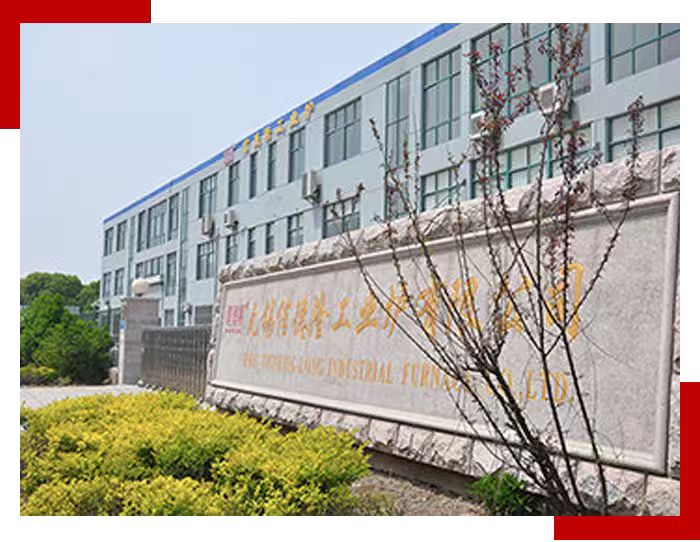

China Bell Furnace Innovations: Advancing Industrial Heat Treatment
2026-08-08
Industrial heat treatment is entering a new era of precision and efficiency, and China's bell furnace technology is at the forefront. From advanced temperature uniformity to energy-saving designs, these innovations are reshaping how manufacturers approach thermal processing. At the heart of this evolution is THINKING-LONG, pushing boundaries with solutions that blend decades of expertise with modern engineering. Dive into how these breakthroughs are not just heating materials, but transforming entire production lines.
Rethinking Heat: Bell Furnace Breakthroughs from China
For decades, bell furnaces have been the quiet workhorses of industrial annealing, but their reputation for sluggish cycles and fuel hunger has clung to them like a shadow. Chinese engineers have taken a hard look at these giants and started asking a simple question: what if heat didn't have to move so predictably? By revisiting the geometry of gas flow and relocating burners, they've turned a traditionally batch-bound design into something far more dynamic. The result isn't just a faster furnace—it's a smarter one that learns the thermal personality of every charge.
The real shift didn't come from a single flash of inspiration, but from a willingness to question base assumptions about how heat blankets a steel coil. Iterative refinements in the circulation pattern, often guided by computational fluid dynamics run on locally built clusters, allowed teams to cut temperature spreads by more than half. Protective atmospheres, once seen as a simple blanket, are now pulsed and profiled with a precision that borders on surgical. These are not laboratory novelties; they are running in mills where floor operators talk about heat curves the way others discuss cooking recipes.
What makes these breakthroughs land differently is the deliberate integration of the furnace with the wider rolling line. Rather than treating annealing as an isolated thermal step, the control logic now predicts downstream coil behavior and adjusts soaking profiles in real time. The energy savings are tangible, but the quiet revolution lies in consistency—coils emerging with mechanical properties so reliable that downstream rejections have become a rarity. This is heat, rethought not as a cost, but as a tuned variable in a system that finally listens to itself.
Precision Heating Redefined in Industrial Applications
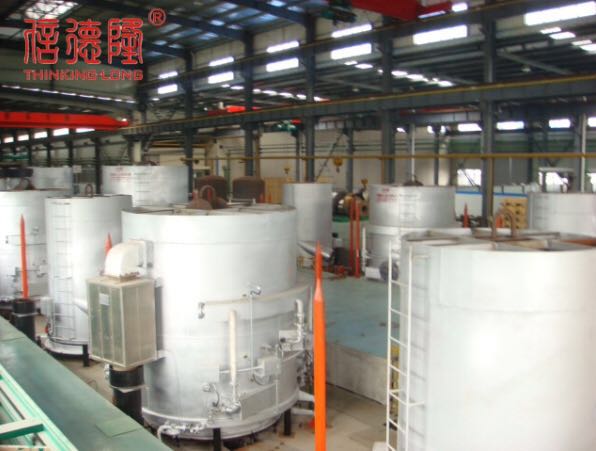
Precision heating is no longer just about hitting a setpoint. In modern industrial environments, it's about delivering uniform heat profiles, rapid response, and micron-level control across complex geometries. Legacy systems often struggle with hot spots, thermal lag, and energy waste, but redefining precision means integrating adaptive algorithms that learn from real-time feedback. These systems anticipate load changes, adjust power delivery on the fly, and maintain stability even in fluctuating conditions, transforming how sensitive processes like semiconductor fabrication, composite curing, and additive manufacturing achieve repeatable results.
This shift isn't just technological—it's operational. By embedding intelligent heating solutions directly into production lines, manufacturers gain tighter process windows and reduced scrap rates. For instance, in sealed foil curing or glass lamination, achieving true uniformity across the surface eliminates defects without sacrificing cycle time. The redefinition lies in merging sensor fusion, predictive analytics, and advanced heater design, so that heating becomes a strategic asset rather than a mere utility. The outcome: higher yields, lower downtime, and a new benchmark for thermal precision in demanding industrial applications.
Energy-Smart Designs Cutting Costs and Carbon
Modern architecture is embracing energy-smart approaches that go far beyond adding solar panels. These designs integrate passive heating and cooling, high-performance insulation, and intelligent building orientation to slash both utility bills and greenhouse gas emissions. By treating the building itself as a finely tuned system, architects are creating spaces that stay comfortable year-round with minimal mechanical intervention, often reducing energy consumption by half or more compared to conventional structures.
A standout example is the use of phase-change materials embedded in walls and ceilings, which absorb heat during the day and release it at night, stabilizing indoor temperatures without using electricity. Coupled with advanced glazing that adjusts tint based on sunlight intensity, such innovations are turning buildings into responsive, climate-adaptive shells. The financial upside is immediate: lower operating costs from day one, often offsetting the initial investment within a few years through energy savings alone.
What makes these designs truly transformative is their scalability. From single-family homes retrofitted with dynamic shading and natural ventilation to entire office towers wrapped in living green walls that act as natural air conditioners, the principles remain the same: work with the environment, not against it. Municipalities are taking note, incentivizing such designs through fast-track permitting and tax breaks, which further accelerates their adoption and amplifies the collective carbon reduction.
Smart Controls Elevating Process Accuracy
In modern industrial environments, precision isn’t just a goal—it’s a baseline expectation. Smart controls redefine how processes are managed by integrating adaptive algorithms that learn from real-time data, adjusting parameters on the fly to maintain tight tolerances. Unlike conventional systems that rely on static setpoints, these intelligent frameworks anticipate deviations and correct them before they manifest, drastically reducing variability and waste.
One overlooked aspect of process accuracy is the human-machine interface. Smart controls simplify complex decision trees into intuitive dashboards, allowing operators to focus on exceptions rather than routine monitoring. This shift not only speeds up response times but also eliminates the subtle inconsistencies that arise from manual adjustments. The result is a workflow where machine-driven precision and human oversight coexist without friction.
The real advantage surfaces in multi-stage production lines where interdependencies are high. A smart control system acts as a central nervous system, synchronizing disparate equipment so that each step feeds into the next with minimal drift. By embedding quality checks directly into the control logic, manufacturers achieve a closed-loop process that self-corrects, ensuring that the final output consistently meets specifications without protracted inspection cycles.
Tailored Solutions for Specialized Alloys
Every specialized alloy brings a unique set of handling requirements—factors like heat sensitivity, oxidation risk, and precise composition tolerances demand a processing approach that goes far beyond standard metallurgy. We design our methodologies around the subtle nuances of each material, from customizing inert atmosphere controls for reactive metals to developing proprietary quenching cycles that preserve grain structure in precipitation-hardenable grades. The result is a process that doesn’t just accommodate complexity but thrives in it, keeping your alloy’s intended performance front and center at every stage.
Our work with nickel-based superalloys, titanium aluminides, and cobalt-chrome formulations has taught us that off-the-shelf treatments rarely match the potential of custom-created solutions. We’ve built a library of adaptations—including staged thermal profiles that reduce residual stress in thin-walled components and surface conditioning techniques that eliminate alpha-case formation on titanium parts. These aren’t one-size-fits-all fixes; each is verified through iterative testing on small-batch samples from your own material inventory, ensuring the solution fits your alloy’s actual behavior in production.
Collaboration shapes the way we approach tricky material challenges. Rather than assuming we know your alloy, we start with a deep dive into your application’s specific stressors, whether it’s cyclic thermal loading, corrosive media, or ultra-high-vacuum compatibility. From there, we craft a closed-loop plan that combines real-time process monitoring with post-run analytics, allowing on-the-fly adjustments that keep every billet or forging within the narrow windows your specs demand. It’s a partnership that recognizes your alloy as an individual, not just another entry on a production sheet.
The Quiet Revolution in Metal Treatment
Metal treatment has long been associated with noisy factories, towering machinery, and harsh chemical baths. But a quieter shift is underway—one that reimagines how we strengthen, protect, and finish metal surfaces. Instead of relying on energy-intensive processes and toxic compounds, engineers are turning to methods that work at lower temperatures, use fewer resources, and produce virtually no hazardous waste. This isn’t just incremental improvement; it’s a fundamental rethink of what’s possible when we apply precision and efficiency to an age-old craft.
Today’s advanced treatments often operate at the molecular level, using carefully controlled coatings, plasma technologies, or electrochemical methods that need only minutes to achieve what once took hours. The results are quieter in every sense—less audible noise, less environmental disruption, and less dependence on volatile supply chains. Components emerge with superior wear resistance, corrosion protection, and even new functional properties, all while the workshop itself becomes cleaner and safer.
This transformation isn’t confined to high-tech labs. Small-scale fabricators and large manufacturers alike are adopting these approaches because they make economic sense. Reduced energy bills, lower chemical consumption, and faster cycle times add up to tangible savings. More importantly, they allow teams to focus on precision and innovation rather than managing messy, hazardous byproducts. What started as a trickle of experimental techniques is becoming the new standard, proving that the most impactful revolutions often happen without a sound.
FAQ
A bell furnace is a batch-type heat treatment unit that uses a removable, bell-shaped cover to create a controlled high-temperature environment. It's particularly valued for processing large, heavy, or delicate components that require uniform heating and cooling rates. Industries rely on it for annealing, tempering, and stress relieving of metals like steel, aluminum, and copper alloys, as it minimizes distortion and achieves precise metallurgical properties.
China has introduced several improvements such as advanced regenerative combustion systems that recover waste heat, cutting fuel consumption by up to 30%. Intelligent process controllers with IoT connectivity allow real-time adjustments and predictive maintenance, reducing downtime. Additionally, new lightweight refractory linings and modular designs shorten cycle times and improve temperature uniformity, which directly boosts throughput.
The Chinese focus is on integrating automation and data analytics deeply into the furnace operation. For instance, many domestic models come with AI-driven recipe management that optimizes heating ramps based on workload and material type. There's also a strong emphasis on scalability and local adaptability, meaning furnaces are tailored for specific industrial clusters like automotive parts in Hebei or aerospace components in Shaanxi, giving them a competitive edge in both cost and performance.
By significantly improving thermal efficiency, modern Chinese bell furnaces burn less natural gas and emit fewer greenhouse gases per ton of processed material. Many units are equipped with low-NOx burners and advanced flue gas filtration systems that capture particulate matter. The use of electric heating options in some designs further reduces on-site emissions, aligning with China's broader push for greener manufacturing.
The automotive sector benefits hugely, especially for annealing stamping dies and treating transmission gears. The aerospace industry uses them for stress relieving titanium and superalloy parts. Wire and cable manufacturers employ bell furnaces for annealing coils of copper and aluminum to achieve desired conductivity and ductility. Even the renewable energy sector relies on them for heat treating components in wind turbines and solar mounting structures.
Firms like Jiangsu KCH Intelligent Equipment and Beijing Huahai have been pushing boundaries with their fully automated bell furnace lines. CITIC Heavy Industries has developed large-capacity units for specialty steel products. In the niche of bright annealing bell furnaces, Zhejiang Sifang Group has gained recognition for clean, precise heat treatment used in medical device manufacturing.
Bell furnaces operate in batches, so they are inherently flexible and ideal for mixed production with varying part sizes and recipes. The heating and cooling occurs under a protective atmosphere without moving the load, which prevents mechanical stress. Continuous roller hearth furnaces, on the other hand, move parts through fixed temperature zones, offering higher throughput for uniform, high-volume products like steel pipes or bars. Bell furnaces are chosen when product quality and surface finish are critical, even if cycle times are longer.
Conclusion
China’s bell furnace technology is quietly reshaping thermal processing landscapes. Rather than incremental tweaks, recent designs rethink heat flow from the ground up, resulting in breakthroughs that lift temperature uniformity to levels once considered impractical. These systems redefine precision—whether treating massive turbine shafts or delicate aerospace components, the heating profile stays remarkably tight, minimizing distortion and rework. Beyond accuracy, energy-smart configurations are slashing consumption: regenerative burners, advanced insulation, and adaptive cycling trim both operating costs and carbon footprint without compromising throughput. This blend of efficiency and fidelity is turning heads in industries where every kilowatt and every micron counts.
What truly sets the latest generation apart is intelligence. Embedded smart controls continuously adjust gas flows and sequencing based on real-time feedback, locking in exact metallurgical outcomes batch after batch. For specialty alloys that demand quirky heating ramps and soak times, manufacturers now offer tailored furnace geometries and atmosphere management that feel almost bespoke. The net result is a quiet revolution: shops once wedded to conventional pit or car-bottom units are switching over, drawn by tighter properties, less scrap, and simpler operation. As global supply chains chase cleaner production and higher consistency, these Chinese innovations are no longer just an option—they’re becoming the blueprint.
Contact Us
Contact Person: Qian Xijun
Email: [email protected]
Tel/WhatsApp: 8613961736750
Website: https://www.thinkinglong.com/