

China Air Circuit Breaker Solutions Worth Considering for Your Next Project
2026-10-09
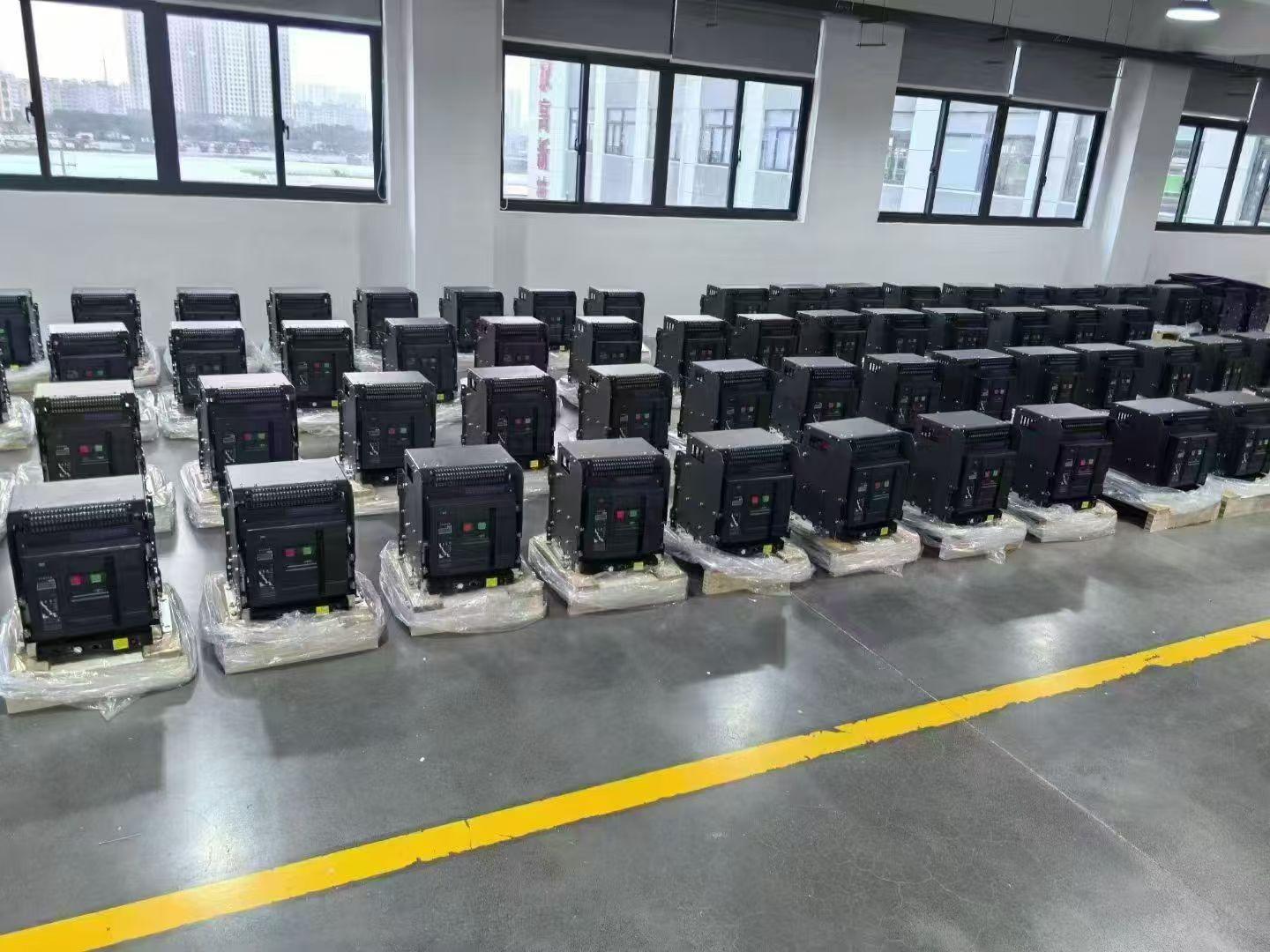
When it comes to power distribution, not all air circuit breakers are created equal—especially when you’re sourcing from China. If your next project demands reliability without the guesswork, MOLDVOLT brings a lineup of air circuit breaker solutions that combine proven performance with practical engineering. From compact designs to high-breaking capacities, there’s more to these breakers than meets the spec sheet. Here’s why they deserve a spot on your shortlist.
What Actually Changes When a Chinese ACB Meets Your Fault Current
When a Chinese ACB sees a fault current, the first thing that shifts is the trip curve's knee point. Most domestic breakers built to GB 14048.2 use bimetal strips for thermal overload and solenoid plungers for short-circuit, but the exact calibration often leans toward faster magnetic pickup than IEC equivalents at the same frame size. That means the breaker clears a bolted fault a few milliseconds sooner, but it also narrows the selectivity window with downstream MCCBs. You'll notice the let-through energy drops, yet the arc chute plates can show more pitting because the contact separation speed hasn't changed to match the aggressive trip.
The second change is in the arc voltage signature. Chinese ACBs frequently use narrower splitter plates and less silver alloy on the arcing contacts, so during interruption the arc remains longer before extinguishing. This lowers the peak current slightly but raises the internal pressure inside the arc chamber. If the fault is close to the breaker's rated Icu, you may hear a sharper report and see more carbon dust around the exhaust vents. The breaker still clears, but the wear per fault is higher than the nameplate would suggest.
Finally, the post-fault behavior changes. After a high-current trip, the mechanism's latch and toggle may need a manual reset even if the breaker has a motor operator. The stored-energy spring can lose preload because the trip shaft rotates farther than expected. In practice, this means a Chinese ACB that handles one fault well may refuse to close on the next attempt unless the operator checks the closing spring charge indicator and the contact wear markers. For critical feeders, it's worth doing a close-open test at no load before putting it back in service.
Ambient Heat, Altitude, and Harmonic Loads: Ratings That Often Get Missed
Datasheets love to quote performance at a clean 25°C, but real installations rarely cooperate. Once a drive or transformer is tucked into a sun-baked enclosure or wedged beside a furnace, ambient heat quietly eats into its thermal budget. The result is a component that runs hotter than intended even before it handles a single overload, forcing insulation to age faster and protection settings to drift. A quick check of the actual cabinet temperature—not the building HVAC setpoint—often reveals why a unit that looked right on paper fails early.
Altitude is another silent degrader. Thinner air at 2,000 meters carries away less heat through convection, so a motor or drive that manages fine at sea level can overheat at a mine site or mountain pump station. At the same time, reduced air density weakens the dielectric strength of gaps, meaning clearance distances that look safe on paper may not hold off voltage spikes. Many specs bury the altitude derating curve in a footnote, but ignoring it turns a routine retrofit into a string of nuisance trips.
Harmonic loads compound the problem by adding heat that a basic thermal model never sees. Non-linear draws from VFDs, LED banks, and UPS systems push current through conductors and transformer windings in ways that increase I²R losses without a corresponding rise in useful work. Neutral conductors in three-phase circuits can carry excessive triplen harmonics, overheating even when phase currents read normal. Unless the equipment is rated for harmonic-rich environments—or filters are added upstream—the extra heat shortens lifespan and occasionally triggers protective devices that were never set for the real waveform.
Why “IEC Equivalent” Claims Need a Hard Look Before Procurement
The phrase “IEC equivalent” often slips through procurement checklists as if it were a rubber stamp, but that assumption can backfire quickly. In practice, it may mean a product was tested to a loosely related national standard, built under an internal quality plan that never saw an outside auditor, or simply benchmarked against an outdated edition of the IEC norm. Without a certificate number and an accredited lab’s name attached, the claim is little more than marketing language. Buyers who treat it as a full IEC certification often discover later that the equipment fails a site acceptance test or raises flags during a regulatory review.
Another wrinkle is that “equivalent” can vary wildly depending on who is making the claim. A supplier might argue that a GB or IS standard mirrors the IEC text, yet omit critical national deviations in creepage distances, temperature limits, or fault withstand ratings. Even when the differences look minor on paper, they can shift how a device behaves under real fault conditions. Procurement teams that skip the comparison table and rely on the word “equivalent” end up accepting risk they never priced into the contract.
A practical safeguard is to demand the original test report, the exact standard designation with year, and the scope of certification for the specific model being quoted. If the vendor cannot produce these within a few days, that delay usually tells you more than any datasheet. Taking that extra step before signing a purchase order keeps the burden of proof where it belongs—on the supplier—and prevents a vague label from becoming an operational liability later.
Spare Parts Lead Times and the Components Worth Stocking Early
Long lead times on spare parts can quietly derail maintenance schedules and leave critical equipment down for weeks. What often separates smooth operations from costly delays is knowing which components to order before a failure occurs. Some parts have predictable wear patterns or are sourced from distant suppliers, making them prime candidates for early stocking. Identifying these items requires looking beyond generic recommendations and examining your own equipment history alongside supplier delivery windows.
A practical approach is to categorize parts by lead time and failure impact. Bearings, seals, and custom-machined fittings frequently top the list because their lead times stretch past standard restock cycles while their absence can halt an entire line. Less obvious candidates include specialized sensors or control boards that may have single-source suppliers with erratic production schedules. By comparing actual downtime costs against the carrying cost of holding these parts, you can build a short, defensible early-stocking list instead of over-investing in slow-moving inventory.
Suppliers rarely volunteer that a certain component has a recurring six-month backlog, so maintenance teams should track order-to-delivery times over multiple purchasing cycles. When lead time variability is high, even a modest buffer stock can prevent weeks of lost productivity. Focus on components that combine long or unreliable lead times with high failure consequences, and review the stocking list quarterly as supply chains shift. This targeted approach keeps working capital lean while ensuring the right parts are on hand before they become urgent.
Retrofit Fit Checks: Mixing Chinese ACBs with Existing Switchgear
Retrofit projects rarely go as planned once you slide a Chinese ACB next to legacy gear. The first thing to check is the physical envelope: many Chinese breakers use a shorter depth but a taller cassette than older European or North American switchgear, so a straightforward bolt-in swap can leave you with misaligned bus stabs and a door that won’t close. Even when the panel cutout looks similar, the breaker’s racking mechanism often expects a different floor rail height and a different interlock pin position, which means you may need to fabricate adapter plates or modify the cell floor before the breaker will rack in safely.
Beyond the mechanical fit, control wiring tends to throw surprises. A legacy switchgear lineup may have 110 VDC closing coils and 230 VAC motor charging circuits, while a Chinese ACB of the same frame size often ships with 220 VDC or 24 VDC coils and a different auxiliary switch layout. If the retrofit simply reuses the old secondary plug without checking coil ratings and contact sequencing, you can end up with a breaker that closes but never trips on protection relay command. It is worth mapping every secondary contact—especially the spring-charged indication and the under-voltage release—against the original schematic rather than assuming the terminal numbers match.
Then there is the question of short-circuit coordination. A replacement ACB may carry an Icu rating that looks fine on paper, but the real risk lies in how it behaves with the existing bus bracing and upstream protection. Chinese breakers often have faster opening times and slightly different arc chute geometry, which can shift the peak let-through current enough to matter if the old bus supports were never designed for that level of dynamic stress. Before energizing, run a quick selectivity study and verify the breaker’s rated peak withstand against the panel’s original short-time rating. If the numbers are close, adding current-limiting fuses or reinforcing the bus supports may be cheaper than finding out during a fault.
Lifecycle Costs After the Initial Quote: What the Numbers Leave Out
Initial quotes tend to anchor attention on the purchase price, but that figure rarely captures what a piece of equipment or software will actually demand over its usable life. Energy draw, routine maintenance, replacement parts, licensing fees, and the labor needed to keep things running all accumulate quietly. By year three or four, those overlooked line items often outpace the original invoice.
One common blind spot is downtime. A cheaper system that fails more often can erode productivity in ways no quote shows. Then there are less obvious costs: training new staff after turnover, compatibility upgrades when adjacent systems change, and even disposal or decommissioning fees at the end. These are not hypothetical—they show up in operating budgets long after procurement closes the file.
The most useful habit is to ask for a total cost of ownership estimate before comparing options. It forces a conversation about expected lifespan, service response times, efficiency under real workloads, and the cost of adapting the tool to future needs. Without that wider lens, an attractive initial quote can quietly turn into a multi-year drain.
FAQ
Many manufacturers now pair solid interrupting capacity with modular designs that are easier to service onsite. The real difference often comes down to customization: you can specify trip units, communication modules, and even busbar orientations without long lead times.
Yes, if you choose units tested to IEC or ANSI standards and verify short-circuit ratings against your fault current study. Several Chinese brands have third-party certifications from KEMA or ASTA, which helps when local inspectors ask for documentation.
Ask for reference projects with similar voltage and breaking capacity, not just a generic list. Also request a factory audit report or plan a video walkthrough. A supplier that is transparent about test failures and corrective actions is often more trustworthy than one that claims zero defects.
Dimensional compatibility can be a hurdle. Some Chinese ACBs follow common DIN or ANSI footprint patterns, but others are proprietary. Always compare panel cutouts, busbar spacing, and door interlock positions before ordering. A good supplier will provide CAD drawings early.
Many now include Modbus, Profibus, or IEC 61850 communication options. You can get real-time current, temperature, and breaker health data without adding external gateways. Just confirm whether the protocol matches your existing SCADA or BMS.
It varies widely. Standard configurations can ship in 3 to 5 weeks, while custom trip settings, special paint, or marine certification may extend to 8 to 12 weeks. Plan for factory acceptance testing if the project schedule allows.
Usually yes, but the total cost of ownership matters more than unit price. Factor in spare parts availability, local technical support, and warranty terms. A cheaper breaker that leaves you waiting weeks for a trip unit is not a bargain.
Conclusion
When a Chinese air circuit breaker actually interrupts your fault current, the differences show up in arc quenching speed, contact wear patterns, and how consistently the trip unit repeats its timing under real short-circuit stress. It is not enough to look at the printed breaking capacity; you need to ask what happens at 80 percent of that rating after several operations, and whether the breaker still coordinates with downstream protection. Field reports from commissioning engineers often highlight that ambient heat, altitude, and harmonic-heavy loads change the effective rating more than the catalog suggests. A breaker installed in a 45°C room at 2,000 meters with significant nonlinear load may need a much larger frame size or forced ventilation to avoid nuisance trips and premature aging.
The phrase “IEC equivalent” deserves a hard look because type-test reports can come from different editions of the standard, and third-party witness testing is not universal. Before procurement, compare the actual temperature-rise test conditions, not just the certificate number. On the logistics side, lead times for spare parts like arc chutes, motor operators, and electronic trip units can stretch beyond eight weeks, so stocking those early prevents extended downtime. Retrofit projects mixing Chinese ACBs with existing switchgear often fail on small details: busbar hole spacing, cable lug depth, door cutout dimensions, and auxiliary switch voltage ratings. After the initial quote, lifecycle costs shift with maintenance intervals, firmware update availability, and energy losses at partial load. A cheaper breaker can become expensive if you are locked into a single supplier for proprietary trip unit programming tools or replacement contacts. The realistic path is to treat Chinese ACB solutions as an engineering decision, not a price decision, and verify the assumptions behind every derating curve before the project starts.
Contact Us
Contact Person: Hellen
Email: [email protected]
Tel/WhatsApp: 86-13634205622
Website: https://www.voltcabinet.com