

Carbon-Based Soil Conditioner for Healthier Roots and Higher Yields
2026-08-13
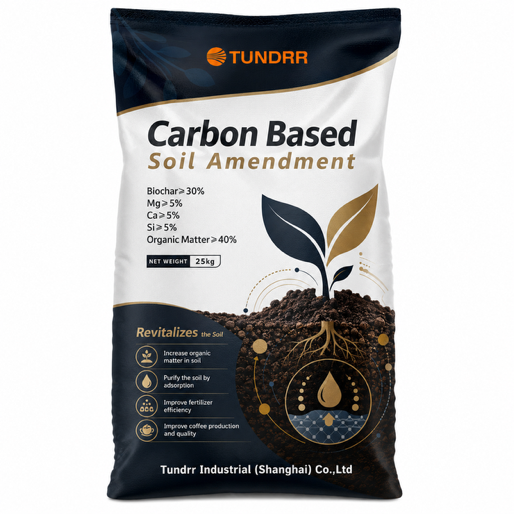
Healthy roots are the foundation of every thriving crop—and the secret to unlocking their full potential often lies beneath the surface. Farmers and growers worldwide are discovering that conventional soil management isn't enough to sustain long-term productivity or fight off stress from compaction, nutrient imbalance, and disease. That's where targeted innovation comes in. Tundrr has developed a carbon-based soil conditioner designed to transform root zones into resilient, high-performance environments. In this post, we'll explore how its unique formulation boosts soil structure, enhances nutrient uptake, and ultimately drives healthier roots and higher yields—without the heavy environmental footprint of synthetic additives. If you're ready to rethink what your soil can do, read on.
What Carbon-Based Conditioners Do That Ordinary Amendments Can't
Carbon-based conditioners don't just feed the soil—they restructure its living architecture. While ordinary amendments like synthetic fertilizers or raw minerals deliver nutrients in a quick, linear burst, carbon-rich materials such as biochar, humic substances, and composted plant residues create a porous, sponge-like matrix. This matrix holds water and nutrients in the root zone far longer, releasing them slowly as microbes break down the carbon. The result is a soil that behaves less like a passive container and more like a self-regulating system, buffering against both drought and nutrient leaching.
Another distinction lies in how carbon-based conditioners awaken the soil's own biology. Ordinary amendments often bypass the microbial community entirely, supplying ions that plants can absorb directly but leaving the underground food web starved and dormant. Carbon, by contrast, serves as both habitat and fuel. It gives mycorrhizal fungi and bacteria the surface area and energy they need to thrive, and those organisms in turn unlock minerals, produce growth-promoting compounds, and even suppress pathogens. Over time, this builds a resilient rhizosphere that continues to improve soil structure and fertility long after the initial application—something a bag of conventional fertilizer simply cannot replicate.
Perhaps most overlooked is the role carbon-based conditioners play in long-term carbon cycling. Ordinary amendments, especially those high in soluble salts, can degrade soil aggregates and accelerate the oxidation of existing organic matter. Carbon-based products, however, tend to stabilize soil organic carbon, forming stable micro-aggregates that resist erosion and compaction. This not only improves tilth and root penetration but also keeps carbon locked in the ground rather than escaping to the atmosphere. It's a compounding benefit: better structure, more active biology, and a tangible contribution to the farm's own carbon balance—all from choosing a conditioner that works with the soil's natural tendencies instead of against them.
Roots Need More Than Water: The Underground Oxygen Boost
Most gardeners assume a good soak is all roots crave, but that logic drowns the quieter half of the story. Root cells burn stored sugars through respiration, and without oxygen, the energy pipeline stalls within hours. In compacted clay or an overwatered container, the tiny air pockets that usually ferry oxygen to root tips collapse. The result isn't wilting from thirst but starvation in the midst of plenty.
The underground oxygen boost happens when soil structure opens up—think crumbly aggregates, old root channels, and the faint movement of earthworms. These spaces let fresh air diffuse downward, replacing the carbon dioxide roots exhale. Aeration isn't a one-time fix; it's a rhythm. Adding coarse perlite to a potting mix, poking a few deep holes around a shrub, or letting a bed dry just enough between waterings changes the gas exchange picture.
Pay attention to the early warnings: new leaves that look pale, a sour smell from the pot, or root tips that brown instead of branch. These signal that the root zone has tipped toward anaerobic microbes, which produce compounds like hydrogen sulfide and ethylene. Giving roots an oxygen boost often means doing less—less water, less foot traffic, less guesswork—and trusting the soil to breathe on its own terms.
Building Soil Structure That Lasts Beyond One Season
Most gardeners treat soil structure like a one-time fix: add compost, till it in, and expect the bed to stay loose. But that loose, crumbly texture rarely survives the first heavy rain or dry spell. True structure comes from living processes—roots, fungi, earthworms, and microbial glues—not from a single amendment.
To build something that carries into next year, keep living roots in the ground as long as possible. Fall-planted cover crops like cereal rye, crimson clover, or daikon radish do more than add biomass; their roots push through compacted layers and feed soil organisms that produce sticky compounds. When you mow or roll them down in spring, leave the residue in place rather than turning it under. That surface mulch protects the soil from raindrop impact, slows evaporation, and becomes food for another round of structure-building fungi.
One season won't be enough, but the right habits compound. Check progress not by how the soil looks when freshly dug, but by how water moves through it after a storm or how easily a shovel slides in during midsummer. If you see grain-like crumbs that hold together when moist and don't crust over, that's a sign the system is working. Adjust your routine based on what you find—maybe add more diverse cover crops, reduce foot traffic, or cut back on aggressive tillage—but avoid chasing quick fixes that only create temporary fluff.
From Compacted Clay to Crumbly Loam: A Field-Tested Shift
For three seasons we watched that patch of ground refuse every attempt at root penetration. Boots came up caked with dense, orange-brown plates that dried into something closer to brick than soil. Rain pooled on the surface, then ran off sideways, leaving behind a cracked crust by midmorning. The standard advice said add gypsum and wait, but the water never moved deep enough for the gypsum to matter. What finally forced a real change was digging a test pit after a dry spell and finding no earthworm casts, no old root channels, no sign of biological work below six inches—just tight, anaerobic clay that smelled sour when broken open.
We stopped trying to amend the whole field at once and focused on what a single season could actually accomplish. A subsoiler shank pulled through the worst zones at 14 inches, cracking the hardpan without inverting the soil. Then we ran a heavy layer of spoiled hay and leaf mold over the surface and let winter do the mixing. By spring, the ground had settled enough to walk on without leaving deep footprints, and the first summer of buckwheat and oilseed radish opened channels we hadn't seen in years. The radish roots went straight down through the fractured clay, and when they rotted in late fall, they left behind macropores that finally let water and air move.
The shift didn't happen all at once, but two years in, a handful of soil from the same plot crumbled between our fingers instead of clodding. It smelled clean, held together when squeezed, and broke apart with a light touch—loam, not clay. Earthworms showed up on their own once the surface stayed covered and the compaction eased. Now that same ground drains within hours after a heavy rain and carries a springy feel underfoot that tells you the structure has changed below the plow layer. It's the kind of result you can read about, but you only trust it after you've cut a spade into the soil and watched the slice fall away in loose, dark crumbs.
How Healthier Microbial Life Translates to Stronger Plants
When the soil around a plant's roots is teeming with diverse, active microbes, the plant doesn't just sit there passively absorbing water and nutrients. These microscopic partners actively break down organic matter into forms the roots can easily take up, while also producing enzymes and acids that unlock minerals otherwise locked away in soil particles. In exchange, the plant feeds them sugars and other root exudates, creating a feedback loop that steadily improves both the microbial community's vitality and the plant's access to essential resources.
A healthier microbial population also acts as a living shield. Beneficial bacteria and fungi colonize the root surface and surrounding soil, competing fiercely for space and food, which leaves less room for pathogens to establish themselves. Some microbes even produce antibiotics or trigger the plant's own immune responses, priming it to fend off diseases more effectively. This biological defense reduces the plant's stress load, allowing it to put more energy into root growth, leaf expansion, and ultimately, stronger stems and larger yields.
The link between microbial health and plant vigor shows up most clearly under challenging conditions. Soils rich in beneficial microbes tend to have better structure, with stable aggregates that hold water during dry spells and drain excess moisture after heavy rains. Microbes also help buffer soil pH and detoxify harmful compounds. Plants growing in such environments exhibit deeper root systems, thicker cuticles, and more robust vascular tissues—traits that directly translate into resilience against drought, heat, and nutrient fluctuations.
Yield Differences You Can Actually Measure at Harvest
Many growers talk about hybrid or variety potential, but the real proof shows up only when you weigh the grain cart or look at calibrated monitor data. Side-by-side strips harvested on the same day, under the same field conditions, give you the clearest picture. One hybrid might look just as green from the road, yet differ by 4 or 5 bushels per acre after you correct for moisture.
The trick is to avoid comparing wet weights without adjusting them. A 220-bushel load at 22% moisture is not the same as 220 at 15%. Use a scale ticket and a moisture meter, then convert to dry bushels. Even a small error in moisture can turn a 3-bushel difference into something that isn't real.
Harvest-time measurements also expose how a product handles stalk quality, ear retention, or drydown. If one entry shells easier and gets you out of the field two days sooner, that saved time has value you can actually capture with a notebook, not just a yield monitor.
FAQ
Compost breaks down quickly and feeds microbes for a season, but a carbon-based conditioner is built around stable carbon structures that persist in the soil. That persistence gives roots a longer-lasting physical environment, with better aeration, water movement, and surface area for beneficial fungi and bacteria to colonize.
Roots that can grow deeper and branch more freely reach water and nutrients that shallow roots miss. With carbon-based conditioning, soil aggregates become more stable, so roots spend less energy pushing through compacted layers and more energy supporting vegetative growth and grain or fruit fill.
It won't happen overnight, but yes, it can help restore some of the structure that tillage destroys. The carbon particles act as nucleation points for soil aggregates, and over a few seasons you will often see lower bulk density, improved infiltration, and more earthworm activity.
It scales down just as well. A small raised bed benefits from the same mechanisms, such as less crusting, better moisture retention, and stronger root systems. Many home gardeners use a lighter application rate and still notice fewer wilting events between waterings.
It doesn't replace them, but it can make them more efficient. The increased cation exchange capacity and microbial habitat mean nutrients like nitrogen and potassium are less likely to leach away before plants can take them up. Many growers find they can reduce fertilizer inputs slightly after the first year.
Hardwood biochar, coconut shell char, and even bone char are common, but the best products use a consistent particle size and are pre-charged with minerals or compost extracts. Raw, uncharged biochar can temporarily lock up nutrients, so formulation matters more than the raw material alone.
Because the carbon skeleton is highly resistant to microbial breakdown, a good application can keep working for three to five years or longer. You won't need to reapply every season, but light top-dressings or banded applications can speed up improvements in particularly poor soils.
Unlike lime or synthetic nitrogen, it is quite forgiving. At very high rates you might see temporary nitrogen drawdown if the material is not properly aged or charged, but that resolves as microbial populations adjust. Most issues come from using raw, dusty char rather than a finished product.
Conclusion
Most soil amendments fall short because they try to feed plants directly, overlooking the real bottleneck underground. A carbon-based conditioner works differently: it opens up dense soil, creating tiny air channels that let roots breathe. Instead of sitting as a lifeless filler, the carbon matrix holds water and nutrients in a form roots can actually reach while preventing compaction from returning after a few heavy rains. This means oxygen reaches root tips even in clay-heavy ground, and that shift alone transforms how plants take up minerals.
Over a full growing season, the change is visible from the ground up. Compacted clay loosens into a crumbly texture that holds together without becoming hard pan. Beneficial microbes multiply in the carbon-rich environment, breaking down organic matter into plant-ready compounds and warding off root pathogens naturally. At harvest, the difference shows up in heavier fruit set, thicker stalks, and more uniform sizing across the field. Growers who track yields report measurable gains without needing extra synthetic inputs, because the root zone finally has the structure, air, and biology that ordinary amendments never provide.
Contact Us
Contact Person: Ellen Zhang
Email: [email protected]
Tel/WhatsApp: +86(21) 2287 6756
Website: https://www.tundrr.com/en/