

Best Rotary Dip Switches Supplier: Ensuring Precision and Durability for Your Projects
2026-05-30
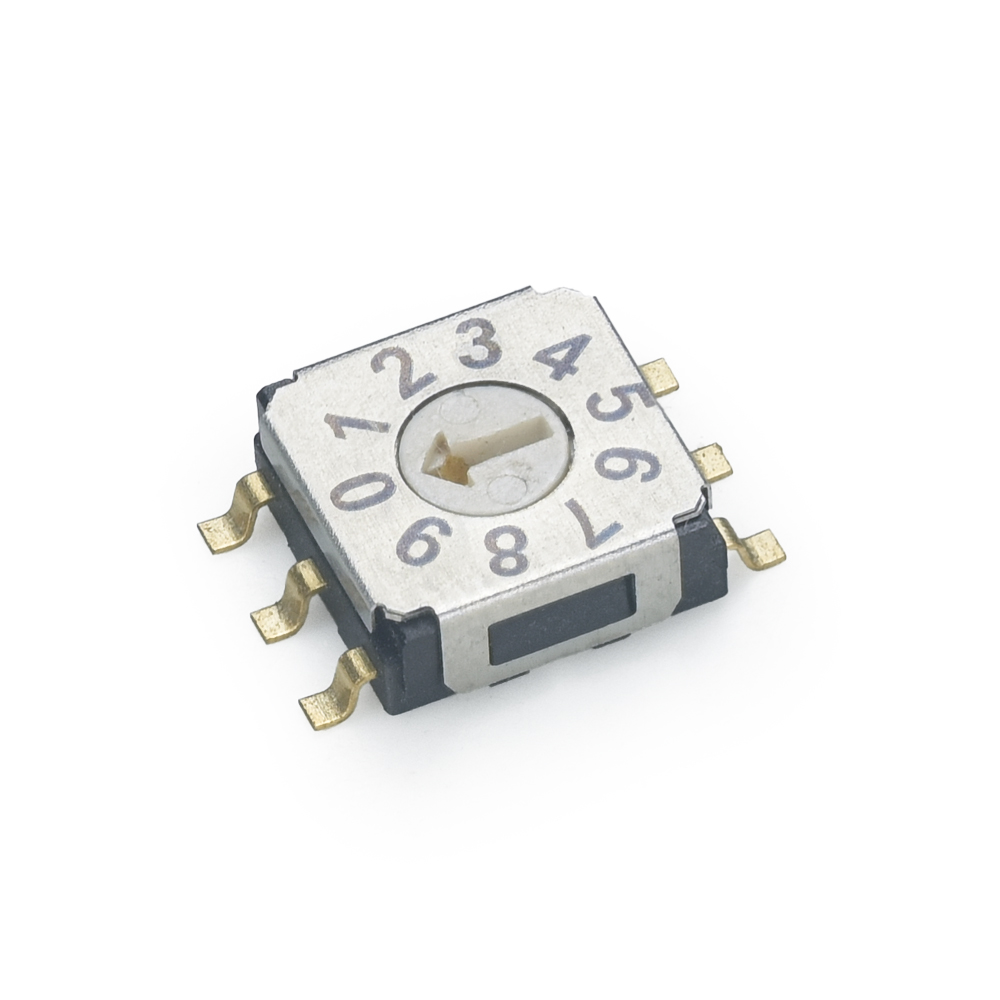
In the world of electronics, the smallest components often make the biggest difference. Rotary dip switches may be tiny, but they're crucial for precise settings and reliable performance. Whether you're designing industrial controls, communication devices, or consumer gadgets, the switch's quality directly impacts your project's durability. That's where choosing the right supplier becomes critical. With KEJIAN ELECTRONICS, you're not just buying a part—you're investing in precision engineering that stands the test of time. So, what truly sets a top-tier rotary dip switch apart? Let's explore.
What Makes a Rotary Dip Switch Reliable
Reliability in a rotary dip switch stems largely from the precision of its internal mechanism. High-quality models use gold-plated phosphor bronze contacts that resist oxidation and maintain consistent conductivity over thousands of actuations. The detent mechanism, often a ball bearing and spring arrangement, provides crisp, repeatable positioning that prevents intermediate states and contact bounce. This tactile feedback isn't just a user convenience—it directly reduces the risk of mis-set addresses or unintended signal fluctuations in the field.
Environmental resilience is another cornerstone of dependable operation. Top-tier designs incorporate O-rings or gasket seals at the shaft entry, protecting the contact area from dust, moisture, and solder flux during wave soldering processes. The body material itself matters: glass-filled thermoplastic housings can endure the thermal shock of automated assembly while resisting warping or cracking over time. These switches often achieve high IP ratings without sacrificing the crisp tactile feel that technicians rely on during board configuration.
Long-term stability under mechanical and thermal stress sets apart a truly reliable dip switch. The terminals are typically designed with compliant or bifurcated contacts that maintain pressure on the PCB pad even through vibration and thermal cycling. This prevents the microscopic fretting corrosion that can plague lower-quality switches in automotive or industrial environments. When combined with a wiping action during rotation that self-cleans the contacts, these design choices ensure that a rotary dip switch will hold its settings for decades without the intermittent failures that can be so costly to diagnose.
Precision Engineering for Consistent Performance
It starts with how we think about tolerances. Every shaft, bearing, and contact surface is ground and fitted to specs that most shops would consider excessive. That level of care isn’t about chasing numbers—it’s about knowing that a 5-micron deviation can ripple through an entire production run. Our engineers treat each assembly step as a variable to eliminate, so the machine you fire up today behaves exactly like the one that passed its 2,000-hour endurance test.
The payoff shows up in the rhythm of your shift. When cutters wear predictably and fixtures locate without drift, you stop baby-sitting adjustments and start trusting the output. That’s where consistent performance lives—not in a spec sheet but in the quiet confidence of walking away from a running cycle knowing the next part will measure up.
Materials and Design That Withstand the Test of Time
True longevity in any creation begins with a deep understanding of materials—how they age, respond to weather, and gain character over decades. Stone, for instance, bears the marks of wind and rain without losing its integrity; wood, when properly chosen and treated, deepens in hue and strength. The key is selecting substances that don’t merely resist time but grow more interesting with it.
Design, too, plays an equal role. A piece that endures avoids fleeting trends, instead embracing proportions and functions that remain relevant. It might be a building with rooms easily adapted to new uses, or a chair contoured to the body without excess ornament. The goal is not to freeze a moment but to create something that future generations will find useful and beautiful on their own terms.
When material and design work in harmony, the result isn’t just an object—it’s a narrative. Each scratch on a hardwood floor, each softened edge of a marble step tells a story of lives lived around it. This marriage of durability and thoughtful form ensures that what we build today won’t just survive; it will matter, quietly standing as a testament to care and foresight.
Real-World Applications Where Quality Matters
In healthcare, the stakes couldn't be higher. Diagnostic imaging equipment, patient monitoring systems, and surgical robots demand flawless precision. A single software glitch or hardware defect can literally mean the difference between life and death. Quality here isn't just a checkbox—it's woven into every line of code, every sterilized instrument, and every regulatory compliance check. Engineers work alongside clinicians to stress-test devices under chaotic real-world conditions, because no lab can fully replicate the emergency room at 3 a.m.
Aerospace takes quality to altitudes where failure isn't an option. Jet engines, avionics, and cabin pressurization systems undergo relentless testing cycles that simulate decades of wear in mere weeks. The cost of cutting corners is measured in human lives and billion-dollar aircraft. That's why manufacturers trace every bolt back to its foundry batch and use statistical process control to catch anomalies before they become tragedies. When you're 35,000 feet above the ocean, trust is built on layers of redundancy and materials that refuse to compromise.
Even in consumer electronics, quality separates brands that stick around from those that vanish after one holiday season. Think about the smartphone in your pocket—its touchscreen has to survive greasy fingers, sudden drops, and extreme temperature shifts. The battery must handle hundreds of charge cycles without swelling. Behind the scenes, factories employ automated optical inspection, X-ray solder joint analysis, and acoustic resonance checks to weed out the tiniest flaws. Users may never think about these tests, but they feel the results every time their device works without a hitch for years on end.
How to Identify a Trustworthy Supplier
Spotting a dependable partner starts with looking past flashy promises and digging into their track record. Request concrete examples of past projects similar to yours, and don't hesitate to ask for direct contact with those clients. A supplier confident in their work will have no issue providing references, and genuine feedback from real businesses often reveals more than a polished website ever could.
Communication style matters more than most people realize. Pay attention to how they handle questions—do they give vague answers or respond with clear, detailed information? Trustworthy suppliers are transparent about their capabilities, lead times, and potential challenges. If they overpromise and appear eager to agree to everything without discussion, that's often a warning sign.
Finally, consider the practical indicators that seasoned buyers rely on. Do they have consistent quality control processes in place? Are they willing to send samples before committing to a larger order? Checking for certifications relevant to your industry can also help, but remember that paperwork alone isn't enough. A short video call showing their facility or a quick tour during a visit, if possible, can tell you more about their operation than any certificate can.
Custom Solutions for Complex Requirements
Every business faces moments when off-the-shelf tools simply can’t keep pace with evolving demands. We step in precisely there, crafting tailored systems that align with your unique workflows, not the other way around. Whether it’s integrating legacy platforms with modern APIs or building a bespoke inventory manager that syncs across three continents, we treat your constraints as the starting point for innovation. The result is a solution that feels native to your operations—quietly handling the heavy lifting while your team focuses on what they do best.
Complexity often hides in the details: a niche compliance requirement, a customer portal that must pull data from five different databases, or a reporting module that needs to speak the language of both finance and operations. We peel back those layers through deep discovery sessions, mapping out every dependency before a single line of code is written. Then we iterate rapidly, showing you functional prototypes weeks before the final polish, so nothing gets lost in translation. It’s a collaborative rhythm that turns ambiguity into a clear, dependable product.
The real measure of a custom solution isn’t just how it performs on launch day, but how gracefully it adapts when your business takes an unexpected turn. That’s why we architect with flexibility in mind—modular components, scalable infrastructure, and documentation that actually makes sense. One client came to us after a failed vendor implementation left them with a tangled mess of code; nine months later, their new system handled twice the traffic with room to grow. That’s the kind of durability we build for, because your requirements won’t stay static, and neither should the tools you depend on.
FAQ
Rotary DIP switches are compact, manually adjustable components that let you select discrete positions with a simple turn. They shine in settings where you need a tangible, tool-free way to configure settings—think industrial controls, embedded systems, or instrument panels. Unlike binary DIP switches, they offer more outputs per space, reducing clutter and speeding up setup.
Look for switches with sealed contacts, typically gold-plated, and housings rated for high temperatures or moisture. A reliable supplier will provide detailed specifications on contact resistance, life cycles, and environmental resilience. Don't just trust the datasheet—ask about real-world testing, like vibration or thermal shock trials, to confirm they’ll hold up where you need them.
Beyond stocking quality parts, an exceptional supplier offers engineering guidance, consistent lead times, and traceable production. They’ll help you navigate compliance requirements, suggest alternatives if a part is over-engineered for your budget, and won’t disappear after the sale. You’ll notice the difference when you need a custom shaft length or a tweak to the detent force.
Many top-tier suppliers do support low- to mid-volume customization. You might adjust actuator style, color-coding, or even pinout configurations. It hinges on their in-house design capabilities—look for a partner with a flexible manufacturing setup and a willingness to collaborate early in your design phase. Prototyping services are a good sign they take smaller runs seriously.
Precision boils down to contact stability and position accuracy. Request samples and test them under your actual load conditions. Measure output consistency at each detent. A supplier confident in their product will supply statistical process control data or allow you to visit their facility. If they dodge such requests, consider it a red flag.
While they’re common in industrial control, they also excel in niche areas like musical instrument modding (pedalboards, synth modules), retro computing, and agricultural automation. In these fields, the tactile feedback and no-power-needed setting retention are invaluable. A creative supplier often shares case studies showing off-beat uses that spark new ideas for your own projects.
Specialists tend to carry deeper inventory of variants and keep tighter quality controls because their reputation rests on that single category. They’re more likely to have technical staff who know the product inside out, not just a salesman reading a catalog. When a project deadline is tight, that expertise can mean the difference between a smooth integration and a frantic search for an alternative.
Conclusion
Choosing the best rotary dip switch supplier isn't simply about picking a catalog part—it’s about guaranteeing that every switch in your design will perform flawlessly under real-world stress. True reliability starts with the fundamentals: robust internal contacts that resist oxidation and wear, crisp detent mechanisms that provide unmistakable tactile feedback even after thousands of cycles, and tight sealing against moisture and dust. A top-tier supplier backs this up with precision engineering, where tolerances are held to micron levels, ensuring consistent switching positions and minimal bounce. This level of manufacturing discipline means the switch you test today will behave identically to the one installed on a production line months later, eliminating costly field failures.
Long-term durability goes beyond initial performance—it demands materials and designs that stand up to harsh environments. Suppliers who prioritize high-temperature thermoplastics, gold-plated contacts, and reinforced actuator designs create products that shrug off vibration, thermal shock, and chemical exposure. These qualities prove essential in industrial controls, medical devices, and communication equipment, where downtime simply isn’t an option. Identifying a trustworthy partner also means looking for those who offer tailored solutions without hesitation: custom shaft lengths, special marking, or sealed housings are hallmarks of a supplier that understands complex project needs. Ultimately, the best supplier combines proven engineering with a collaborative approach, delivering switches that become the invisible, reliable backbone of your system.
Contact Us
Contact Person: Anna lin
Email: [email protected]
Tel/WhatsApp: +86 13567768885
Website: https://www.kjele.com/